
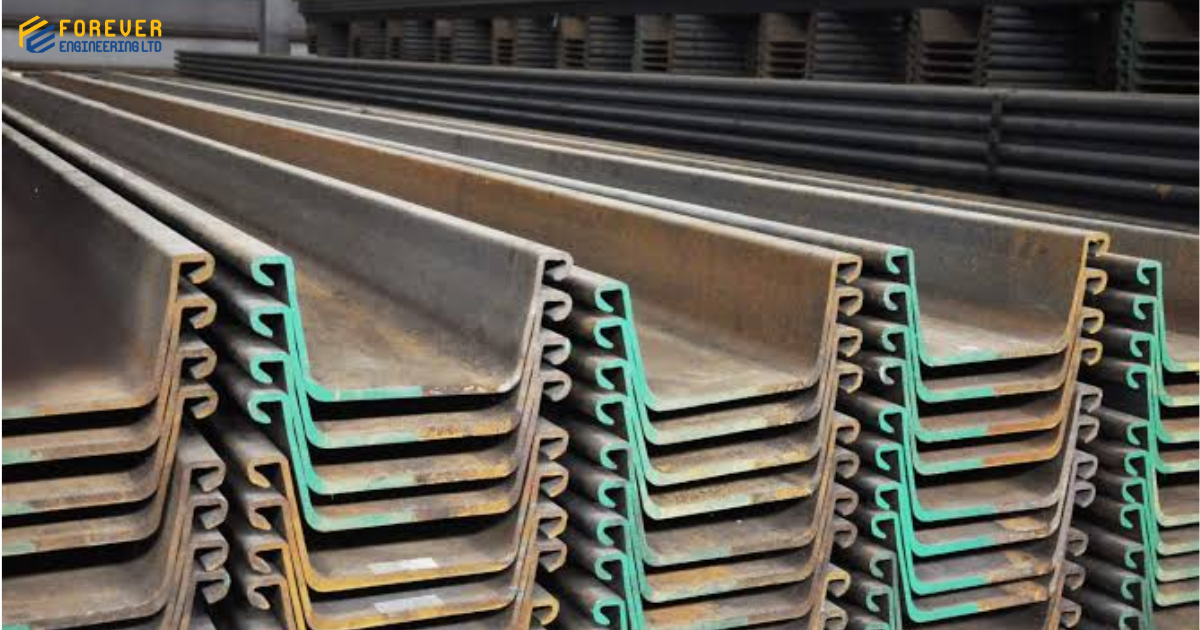
Choosing the correct steel sheet pile size is one of the most important parts of any construction project. A suitable sheet pile size helps create a strong and stable retaining wall that can safely resist soil pressure, water pressure, and structural loads. Whether you are building a basement, bridge foundation, riverbank protection system, marine structure, or cofferdam, selecting the proper sheet pile size improves safety, durability, and construction quality.
In Bangladesh, many construction sites have soft soil, high groundwater levels, and challenging environmental conditions. These factors make it important to choose the correct steel sheet pile size before construction begins. Engineers carefully study the soil condition, excavation depth, project load, and design requirements before selecting the most suitable sheet pile profile and size. Forever Engineering Ltd. supplies high-quality steel sheet piles in different sizes for residential, commercial, industrial, and infrastructure projects across Bangladesh. Our experienced engineers help clients select the right sheet pile based on project requirements to ensure safe and cost-effective construction.
This Steel Sheet Pile Size Guide explains everything you need to know about sheet pile sizes, standard dimensions, selection methods, applications, and the factors that influence the right choice.
What Is a Steel Sheet Pile Size Guide?
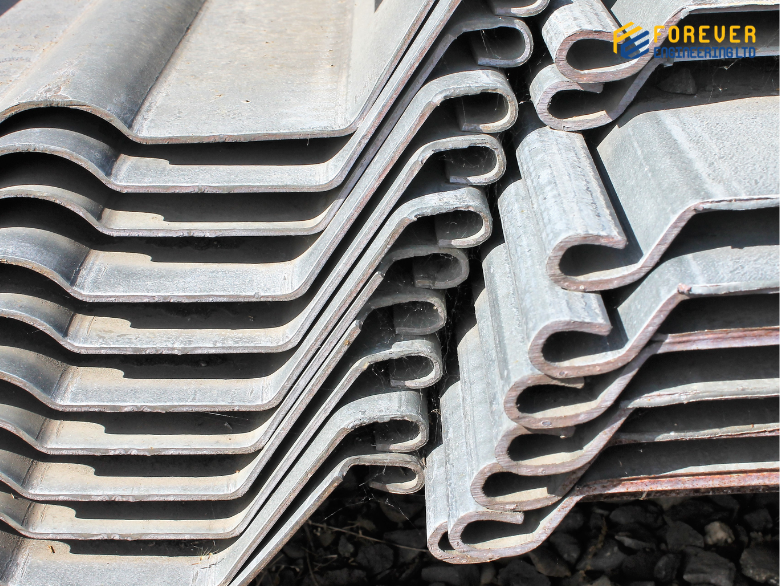
A steel sheet pile size guide is a reference that explains the standard dimensions and specifications of steel sheet piles used in construction projects. It helps engineers, contractors, and project owners choose the correct sheet pile size based on soil conditions, excavation depth, water level, and structural load. A sheet pile size guide usually includes important measurements such as
- Overall width
- Overall height
- Steel thickness
- Length
- Weight
- Section modulus
- Moment of inertia
- Cross-sectional area
Each measurement affects the strength and performance of the sheet pile wall. Larger sheet piles can resist greater soil and water pressure, while smaller profiles are suitable for lighter construction work.
Using a proper steel sheet pile size guide helps reduce construction risks and improves the long-term stability of retaining structures.
Why Is a Steel Sheet Pile Size Guide Important?
Choosing the right sheet pile size is not simply about selecting the largest steel section. Every project has different requirements. A proper size guide helps engineers select the most suitable profile that provides enough strength without increasing unnecessary material costs. Some important benefits include:
Improves Structural Strength
The correct sheet pile size provides enough bending resistance to support soil pressure and groundwater pressure. Strong sheet piles reduce wall movement and improve structural stability throughout the construction process.
Increases Project Safety
Proper sheet pile sizes reduce the risk of soil collapse, wall failure, and water leakage. This creates a safer working environment for construction workers and protects nearby buildings and roads.
Saves Construction Costs
Selecting the correct size prevents overspending on unnecessary steel while ensuring enough strength for the project. Good engineering design always balances safety and cost.
Improves Installation Efficiency
Suitable sheet pile sizes fit the project design more accurately. Workers can install them more quickly, reducing delays and improving productivity.
Supports Long Service Life
Properly selected steel sheet piles remain stable for many years. They resist corrosion, soil movement, and environmental conditions better when engineers choose the correct dimensions.
Common Steel Sheet Pile Sizes Used in Bangladesh
Steel sheet piles are available in different sizes to meet the needs of different construction projects. Engineers select the most suitable size after reviewing the project design and site conditions.
Width
The width of a steel sheet pile generally ranges from 400 mm to 900 mm depending on the profile. Wider sheet piles cover more area with fewer sections. This helps reduce installation time and creates a stronger retaining wall.
Height
The profile height normally ranges from 100 mm to 500 mm. A higher profile increases bending strength and allows the sheet pile to resist greater soil pressure. Deep excavation projects often require taller profiles.
Thickness
Steel thickness usually varies between 8 mm and 20 mm. Thicker steel provides higher strength and durability. It also offers better resistance against corrosion and wear during long-term use.
Length
Standard steel sheet piles are commonly available in lengths between 6 meters and 24 meters. Longer piles are manufactured for projects that require deeper embedment, such as bridge foundations, marine structures, and large retaining walls.
Weight
The weight of a steel sheet pile depends on its profile, width, thickness, and length. Heavier sheet piles generally provide higher structural capacity. However, they also require larger lifting equipment during installation.
Understanding Steel Sheet Pile Size Chart
A steel sheet pile size chart helps engineers compare different sheet pile profiles before selecting one for a project. A standard size chart normally includes the following:
- Profile type
- Width
- Height
- Thickness
- Length
- Weight per meter
- Section modulus
- Moment of inertia
- Cross-sectional area
- Steel grade
Engineers use this information to calculate the load-bearing capacity of the retaining wall. Instead of choosing the largest profile, they compare different options to find the most efficient solution for the project. A properly prepared size chart helps reduce design errors and improves construction quality.
Different Steel Sheet Pile Profiles and Their Sizes
Different sheet pile profiles have different sizes and structural properties. Engineers select the profile according to the project requirements.
U Type Steel Sheet Piles
U-type sheet piles are among the most widely used profiles in Bangladesh. They provide excellent bending strength and reliable interlocking performance. Common applications include:
- Basement construction
- Riverbank protection
- Retaining walls
- Cofferdams
- Flood protection
Their wide profile makes installation efficient while providing strong resistance against soil pressure.
Z-Type Steel Sheet Piles
Z-type sheet piles offer high structural efficiency with lower steel consumption. Their interlocks are positioned away from the centerline, which increases bending resistance. These profiles are suitable for:
- Bridge construction
- Port development
- Marine structures
- Large infrastructure projects
- Deep excavations
Many engineers choose Z-type profiles for heavy-duty construction because they provide excellent performance with efficient material use.
Straight Web Sheet Piles
Straight web sheet piles are mainly used where water tightness is important. Their design allows engineers to build circular retaining structures and cofferdams. They are commonly used in:
- Marine construction
- Water treatment plants
- Circular cofferdams
- Dock construction
Their strong interlocking system helps reduce water leakage during excavation.
Omega Sheet Piles
Omega sheet piles are lightweight and easy to transport. They are suitable for temporary retaining structures and small construction projects. Common applications include:
- Temporary excavation support
- Small retaining walls
- Landscaping projects
- Light industrial work
Although they are lighter than U-type and Z-type profiles, they still provide reliable performance for many projects.
How to Choose the Right Steel Sheet Pile Size
Selecting the correct steel sheet pile size is one of the most important decisions in any construction project. The right size provides enough strength to support soil and water pressure while keeping construction costs under control. Engineers study several factors before choosing the most suitable sheet pile profile. Those factors are given below:
Consider the Soil Condition
The soil condition plays a major role in selecting the correct sheet pile size. Soft clay, loose sand, and reclaimed land usually require larger and stronger sheet piles because these soils provide less natural support. Dense soil and rocky ground may allow the use of smaller sheet piles depending on the project design.
A detailed soil investigation helps engineers understand the ground condition before construction starts. This information ensures that the selected sheet pile performs safely throughout the project.
Determine the Excavation Depth
Excavation depth directly affects the required sheet pile length and profile strength. Shallow excavations usually need shorter sheet piles, while deep excavations require longer piles with higher bending resistance.
Proper embedment into the ground keeps the retaining wall stable and reduces the risk of movement during excavation.
Evaluate Groundwater Conditions
Groundwater creates additional pressure on retaining walls. Projects near rivers, lakes, coastal areas, and canals often require stronger sheet piles with reliable interlocks.
Selecting the correct sheet pile size improves water resistance and helps prevent leakage during construction.
Calculate Structural Loads
Different projects place different loads on retaining walls. Heavy buildings, bridges, industrial plants, and highways require stronger steel sheet piles than temporary excavation projects.
Engineers calculate the expected loads before selecting the sheet pile size. Proper calculations improve both safety and structural performance.
Follow Engineering Design
Professional engineering design combines soil investigation, groundwater analysis, structural calculations, and safety standards. Following these design recommendations helps contractors choose the most suitable sheet pile size while avoiding unnecessary material costs.
Steel Sheet Pile Size Guide for Different Construction Projects
Every construction project requires a different steel sheet pile size. Engineers select the profile according to project requirements and site conditions.
Basement Construction
Basement excavation often takes place in busy urban areas where nearby buildings need protection. Medium to large sheet pile profiles provide strong support and reduce soil movement during excavation. Proper sheet pile sizes also help control groundwater and create a safe working environment.
Bridge Foundation Projects
Bridge construction usually takes place near rivers or water bodies. These projects require long and heavy-duty sheet piles that can resist water pressure and support deep foundations. Engineers often select larger profiles for bridge foundations because they provide greater structural stability.
Riverbank Protection
Riverbanks experience continuous erosion caused by flowing water. Strong sheet piles with suitable dimensions help stabilize the riverbank and prevent soil loss. Proper sheet pile sizes also improve the lifespan of erosion protection systems.
Marine Structures
Ports, jetties, docks, and seawalls require durable steel sheet piles that can resist corrosion and continuous water pressure. Larger sheet pile profiles provide better performance in these demanding environments.
Cofferdam Construction
Cofferdams create dry working areas inside rivers and lakes. Strong interlocking sheet piles with suitable dimensions reduce water leakage and improve construction safety. The correct sheet pile size depends on water depth and soil condition.
Retaining Walls
Retaining walls support soil on highways, railways, industrial sites, and commercial developments. Engineers select sheet pile sizes according to wall height, soil pressure, and external loads to ensure long-term stability.
Industrial Buildings
Factories, warehouses, and power plants often require deep excavation and heavy foundations. Strong steel sheet piles provide reliable support while protecting nearby structures during construction.
Factors That Affect Steel Sheet Pile Size Selection
Many factors influence the selection of steel sheet pile sizes. Engineers evaluate each condition carefully before making the final decision.
Soil Type
Different soils create different levels of pressure. Weak soils usually require stronger and longer sheet piles.
Groundwater Level
High groundwater increases pressure on retaining walls. Larger sheet piles improve resistance against water pressure.
Excavation Depth
Deep excavations require stronger sheet pile sections with greater bending capacity.
Structural Load
Buildings, bridges, and industrial facilities produce different loads. Larger projects require stronger steel sections.
Project Duration
Permanent retaining walls normally require stronger sheet piles than temporary structures. Permanent projects also require better durability and corrosion resistance.
Environmental Conditions
Marine environments, chemical exposure, and changing weather conditions affect steel performance. Engineers may choose thicker sheet piles or protective coatings to improve service life.
Benefits of Choosing the Correct Steel Sheet Pile Size
Selecting the correct steel sheet pile size offers many advantages throughout the project.
Better Structural Stability
Proper sheet pile sizes safely resist soil pressure, groundwater pressure, and external loads. They help the retaining wall remain stable during excavation and throughout the life of the structure. Strong structural stability also protects nearby buildings, roads, and underground utilities from unwanted movement.
Improved Safety
Correctly designed retaining walls reduce the risk of collapse and create a safer construction site. They provide better support for workers, equipment, and nearby structures during excavation. Proper sheet pile sizing also helps reduce accidents caused by soil movement and water leakage.
Faster Installation
Suitable sheet pile sizes fit the project design more accurately, allowing faster installation and reducing project delays. Workers can complete the piling work with fewer adjustments and less downtime. Faster installation improves overall project efficiency and helps keep the construction schedule on track.
Lower Maintenance Costs
Well-designed sheet pile walls experience less structural stress, reducing future repairs and maintenance expenses. They remain durable even under changing soil and groundwater conditions. This long-term performance helps project owners save money throughout the life of the structure.
Cost-Effective Construction
Choosing the right size avoids unnecessary steel use while maintaining the required strength. This helps control the overall project budget. It also reduces material waste and improves the efficient use of construction resources without compromising safety or quality.
Why Choose Forever Engineering Ltd.?
Forever Engineering Ltd. is a trusted supplier and contractor for steel sheet pile solutions in Bangladesh. We provide high-quality steel sheet piles in different sizes to meet the needs of residential, commercial, industrial, and infrastructure projects. Our experienced engineers carefully evaluate each project before recommending the most suitable sheet pile size. We consider soil conditions, groundwater level, excavation depth, and structural load to ensure safe and efficient construction. We use quality materials, modern equipment, and professional installation methods to deliver reliable results. Our team works closely with clients from project planning to final installation, providing technical support at every stage. Whether you need steel sheet piles for basement construction, bridge foundations, riverbank protection, marine structures, or industrial projects, Forever Engineering Ltd. delivers dependable solutions across Bangladesh.
Get a Free Quotation from Forever Engineering Ltd.
If you are planning a construction project and need expert advice on selecting the right steel sheet pile size, Forever Engineering Ltd. is ready to assist you. Our experienced team will study your project requirements and recommend the most suitable steel sheet pile solution based on soil conditions, excavation depth, and engineering design.
Call Forever Engineering Ltd. at +880 1711-457346 to speak with our engineering team and request a free quotation for your upcoming project.
Conclusion
Choosing the correct steel sheet pile size is essential for building a safe, durable, and cost-effective retaining structure. The right sheet pile improves structural strength, reduces construction risks, and increases the service life of the project. Engineers carefully consider soil conditions, groundwater levels, excavation depth, structural loads, and project requirements before selecting the appropriate sheet pile size. This Steel Sheet Pile Size Guide provides useful information for contractors, engineers, consultants, and project owners who want to make informed decisions. By selecting the proper sheet pile size, you can improve project safety, construction efficiency, and long-term performance.
Forever Engineering Ltd. supplies high-quality steel sheet piles in various sizes for projects throughout Bangladesh. Our experienced team is committed to delivering reliable products, expert guidance, and professional installation services for every project.
Frequently Asked Questions (FAQs)
1. What is a Steel Sheet Pile Size Guide?
A steel sheet pile size guide explains the standard dimensions, profiles, and specifications of steel sheet piles. It helps engineers and contractors choose the correct size for different construction projects.
2. What are the standard steel sheet pile sizes?
Steel sheet piles commonly have widths between 400 mm and 900 mm, heights from 100 mm to 500 mm, thicknesses between 8 mm and 20 mm, and lengths from 6 meters to 24 meters. The exact size depends on the project requirements.
3. How do engineers choose the right steel sheet pile size?
Engineers evaluate soil conditions, excavation depth, groundwater level, structural load, environmental conditions, and project duration before selecting the most suitable sheet pile size.
4. Which steel sheet pile profile is most commonly used?
U-type and Z-type steel sheet piles are the most widely used profiles. U-type sheet piles are common for retaining walls and basement construction, while Z-type sheet piles are preferred for large infrastructure and marine projects.
5. Can one steel sheet pile size be used for every project?
No. Every project has different soil conditions, excavation depths, water pressure, and structural loads. Engineers select the sheet pile size that best matches the specific project requirements.