
What Are Sheet Pile Sizes?
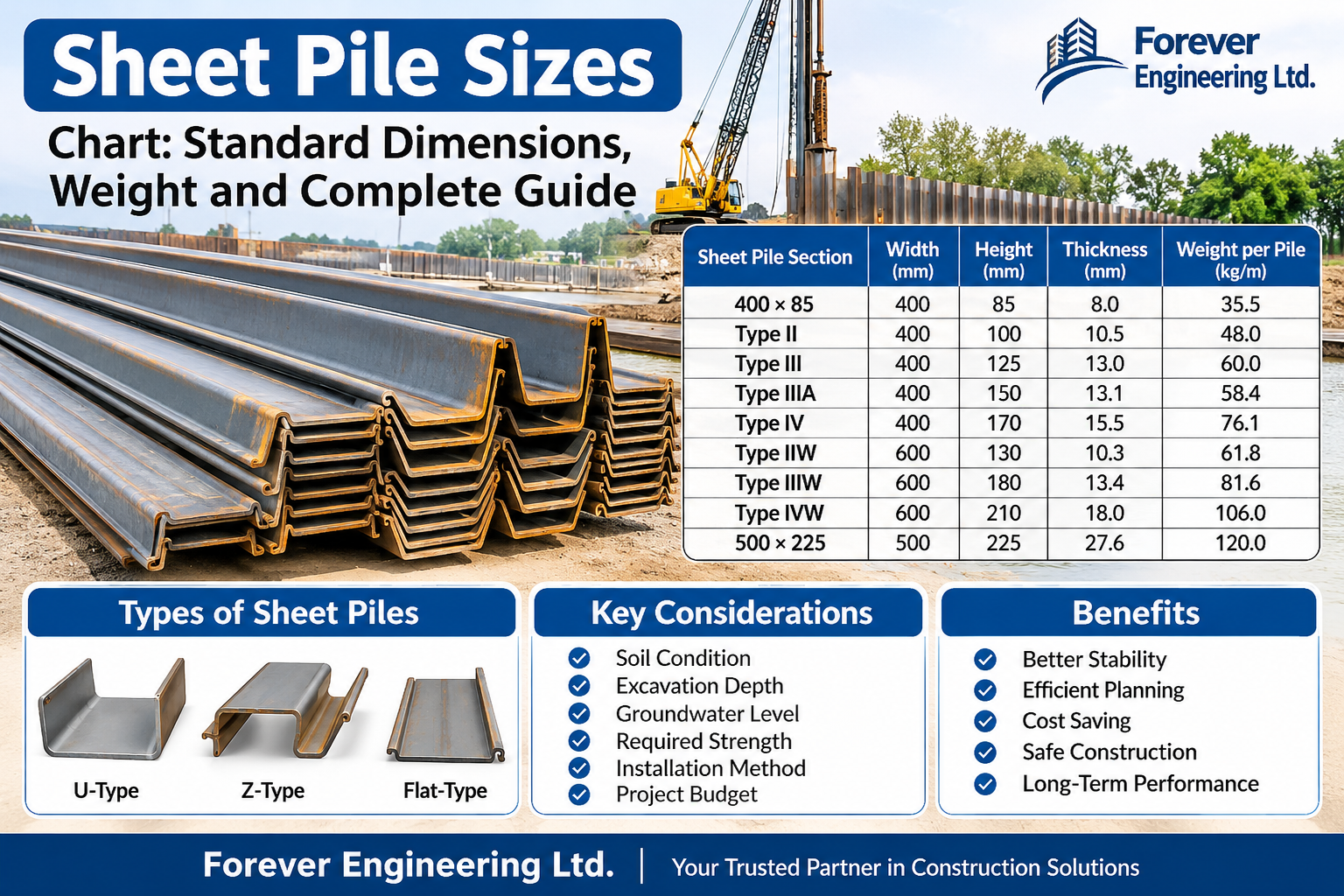
Sheet pile sizes play an important role in selecting suitable materials for construction projects. Width, height, thickness, length, and weight help engineers understand the specifications of different sheet pile sections. Before selecting a size, contractors should review the project design, soil conditions, excavation depth, and installation requirements. Proper selection helps manage material costs, equipment needs, and installation planning. For sheet pile supply and project assistance, contact Forever Engineering Ltd. to discuss your requirements.
Standard Sheet Pile Sizes Chart
Sheet piles are available in different sizes and profiles to meet the needs of various construction projects. Their dimensions and weight depend on the manufacturer, section type, and steel specifications. The following chart shows some example sheet pile specifications for reference. Actual dimensions may vary between manufacturers, so it is important to check the product catalogue before making a final selection.
| Sheet Pile Section | Width (mm) | Height (mm) | Thickness (mm) | Weight per Pile (kg/m) |
| 400 × 85 | 400 | 85 | 8.0 | 35.5 |
| Type II | 400 | 100 | 10.5 | 48.0 |
| Type III | 400 | 125 | 13.0 | 60.0 |
| Type IIIA | 400 | 150 | 13.1 | 58.4 |
| Type IV | 400 | 170 | 15.5 | 76.1 |
| Type IIW | 600 | 130 | 10.3 | 61.8 |
| Type IIIW | 600 | 180 | 13.4 | 81.6 |
| Type IVW | 600 | 210 | 18.0 | 106.0 |
| 500 × 225 | 500 | 225 | 27.6 | 120.0 |
Note: These values are reference specifications. Always confirm the exact dimensions and weight with the selected manufacturer’s catalogue.
Main Dimensions of Sheet Piles
Understanding sheet pile sizes helps contractors compare different sections before purchasing materials
Width: Sheet pile width refers to the effective coverage of one pile section. It helps determine how many piles are required to complete a retaining wall. A wider section may reduce the number of individual piles needed for a specific wall length.
Height or Section Depth: Height refers to the depth of the sheet pile profile. It affects the shape and structural properties of the section. Engineers consider this dimension when checking the required strength and bending resistance of a retaining wall.
Thickness: Thickness refers to the steel thickness of the sheet pile. It is an important factor in determining the section’s strength and weight. Thicker sections may be suitable for projects that require greater structural capacity, depending on the design.
Length: Sheet pile length refers to the total length of each pile from top to bottom. The required length depends on excavation depth, soil conditions, groundwater level, and the depth needed below the excavation level. Engineers determine the suitable length through project design and soil investigation.
Weight: Weight is usually measured in kilograms per meter (kg/m). It helps contractors estimate the total steel requirement, transportation cost, lifting capacity, and installation equipment needs.
Different Types of Sheet Pile Sizes
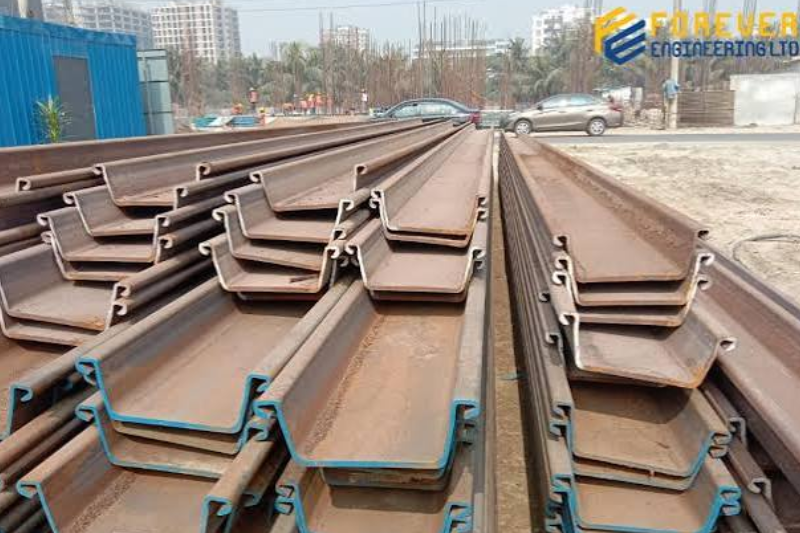
Sheet piles are available in different profiles. Each profile has its own shape and structural characteristics. The selection depends on the wall design, soil pressure, excavation depth, and project requirements.
U-Type Sheet Piles: U-type sheet piles have a U-shaped profile and are commonly used for retaining walls, riverbank protection, and temporary excavation support. Their interlocking system helps connect individual piles and create a continuous wall. Engineers select the section based on the required strength and project conditions.
Z-Type Sheet Piles: Z-type sheet piles have a Z-shaped profile with their main sections positioned to provide suitable bending resistance. They are commonly used in permanent retaining walls, deep excavations, and projects that require higher structural performance. Their dimensions and weight depend on the selected manufacturer and section series.
Straight or Flat Sheet Piles: Straight or flat sheet piles have a relatively flat profile and are often used in applications where the interlocking strength is important. They are commonly associated with circular cells and special retaining structures. Their suitability depends on the structural design and site requirements.
Factors to Consider When Choosing Sheet Pile Sizes
The selection of suitable sheet pile sizes depends on structural requirements and actual site conditions. Engineers should consider the following factors before selecting a sheet pile.
- Soil Condition: Soil type affects the resistance and pressure acting on the sheet pile wall. Soft clay, loose sand, dense sand, and hard soil may require different section specifications and installation methods.
- Excavation Depth: Deeper excavations generally require careful structural design because soil and water pressure can increase with depth. The pile length and section properties should be selected according to the excavation design.
- Groundwater Level: Groundwater can create additional pressure on retaining structures. Engineers should consider water pressure and drainage conditions when selecting the required sheet pile section.
- Required Strength: The sheet pile must have enough structural capacity to resist the loads expected during the project. Engineers check section properties, bending resistance, and other design requirements before choosing a suitable size.
- Installation Equipment: The selected pile size and weight should be suitable for the available installation equipment. Contractors need to check the lifting capacity, hammer compatibility, and site access before starting installation.
- Project Budget: Larger or heavier sheet piles may increase material, transportation, and installation costs. Contractors should compare the required structural performance with the overall project budget.
How to Calculate Sheet Pile Weight
Calculating sheet pile weight helps contractors estimate the total amount of steel required for a project. The calculation is useful for preparing material budgets, transportation plans, and lifting arrangements. The basic formula is: Total Weight = Unit Weight per Meter × Total Pile Length.
For example, if a sheet pile section weighs 60 kg per meter and the required pile length is 12 meters, the weight of one pile will be 60 × 12 = 720 kg. If the project requires 50 piles of the same size, the estimated total weight will be 720 × 50 = 36,000 kg or 36 tonnes. This is a simple estimation method, and the actual weight should be confirmed using the manufacturer’s specifications.
Steps to Select the Right Sheet Pile Sizes
Selecting the correct sheet pile size requires proper planning and technical review. Contractors should not choose a section based only on its price or appearance. The following steps can help make the selection process easier.
- Review the Project Design: Check the retaining wall design, excavation depth, expected loads, and other structural requirements before selecting a pile section.
- Check Soil Investigation Reports: Review the soil layers, groundwater conditions, and other site information to understand the pressure and resistance expected during installation.
- Compare Available Sizes: Check the width, height, thickness, length, and weight of available sheet pile sections to identify suitable options for the project.
- Confirm Installation Requirements: Consider the available machinery, lifting arrangements, site access, and installation method to make sure the selected piles can be installed safely.
- Get Technical Advice: Discuss the project requirements with an experienced supplier or engineer before finalising the sheet pile size and quantity.
Benefits of Choosing the Correct Sheet Pile Sizes
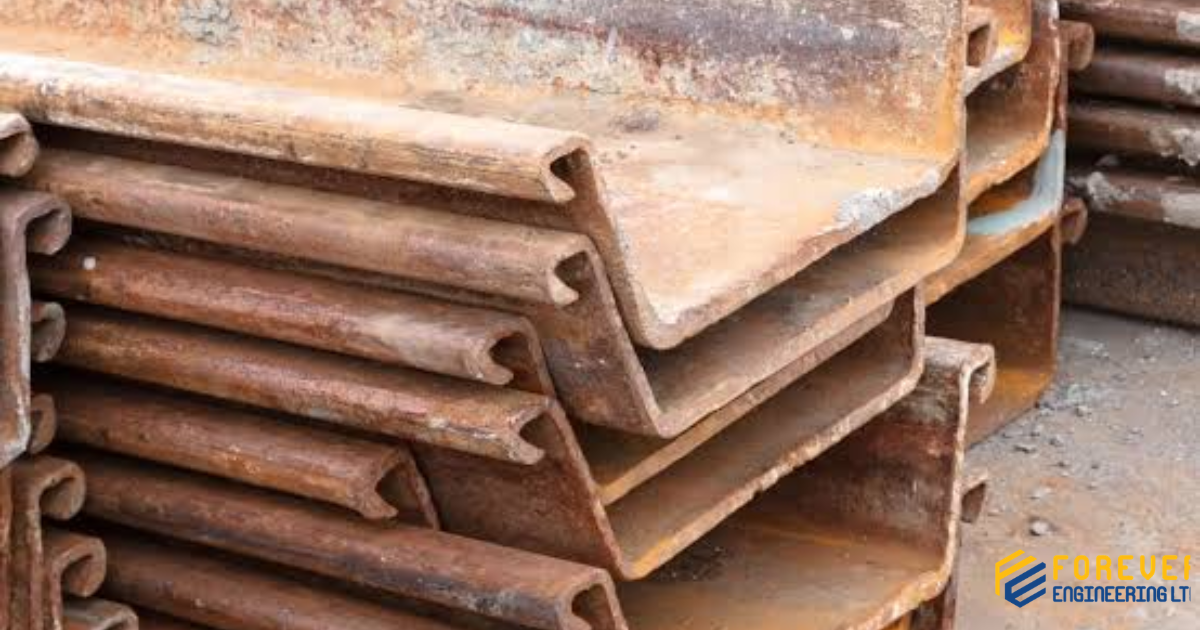
Choosing the right sheet pile size can improve project planning and help contractors manage construction work more effectively. A suitable section provides the required structural performance while supporting better material and equipment planning.
- Better Structural Performance: Properly selected sheet piles help the retaining wall resist the expected soil and water pressure according to the approved design.
- Improved Installation Planning: Knowing the exact dimensions and weight helps contractors select suitable machinery, lifting equipment, and installation methods.
- Better Cost Management: Selecting an appropriate section helps avoid unnecessary material costs and reduces the risk of choosing piles that do not meet project requirements.
- Efficient Material Calculation: Accurate size and weight information helps estimate the required quantity, total steel weight, and transportation arrangements.
- Project Safety: Using sheet piles that match the engineering design supports safe construction and reduces the risk of problems caused by unsuitable material selection.
Sheet Pile Supply and Support from Forever Engineering Ltd.
Forever Engineering Ltd. provides sheet pile supply and project support for different construction and foundation works in Bangladesh. Our team can help contractors, consultants, and project owners understand available sheet pile options based on their project requirements. Whether you need sheet piles for basement construction, deep excavation, riverbank protection, retaining walls, or other infrastructure work, we can discuss suitable material specifications and supply requirements. We also consider pile dimensions, weight, installation methods, and project conditions when providing assistance. Contact Forever Engineering Ltd. to discuss your requirements and request a project-based quotation.
Conclusion
Sheet pile sizes are an important consideration in the planning and execution of construction projects. Width, height, thickness, length, and weight all affect material selection, structural performance, and installation planning. Before choosing a sheet pile section, engineers and contractors should review soil conditions, excavation depth, groundwater level, and project design requirements. A suitable size helps maintain the required structural performance and manage project costs. For sheet pile supply and technical assistance in Bangladesh, Forever Engineering Ltd. can help you discuss suitable options for your construction work.
Frequently Asked Questions (FAQs)
- What are the standard sheet pile sizes?
Sheet pile sizes vary by profile and manufacturer. Common specifications include different widths, heights, thicknesses, and weights. Contractors should check the manufacturer’s catalogue to confirm the exact dimensions.
- How do I choose the right sheet pile size?
The right size depends on excavation depth, soil conditions, groundwater level, structural loads, and installation requirements. Engineers should review the project design before selecting a section.
- What is the common thickness of steel sheet piles?
Steel sheet pile thickness varies depending on the section type and manufacturer. Different projects may require different thicknesses based on the structural design and expected loads.
- How is sheet pile weight calculated?
Sheet pile weight is calculated by multiplying the unit weight per meter by the total pile length. The manufacturer’s weight specification should be used for accurate estimation.
- Are U-type and Z-type sheet piles different in size?
Yes. U-type and Z-type sheet piles have different profiles and section dimensions. Their width, height, thickness, and structural properties vary depending on the selected section and manufacturer.
- Where can I get sheet piles in Bangladesh?
You can contact Forever Engineering Ltd. to discuss sheet pile supply, available specifications, and project requirements in Bangladesh.