

Sheet pile shoring is an important temporary excavation support system used for building construction, basement excavation, foundation work, and deep excavation projects. It helps retain surrounding soil and provides support when excavation is carried out near buildings, roads, property boundaries, or other structures.
Sheet pile shoring can be particularly useful where there is limited space around the excavation. Instead of creating wide slopes around an excavation, interlocking steel sheet piles can be installed along the excavation boundary to form a retaining wall. Depending on the project requirements, additional systems such as walls, struts, or anchors may be used to provide additional support.
In Bangladesh, sheet pile shoring is commonly considered for basement construction, deep foundation excavation, underground parking, retaining structures, waterfront work, and other projects where temporary ground support is required. Forever Engineering Ltd provides sheet pile supply and driven services and offers sheet pile installation solutions according to project requirements.

What Is Sheet Pile Shoring for Building Excavation?
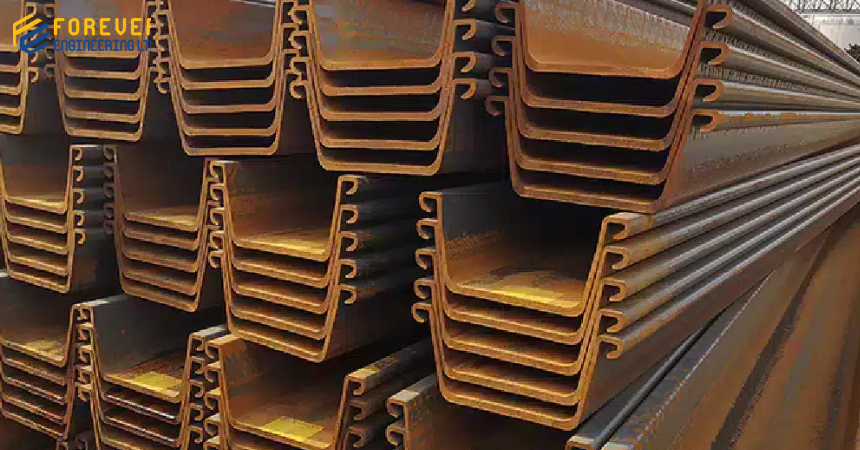
Sheet pile shoring is a system used to support the sides of an excavation by installing interlocking steel sheet piles into the ground. The connected piles create a continuous wall around part or all of the excavation area.
The sheet pile wall helps retain the surrounding soil while construction work is carried out inside the excavation. Depending on the excavation depth and ground conditions, the wall may work as a cantilever system or may require additional support such as struts, walers, or ground anchors.
The final shoring arrangement should be determined through appropriate geotechnical and structural assessment because excavation depth, soil conditions, groundwater, nearby structures, and construction loads can all affect the required system.
Main Factors That Affect Sheet Pile Shoring Include:
Excavation Depth: Deeper excavation generally creates greater lateral pressure on the shoring wall and may require additional structural support.
Soil Condition: Soil type, density, strength, layering, and groundwater conditions influence sheet pile selection, embedment, and support requirements.
Groundwater Level: Groundwater can increase pressure on the excavation and may create seepage or stability issues that need to be considered during design.
Nearby Buildings: Existing buildings close to the excavation may be affected by ground movement, settlement, or vibration during piling and excavation.
Excavation Size: The length, width, and shape of the excavation influence the sheet pile arrangement and the requirement for internal bracing.
Construction Loads: Excavators, cranes, vehicles, stored materials, and other loads near the excavation can add pressure to the surrounding ground.
Site Access: Limited access can affect the type of piling equipment and installation method that can be used.
Pile Length: The required sheet pile length depends on excavation depth, required embedment, soil conditions, and the design of the shoring system.
Sheet Pile Profile: Different sheet pile profiles have different structural characteristics, weights, and interlocking arrangements.
Installation Method: Vibratory driving, impact driving, hydraulic pressing, or predrilling may be considered depending on ground conditions and site restrictions.
Why Is Sheet Pile Shoring Important for Building Excavation?
Building excavation can change the natural stress condition of surrounding soil. When soil is removed, the remaining soil may move toward the excavation if adequate support is not provided.
A sheet pile shoring system creates a retaining barrier around the excavation and helps control soil movement. This can be important when construction takes place in a developed area where uncontrolled ground movement could affect adjacent structures, roads, utilities, or other property. Sheet pile shoring can also allow construction teams to work within a relatively confined excavation area without requiring large sloped excavation faces.
Proper Sheet Pile Shoring Helps With:
Soil Retention: The sheet pile wall provides lateral support to the surrounding soil during excavation.
Excavation Stability: Properly designed shoring can help maintain stable excavation sides while construction work is underway.
Restricted Construction Sites: Sheet pile walls can be useful where there is not enough space for conventional sloped excavation.
Nearby Structure Protection: Appropriate shoring can help control ground movement near existing buildings and infrastructure.
Basement Construction: Sheet piles can provide temporary support during basement excavation and underground construction.
Groundwater Control: Interlocking sheet piles can reduce water movement into an excavation when properly designed and installed.
Construction Space: A vertical shoring wall can allow more usable space within the construction site compared with a wide, sloped excavation.
Temporary Support: Sheet piles can be installed for temporary excavation support and later removed when the permanent structure is capable of providing the required support.
Sheet Pile Shoring Methods for Building Excavation
Different sheet pile shoring methods can be used depending on excavation depth, soil condition, groundwater, surrounding structures, and project requirements.
Cantilever Sheet Pile Shoring: A cantilever sheet pile wall relies primarily on the embedded portion of the sheet piles to resist lateral soil pressure. It can be considered for suitable excavation depths where engineering calculations confirm adequate stability.
Strutted Sheet Pile Shoring: Internal struts are installed across the excavation to provide additional lateral support to the sheet pile wall. This arrangement can be used when excavation depth or loading requires more support.
Waler and Strut System: Walers are installed horizontally against the sheet pile wall and connected to internal struts. The system helps distribute lateral loads along the wall and transfer them to the opposing side.
Anchored Sheet Pile Shoring: Ground anchors can be installed behind the sheet pile wall to provide lateral resistance. This system may reduce obstruction inside the excavation where suitable anchor installation is possible.
Multi-Level Strutting: Deeper excavations may require more than one level of walers and struts. The exact arrangement depends on the engineering design and excavation sequence.
Combined Shoring System: In some projects, sheet piles may be combined with other excavation support systems according to soil conditions, groundwater, excavation depth, and nearby structures.
What Is Included in Sheet Pile Shoring Work?
The exact scope of sheet pile shoring depends on the project requirements and agreement between the contractor and service provider.
Main Sheet Pile Shoring Work May Include:
Site Assessment: The construction area is reviewed to understand excavation dimensions, access conditions, surrounding structures, soil conditions, and groundwater.
Engineering Planning: The required sheet pile wall and support arrangement are developed based on project requirements.
Sheet Pile Supply: Steel sheet piles are supplied according to the required profile, length, quantity, and specification.
Mobilization: Required piling equipment, lifting equipment, operators, and workers are mobilized to the project site.
Sheet Pile Installation: Sheet piles are positioned and driven or installed to the required depth.
Alignment Control: The position and verticality of sheet piles are monitored during installation to maintain the required wall alignment.
Waler Installation: Walers may be installed where required to distribute loads along the sheet pile wall.
Strut Installation: Internal struts may be installed to provide additional lateral support during excavation.
Excavation Support: Excavation proceeds according to the approved sequence while the shoring system remains in place.
Monitoring: The sheet pile wall and surrounding area may be monitored for movement, settlement, groundwater changes, or other unexpected conditions.
Sheet Pile Extraction: Temporary sheet piles may be removed after the permanent construction has reached a stage where the temporary support is no longer required.
How Can Sheet Pile Shoring Be Installed for Building Excavation?
Installing sheet pile shoring requires proper planning and coordination between piling and excavation activities.
Follow These Steps:
- Review the Project Requirements: Determine the excavation depth, dimensions, wall length, soil conditions, groundwater level, nearby structures, and site restrictions.
- Review the Soil Investigation: Available geotechnical information should be reviewed to understand soil layers, soil strength, groundwater, and possible obstructions.
- Determine the Sheet Pile Specification: Select the appropriate sheet pile profile, length, weight, and structural properties based on the engineering requirements.
- Establish the Sheet Pile Alignment: Mark the sheet pile wall alignment around the excavation according to the approved layout.
- Prepare the Work Area: Ensure that the piling equipment, crane, workers, and materials can operate safely within the available site area.
- Position the Sheet Piles: Lift and position individual sheet piles while maintaining the required alignment.
- Connect the Interlocks: Connect each sheet pile to the adjacent pile so that the wall forms a continuous interlocking system.
- Drive the Sheet Piles: Install the sheet piles using an appropriate piling method and equipment according to soil and site conditions.
- Check Alignment and Verticality: Monitor the pile position during installation to reduce excessive deviation from the planned alignment.
- Install Walers and Struts: Where required, install the designed internal support system before excavation reaches the level where additional support is required.
- Begin Excavation: Excavation should proceed in stages according to the approved construction sequence.
- Monitor the Excavation: Monitor the sheet pile wall, nearby structures, ground surface, groundwater, and support system throughout construction.
- Complete Foundation or Basement Work: Continue the permanent construction while maintaining the required temporary shoring.
- Remove Temporary Sheet Piles: If the system is temporary, sheet piles may be extracted when the permanent structure is capable of providing the necessary support.
Sheet Pile Shoring Applications in Building Construction
Sheet pile shoring can be used for a variety of excavation and construction applications.
Common Applications Include:
Basement Excavation: Sheet piles can provide temporary soil support around basement excavation areas.
Deep Foundation Work: Sheet pile walls can support excavation required for foundation construction.
Underground Parking: Sheet pile shoring can help retain soil during construction of underground parking facilities.
Building Foundation Construction: Sheet piles can support excavation while footings, pile caps, rafts, and other foundation elements are constructed.
Urban Excavation: Sheet pile shoring can be useful in crowded construction areas where nearby buildings and roads limit available space.
Utility Installation: Sheet piles can support deeper excavation for underground water, drainage, electrical, and other utility work.
Retaining Structures: Sheet piles can be used as retaining elements where the project design requires them.
Drainage Projects: Sheet pile walls can support excavation for drainage and water-management structures.
Waterfront Construction: Sheet piles can be used for construction near rivers, canals, ports, and other water-adjacent areas.
Underground Structures: Sheet pile shoring can support excavation for underground rooms, structures, and facilities.
Forever Engineering Ltd provides sheet pile supply and driven services for construction applications, including excavation-related works and other projects requiring sheet piling solutions.
How to Select the Right Sheet Pile Shoring System
Selecting a sheet pile shoring system requires consideration of the complete site and construction conditions.
Consider These Factors:
- Determine Excavation Depth: The depth of excavation influences the lateral pressure on the sheet pile wall and the required pile embedment.
- Review Soil Conditions: Soil strength, density, layering, and groundwater conditions should be considered before selecting the shoring system.
- Check Nearby Structures: Buildings, roads, boundary walls, utilities, and other structures close to the excavation should be considered during design.
- Evaluate Groundwater: Groundwater conditions should be reviewed because water pressure and seepage can affect excavation stability.
- Select the Sheet Pile Type: The appropriate profile and section should be selected according to structural and geotechnical requirements.
- Determine Pile Length: The required length should provide sufficient embedded depth below the excavation level according to engineering calculations.
- Select the Installation Method: Vibratory driving, impact driving, hydraulic pressing, or predrilling may be considered based on soil and site conditions.
- Determine the Support Arrangement: Depending on excavation depth, the system may require walers, struts, anchors, or other support elements.
- Consider Construction Sequence: The shoring arrangement should work with the planned excavation and foundation construction sequence.
- Prepare a Safety Plan: Lifting, piling, excavation, access, monitoring, emergency response, and equipment safety should be addressed before construction begins.
How to Reduce Sheet Pile Shoring Project Cost
Reducing the cost of sheet pile shoring requires proper project planning rather than simply selecting the lowest-cost material. The complete project cost may include sheet piles, transportation, equipment, installation, internal bracing, labor, monitoring, and extraction.
Consider These Factors:
- Select the Correct Sheet Pile: Use a sheet pile section suitable for the engineering requirements instead of unnecessarily selecting a heavier section.
- Optimize Pile Length: Determine pile length through engineering assessment to avoid unnecessary material while maintaining the required embedment.
- Plan the Installation Sequence: A clear installation sequence can reduce equipment downtime and unnecessary handling.
- Check Site Access: Proper access planning can reduce mobilization difficulties and equipment delays.
- Coordinate Excavation and Shoring: Excavation should proceed according to the approved sequence so that the support system is installed when required.
- Plan Internal Supports: Properly planned walls and struts can provide the required support while allowing construction activities to continue.
- Protect Sheet Piles During Installation: Careful handling and installation can reduce damage and improve the potential for reuse in temporary works.
- Plan Extraction Early: If sheet piles are intended for temporary use, extraction requirements should be considered during the initial planning stage.
- Compare Complete Project Costs: Review material, equipment, transportation, installation, labor, support systems, and extraction together rather than comparing only the sheet pile material price.
How Is Sheet Pile Shoring Supported by Forever Engineering Ltd?
Forever Engineering Ltd provides sheet pile supply and driven services in Bangladesh. The company supports sheet piling requirements according to project conditions, including the required sheet pile specification, quantity, length, excavation depth, soil condition, groundwater, installation method, and support arrangement.
For building excavation projects, the required shoring system should be reviewed before work begins. The appropriate combination of sheet piles, walers, struts, anchors, and other temporary support components depends on the engineering requirements of each project.
Forever Engineering Ltd can discuss project requirements and provide sheet pile-related services according to the construction needs.
Benefits of Choosing Sheet Pile Shoring for Building Excavation
Sheet pile shoring can provide several practical benefits for building excavation projects when properly designed and installed.
Soil Retention: Sheet piles create a continuous wall that helps retain soil around the excavation.
Restricted-Site Excavation: Sheet pile walls can be useful where there is insufficient space for conventional sloped excavation.
Basement Support: Sheet piles can support excavation during basement and underground construction.
Ground Movement Control: A properly designed shoring system can help control lateral ground movement.
Efficient Installation: Depending on ground conditions and equipment, sheet piles can be installed efficiently.
Reusable Material: Steel sheet piles used for temporary works may be extracted and reused when their condition remains suitable.
Flexible Support: Sheet piles can be combined with walers, struts, or anchors according to the project design.
Water Movement Reduction: Interlocking sheet piles can reduce water movement into an excavation when the system is properly designed for the site conditions.
Temporary or Permanent Applications: Sheet piles can be used for temporary shoring or incorporated into permanent retaining structures depending on the project design.
Multiple Construction Applications: Sheet piles can support basement excavation, underground structures, marine construction, retaining works, and other projects.
Safety During Sheet Pile Shoring and Building Excavation
Safety is important during sheet pile installation, excavation, and removal. Heavy steel piles, cranes, piling equipment, open excavations, and nearby structures can create significant risks if proper procedures are not followed.
Important Safety Measures Include:
Inspect Sheet Piles: Check sheet piles for damage, excessive deformation, or other defects before installation.
Check Lifting Equipment: Cranes, slings, chains, hooks, and other lifting accessories should be appropriate for the loads being handled.
Control Suspended Loads: Workers should remain outside the danger zone while sheet piles are lifted or positioned.
Establish a Safe Working Zone: Restrict unnecessary access around piling equipment and excavation areas.
Check Equipment Ground Stability: Piling rigs, cranes, and other heavy equipment should be positioned on suitable ground.
Monitor Installation: Observe pile alignment, vibration, refusal, unexpected obstructions, and other installation conditions.
Follow the Excavation Sequence: Excavation should proceed according to the approved shoring and construction sequence.
Install Support Correctly: Walers, struts, anchors, and other support components should be installed according to the approved design.
Monitor Nearby Buildings: Existing structures close to the excavation should be monitored where ground movement could affect them.
Monitor Groundwater: Unexpected groundwater changes or seepage should be reported and managed according to the project plan.
Provide Safe Excavation Access: Workers should have safe entry and exit routes from the excavation.
Control Loads Near Excavation Edges: Heavy equipment, vehicles, excavated soil, and stored materials should be controlled around the excavation according to the safety plan.
Use Trained Operators: Piling and lifting equipment should be operated by appropriately trained and competent personnel.
Follow Site Safety Procedures: Risk assessments, method statements, emergency procedures, and applicable construction safety requirements should be followed.
Why Choose Forever Engineering Ltd. for Sheet Pile Shoring Solutions?
Forever Engineering Ltd provides sheet pile supply and driven services for construction projects in Bangladesh. Its services can support excavation, retaining, foundation, basement, and other sheet piling requirements.
Key Reasons to Consider Forever Engineering Ltd. Include:
Sheet Pile Supply and Driven Services: Forever Engineering Ltd provides sheet pile supply and driven services for construction projects in Bangladesh.
Engineering Support: Project requirements can be reviewed to determine suitable sheet pile specifications and installation requirements.
Multiple Installation Methods: Sheet pile installation can be planned according to soil conditions, site restrictions, and project requirements.
Project-Specific Solutions: Sheet pile arrangements can be planned according to excavation requirements, soil conditions, and construction needs.
Equipment Resources: Appropriate piling and lifting equipment can be arranged according to the project requirements.
Temporary Shoring Applications: Sheet piles can be used for temporary excavation support and other temporary construction requirements.
Basement Applications: Sheet pile shoring can support basement and underground excavation projects where the site conditions are suitable.
Marine Applications: Sheet piling can also be used for waterfront and marine-related construction requirements.
Technical Approach: Engineering and installation requirements can be reviewed according to the specific project conditions.
Service Coverage: Forever Engineering Ltd provides sheet pile-related services for construction projects in Bangladesh.
Contact Forever Engineering Ltd. for Sheet Pile Shoring
If you need sheet pile shoring for building excavation, provide the project requirements so the suitable sheet pile and excavation support arrangement can be assessed.
For a project-based quotation, provide details such as excavation depth, excavation dimensions, wall length, required sheet pile length, estimated quantity, soil conditions, groundwater conditions, nearby structures, installation requirements, and whether the sheet piles are intended for temporary or permanent use.
Forever Engineering Ltd. Contact Numbers:
Phone: +880 1894 615871
Phone: +880 1894 615872
Conclusion
Sheet pile shoring is an important excavation support method for building construction, particularly for basement excavation, deep foundation work, underground parking, and construction projects where surrounding space is limited.
The appropriate sheet pile shoring system depends on excavation depth, soil conditions, groundwater, nearby structures, construction loads, site access, and the planned construction sequence. Depending on the project, cantilever sheet piles, strutted systems, anchored systems, or combinations of walers and struts may be used. Proper engineering, installation, excavation sequencing, monitoring, and safety procedures are essential for a suitable sheet pile shoring system. Temporary sheet piles may also be extracted and reused when their condition and project requirements permit.
Forever Engineering Ltd provides sheet pile supply and driven services in Bangladesh and supports project-specific sheet piling requirements for building excavation and other construction applications.
Frequently Asked Questions
- What is sheet pile shoring?
Sheet pile shoring is an excavation support system where interlocking steel sheet piles are installed around an excavation to retain surrounding soil and support excavation stability.
- Why is sheet pile shoring used for building excavation?
Sheet pile shoring can support soil during basement, foundation, and underground construction, especially where available excavation space is limited.
- What are the main sheet pile shoring methods?
Common methods include cantilever sheet pile walls, strutted sheet pile systems, waler and strut systems, and anchored sheet pile walls. The appropriate arrangement depends on the project design and site conditions.
- Can sheet piles be used for basement excavation?
Yes. Sheet piles can be used for basement excavation where the soil conditions, excavation requirements, and engineering design are suitable.
- Are sheet piles suitable for deep excavation?
Sheet piles can be used for deep excavation, but deeper excavations may require additional support such as walers, struts, or anchors. The complete system should be designed according to the site conditions.
- Can sheet piles help control groundwater?
Interlocking sheet piles can reduce water movement into an excavation, but the effectiveness depends on soil conditions, groundwater pressure, interlock condition, installation quality, and project design.
- How deep should sheet piles be installed?
The required sheet pile depth depends on excavation depth, soil properties, groundwater, loads, and the selected shoring system. The required embedment should be determined through engineering design.
- Can sheet piles be reused after excavation work?
Yes. Temporary steel sheet piles may be extracted and reused when their condition remains suitable and the project requirements allow reuse.
- Does Forever Engineering Ltd provide sheet pile driving services?
Yes. Forever Engineering Ltd provides sheet pile supply and driven services for construction projects and can support sheet piling requirements according to project conditions.
- How can I get a sheet pile shoring quotation?
Contact Forever Engineering Ltd and provide the excavation depth, excavation dimensions, sheet pile wall length, required pile length, soil conditions, groundwater information, project requirements, and installation details. The company can then review the requirements and discuss a suitable sheet pile shoring solution.
Forever Engineering Ltd. Contact: +880 1894 615871 / +880 1894 615872
I’ve kept Forever Engineering Ltd as the company name throughout and used the same overall section order and writing structure as your sample.