
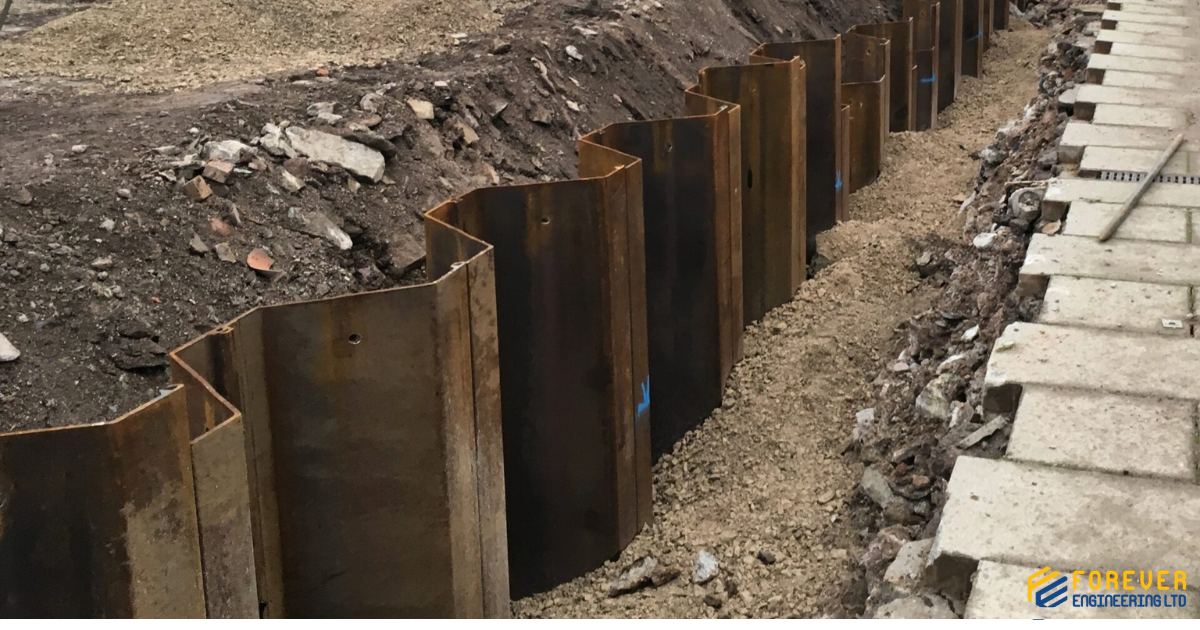
Sheet pile installation safety is essential for protecting workers, equipment, materials, and nearby structures during sheet pile construction. Steel sheet pile installation involves heavy piles, cranes, vibratory hammers, impact hammers, lifting accessories, and other equipment. Without proper planning and safety procedures, these activities can create risks such as falling materials, equipment accidents, excessive vibration, unstable ground, and unsafe working conditions.
Forever Engineering Ltd. provides sheet pile solutions for construction projects. Our team focuses on proper project planning, suitable equipment, safe installation methods, and site requirements to support controlled and efficient sheet pile installation.
What Is Sheet Pile Installation Safety?
Sheet pile installation safety refers to the rules, procedures, equipment checks, and site controls used to protect workers and construction operations during sheet pile installation. Safety measures should cover material handling, lifting, positioning, pile driving, equipment operation, site access, and emergency procedures.
Steel sheet piles are heavy and can require cranes and specialized hammers for installation. Workers must control the movement of piles and maintain safe distances from operating equipment. A properly planned safety system helps reduce accidents and supports smooth construction operations.
Why Is Sheet Pile Installation Safety Important?
Following proper safety procedures helps construction teams control risks during sheet pile installation. Heavy materials and powerful installation equipment require trained workers and careful coordination.
Key benefits include:
Worker Protection: Proper safety procedures help protect workers from falling piles, moving equipment, lifting operations, and other construction hazards.
Equipment Protection: Regular inspection and correct equipment operation can help prevent damage to cranes, hammers, clamps, lifting accessories, and other equipment.
Controlled Installation: Safe working procedures help operators maintain better control while lifting, positioning, and driving sheet piles.
Reduced Accidents: Proper site planning can reduce risks caused by poor communication, unstable ground, equipment failure, and unsafe access.
Better Site Organization: A controlled working area helps separate workers from cranes, piles, hammers, and other moving equipment.
Improved Project Efficiency: Safe operations can reduce unexpected stoppages, equipment damage, injuries, and delays.
Protection of Nearby Structures: Monitoring vibration, movement, and equipment operation can help reduce risks to nearby buildings, roads, utilities, and other structures.
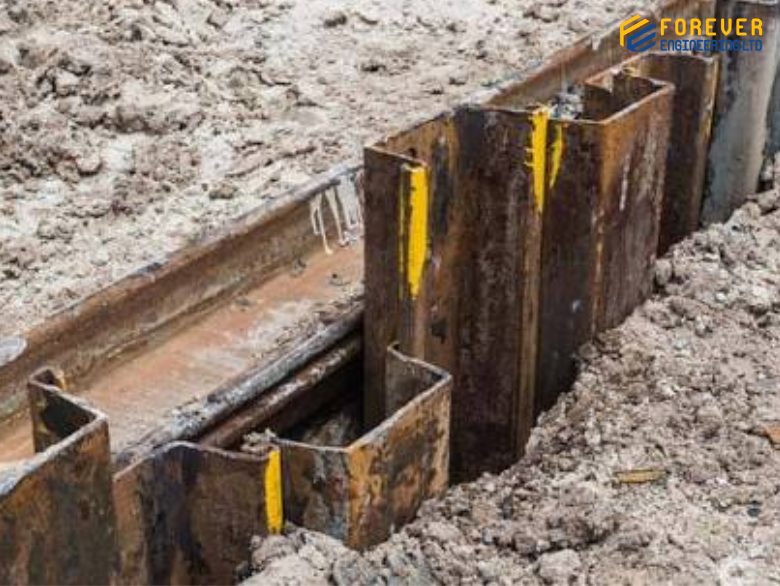
Sheet Pile Installation Safety Solutions Offered by Forever Engineering Ltd.
Forever Engineering Ltd. supports sheet pile projects with practical installation planning and project-focused solutions. We consider site conditions, equipment requirements, pile specifications, and installation needs when planning sheet pile work.
- Site Safety Planning: We help identify important site requirements before sheet pile installation begins. This includes access, working space, equipment movement, and lifting requirements.
- Equipment Coordination: Sheet pile installation requires suitable equipment such as cranes, vibratory hammers, impact hammers, pile clamps, pile guides, and lifting accessories. Proper equipment selection supports safer operations.
- Sheet Pile Handling Support: Steel sheet piles require careful lifting, transportation, and positioning. Workers should use suitable lifting equipment and follow approved handling procedures.
- Installation Method Support: Different soil and site conditions can require different installation methods. We help clients understand suitable installation requirements for their projects.
- Project-Based Safety Support: Every construction site has different risks. We focus on project conditions such as soil, groundwater, access, nearby structures, pile length, and installation equipment.
Common Hazards During Sheet Pile Installation
Sheet pile installation can involve several construction hazards. Workers should identify and control these risks before starting work.
Falling Sheet Piles: Improper lifting or handling can cause a sheet pile to fall or swing unexpectedly. Workers should maintain safe distances during lifting operations.
Crane Hazards: Cranes can create risks when workers operate them near unstable ground, overhead power lines, buildings, or other equipment.
Hammer Hazards: Vibratory and impact hammers generate significant force and movement. Workers should stay clear of operating hammers and follow equipment safety procedures.
Lifting Equipment Failure: Damaged slings, shackles, hooks, or clamps can create serious lifting risks. Workers should inspect lifting accessories before use.
Unstable Ground: Heavy cranes and installation equipment require stable working surfaces. Weak or uneven ground can affect equipment stability.
Pile Movement: A sheet pile can move unexpectedly during lifting, positioning, or driving. Workers should control access around the installation area.
Vibration and Noise: Sheet pile driving can generate vibration and noise. Contractors should monitor these effects when working near sensitive structures or occupied areas.
Underground Utilities: Buried utilities can create serious hazards if workers do not identify them before installation. Site information and utility locations should be reviewed before driving piles.
Sheet Pile Installation Safety Rules
Construction teams should follow clear safety rules throughout the sheet pile installation process.
Essential safety rules include:
- Inspect Equipment Before Work: Check cranes, hammers, clamps, lifting accessories, pile guides, and other equipment before starting installation.
- Use Trained Operators: Only trained and authorized workers should operate cranes, hammers, and other heavy equipment.
- Establish a Controlled Work Area: Create a clear exclusion zone around lifting and pile-driving operations. Keep unauthorized workers away from the area.
- Check Ground Stability: Confirm that the crane and other heavy equipment can operate safely on the working surface.
- Inspect Sheet Piles: Check sheet piles for damage, deformation, corrosion, or other problems before lifting and installation.
- Check Lifting Accessories: Inspect slings, shackles, hooks, clamps, and other lifting accessories before use.
- Maintain Safe Clearance: Keep equipment and workers at a safe distance from overhead power lines and other hazards.
- Use Suitable PPE: Workers should wear appropriate personal protective equipment for the construction activity.
- Maintain Communication: Operators and ground workers should use clear communication signals during lifting and installation.
- Monitor Pile Movement: Workers should observe pile movement during lifting, positioning, and driving.
- Control Vibration and Noise: Monitor vibration and noise when working near buildings, utilities, roads, or sensitive structures.
- Stop Unsafe Work: Workers should stop installation when weather, ground conditions, equipment problems, or other site conditions become unsafe.
Sheet Pile Installation Safety for Different Soil Conditions
Soil conditions can affect both installation performance and site safety. Contractors should understand ground conditions before selecting equipment and starting pile driving.
Soft Clay: Soft clay can provide lower driving resistance, but workers should still monitor ground stability and equipment movement during installation.
Stiff Clay: Stiff clay can increase driving resistance. Contractors may require suitable equipment and careful monitoring during pile installation.
Loose Sand: Loose sand can move during excavation and installation. Proper planning can help control soil movement and maintain safe working conditions.
Dense Sand: Dense sand can increase driving resistance and equipment loads. Operators should monitor hammer performance and pile movement.
Gravel: Gravel can make pile driving difficult. Contractors may need specialized installation methods and additional planning.
Mixed Soil: Different soil layers can create changing driving resistance. Workers should review available soil information and monitor installation conditions.
Sheet Pile Installation Safety Equipment
The right safety and installation equipment helps construction teams perform sheet pile work in a controlled manner.
- Crane: A crane lifts and positions sheet piles. The crane should have suitable capacity, reach, and ground support for the project.
- Vibratory Hammer: A vibratory hammer uses rapid vibration to drive sheet piles into the ground. Workers should maintain a safe distance while the hammer operates.
- Impact Hammer: An impact hammer uses repeated blows to drive sheet piles. Operators must follow equipment procedures and maintain a controlled work area.
- Pile Clamp: A pile clamp connects the hammer to the sheet pile. Workers should inspect the connection before operation.
- Pile Guide: A pile guide helps control pile position and alignment during installation.
- Lifting Slings: Slings help workers lift and move sheet piles. Workers should inspect them for damage before use.
- Shackles and Hooks: These accessories connect lifting equipment to sheet piles. Workers should use suitable equipment and check it before lifting.
- Personal Protective Equipment: Helmets, safety footwear, gloves, eye protection, hearing protection, and other suitable PPE can help protect workers from site hazards.
Sheet Pile Installation Safety Process
A planned safety process helps contractors control risks before and during sheet pile installation.
- Review the Project Design: Review structural and geotechnical requirements before starting work. Identify wall location, pile depth, excavation requirements, and installation conditions.
- Study Site Conditions: Review soil information, groundwater conditions, site access, overhead hazards, underground utilities, and nearby structures.
- Prepare the Work Area: Clear unnecessary materials and create suitable access for cranes, trucks, workers, and installation equipment.
- Establish the Safety Zone: Mark the controlled working area around the sheet pile installation location. Prevent unauthorized access.
- Inspect Sheet Piles: Check the pile profile, length, thickness, condition, and quantity before installation.
- Inspect Installation Equipment: Check the crane, hammer, clamp, pile guide, slings, shackles, hooks, and other equipment.
- Conduct a Safety Briefing: Explain the installation sequence, communication signals, hazards, exclusion zones, and emergency procedures to the work team.
- Lift the Sheet Pile: Use suitable lifting equipment to move the sheet pile into position. Workers should stay clear of suspended loads.
- Position the Pile: Place the sheet pile within the guide system and check its position before driving.
- Drive the Sheet Pile: Operate the selected hammer or press-in system according to the approved installation procedure.
- Monitor the Operation: Watch pile movement, equipment behavior, ground conditions, vibration, and other important site conditions.
- Check Alignment: Maintain correct pile position and interlock engagement during installation.
- Continue Installation: Install the remaining piles while maintaining safe access and proper communication between workers and operators.
- Inspect the Completed Wall: Check the final wall for alignment, penetration, interlock condition, and other project requirements.
Safety Checklist Before Sheet Pile Installation
Contractors should complete a safety check before starting sheet pile installation.
Important checklist items include:
- Confirm the approved installation plan.
- Review soil and groundwater information.
- Identify underground utilities.
- Check nearby buildings and structures.
- Confirm safe access for cranes and trucks.
- Inspect the crane and installation equipment.
- Inspect lifting slings, shackles, hooks, and clamps.
- Confirm that operators are trained and authorized.
- Establish the exclusion zone.
- Check overhead power line clearance.
- Confirm suitable ground stability.
- Provide required PPE.
- Establish communication procedures.
- Prepare emergency procedures.
- Check weather and site conditions.
- Confirm that workers understand the installation sequence.
A proper pre-installation safety check helps workers identify hazards before heavy equipment and sheet piles begin moving.
Safety During Sheet Pile Installation
Safety controls should remain active throughout the installation process. Workers should not treat safety checks as a one-time activity.
Important measures include:
Monitor Lifting Operations: Workers should observe every lifting operation and stay away from suspended loads.
Maintain Communication: Crane operators and ground workers should maintain clear communication during pile movement and positioning.
Control Access: Keep unnecessary workers away from the installation area.
Watch Equipment Performance: Operators should monitor unusual noise, movement, vibration, or other signs of equipment problems.
Monitor Ground Conditions: Heavy equipment can affect the ground around the work area. Workers should watch for settlement or instability.
Check Pile Alignment: Monitor pile position during driving to reduce the risk of unexpected movement or installation problems.
Monitor Nearby Structures: Contractors should observe nearby buildings, roads, utilities, and other structures when vibration may affect them.
Use PPE: Workers should use the required protective equipment throughout the installation operation.
Stop When Conditions Become Unsafe: Workers should stop operations when equipment fails, ground conditions change, visibility becomes poor, or another serious hazard develops.
Vibration and Noise Safety During Sheet Pile Installation
Sheet pile driving can generate vibration and noise, particularly when contractors use vibratory or impact hammers. These effects can create problems when construction takes place close to buildings, roads, utilities, or occupied areas.
Contractors should identify sensitive structures before installation. They can monitor vibration and noise during pile driving and adjust the installation method when project conditions require it.
Press-in systems can provide an option for projects where contractors need to limit vibration and noise. The appropriate method depends on soil conditions, pile specifications, site restrictions, and project requirements.
Sheet Pile Installation Safety Near Existing Structures
Installing sheet piles near existing buildings or infrastructure requires careful planning. Ground movement and vibration can affect nearby structures if contractors do not control the installation process.
Before starting work, contractors should review the location and condition of nearby structures. They should also identify underground utilities, roads, pipelines, and other important infrastructure.
Monitoring during installation can help the project team identify unexpected movement or vibration. Contractors should follow the approved project safety and installation plan and stop work when site conditions become unsafe.
Sheet Pile Installation Safety and Emergency Planning
Every sheet pile installation project should have suitable emergency procedures. Workers should know what to do if equipment fails, a lifting incident occurs, ground conditions become unstable, or another emergency develops.
Emergency planning should include:
- Clear emergency communication procedures.
- Accessible emergency contact information.
- Suitable first-aid arrangements.
- Safe access for emergency response.
- Equipment shutdown procedures.
- Worker evacuation routes.
- Procedures for equipment failure.
- Procedures for unstable ground conditions.
- Reporting procedures for accidents and near misses.
A clear emergency plan helps workers respond quickly and reduce the impact of unexpected incidents.
Factors to Consider for Sheet Pile Installation Safety
Several project factors can affect safety during sheet pile installation.
Soil Conditions: Soil affects driving resistance, ground stability, equipment operation, and pile movement.
Pile Length: Longer piles can require greater lifting height and additional handling considerations.
Pile Weight: Heavy sheet piles require suitable lifting equipment and careful handling.
Installation Method: Vibratory hammers, impact hammers, and press-in systems create different operating conditions and risks.
Site Access: Restricted access can make crane operation, pile delivery, and material handling more difficult.
Groundwater: High groundwater levels can affect excavation and ground stability.
Nearby Structures: Buildings, roads, utilities, and other structures may require additional monitoring during installation.
Overhead Hazards: Power lines and other overhead structures can create serious risks during crane operations.
Weather Conditions: Strong wind, heavy rain, poor visibility, and other weather conditions can affect lifting and installation operations.
Worker Experience: Trained and authorized workers can operate equipment and follow site safety procedures more effectively.

Why Choose Forever Engineering Ltd. for Sheet Pile Installation?
Forever Engineering Ltd. focuses on providing practical sheet pile solutions for construction projects. We understand that safe sheet pile installation requires proper planning, suitable equipment, trained workers, and attention to site conditions.
Project-Focused Planning: We consider project requirements, soil conditions, pile specifications, installation methods, and site restrictions.
Quality-Focused Sheet Pile Supply: We focus on supplying steel sheet piles that meet the required project specifications and construction needs.
Installation Support: Our team supports installation planning based on pile requirements, equipment, soil conditions, and site conditions.
Equipment Coordination: We help clients understand the equipment requirements for lifting, positioning, and driving sheet piles.
Safety-Focused Approach: We recognize the importance of controlled working areas, equipment inspection, proper lifting procedures, and trained personnel during sheet pile installation.
Wide Construction Applications: Our sheet pile solutions can support excavation, retaining walls, basement construction, cofferdams, riverbank protection, marine projects, bridge construction, and industrial construction.
Professional Assistance: Our team provides project-focused assistance to help clients plan their sheet pile requirements and installation activities.
Contact Forever Engineering Ltd.
Need reliable sheet pile installation safety support for your construction project?
Contact Forever Engineering Ltd. to discuss your sheet pile requirements, project conditions, pile specifications, installation method, equipment requirements, and site safety needs.
Conclusion
Sheet Pile Installation Safety plays an important role in protecting workers, equipment, materials, nearby structures, and construction operations. Sheet pile installation involves heavy steel piles, cranes, hammers, lifting accessories, and other equipment, so contractors must follow proper safety procedures throughout the project.
The correct safety approach depends on soil conditions, pile length, pile weight, installation method, site access, groundwater, nearby structures, overhead hazards, weather conditions, and project requirements. Contractors should review these factors before starting installation.
Proper equipment inspection, trained operators, controlled work areas, safe lifting procedures, suitable PPE, clear communication, vibration monitoring, and emergency planning can help reduce construction risks.
Forever Engineering Ltd. provides sheet pile solutions for construction projects and supports clients with project-focused material, equipment, and installation requirements.
Frequently Asked Questions
- What is Sheet Pile Installation Safety?
Sheet Pile Installation Safety refers to the procedures and precautions used to protect workers, equipment, materials, and nearby structures during sheet pile lifting, positioning, and driving operations.
- Why is safety important during sheet pile installation?
Safety is important because sheet pile installation involves heavy steel materials, cranes, powerful hammers, lifting accessories, and moving equipment. Proper procedures help reduce accidents and support controlled construction operations.
- What are the main hazards during sheet pile installation?
Common hazards include falling sheet piles, crane accidents, lifting equipment failure, unstable ground, hammer operation, pile movement, vibration, noise, overhead power lines, and underground utilities.
- What PPE should workers use during sheet pile installation?
Workers should use suitable PPE based on site requirements. Common equipment can include safety helmets, safety footwear, gloves, eye protection, hearing protection, and other required protective equipment.
- How can workers stay safe around a crane?
Workers should stay outside the lifting zone, maintain safe clearance from the crane and suspended loads, follow communication procedures, and allow only trained and authorized operators to control the equipment.
- How can vibration affect sheet pile installation safety?
Sheet pile driving can create vibration that may affect nearby buildings, roads, utilities, or other structures. Contractors should assess and monitor vibration when working near sensitive areas.
- What should contractors check before sheet pile installation?
Contractors should check the project design, soil conditions, groundwater, site access, underground utilities, nearby structures, equipment condition, lifting accessories, ground stability, and safety procedures.
- Can sheet piles be installed safely near existing buildings?
Yes, contractors can install sheet piles near existing buildings with proper planning and monitoring. They should consider vibration, ground movement, site access, building condition, and suitable installation methods.
- What equipment is required for safe sheet pile installation?
Common equipment includes cranes, vibratory hammers, impact hammers, pile clamps, pile guides, lifting slings, shackles, hooks, and suitable personal protective equipment.
- Why should I choose Forever Engineering Ltd.?
Forever Engineering Ltd. provides project-focused sheet pile solutions and helps clients understand material, equipment, installation, and site requirements for their construction projects.