
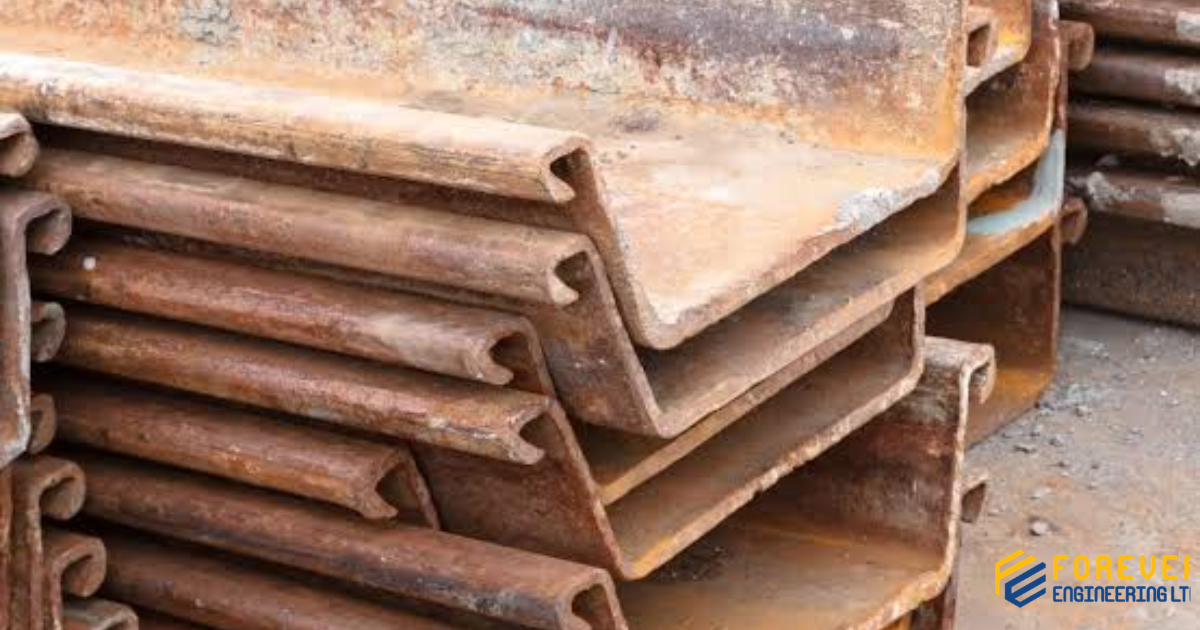
Sheet pile driving methods for different soil types are important to understand before starting a foundation or excavation project. Soil conditions affect how easily sheet piles enter the ground, which equipment is suitable, and how the installation process should be managed. A method that works well in soft clay may not be suitable for dense sand or gravel. Choosing the right installation method helps reduce delays, limit pile damage, and improve construction safety. Forever Engineering Ltd. understands the importance of selecting suitable sheet pile solutions based on project requirements and ground conditions.
What Are Sheet Pile Driving Methods?
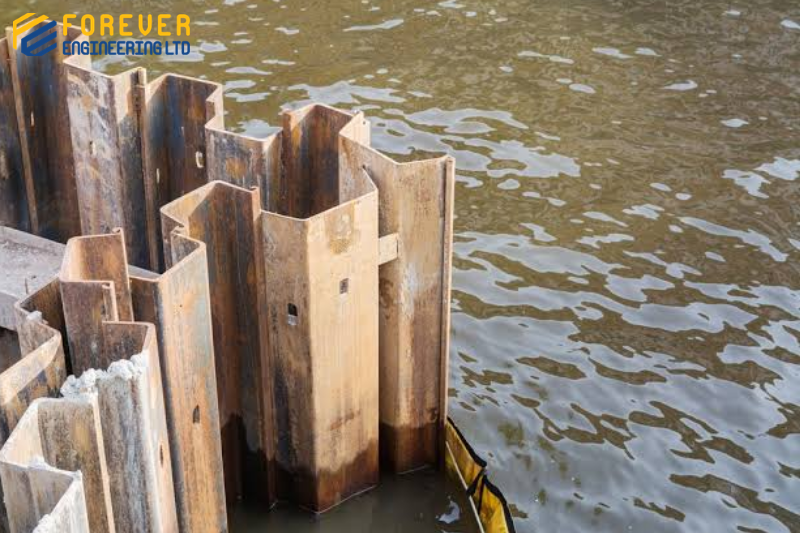
Sheet pile driving methods are techniques used to install interlocking steel sheets into the ground to create a continuous wall. These walls are commonly used for excavation support, basement construction, riverbank protection, cofferdams, and other foundation works. The main methods include impact hammer driving, vibratory hammer driving, and hydraulic press-in installation. The choice depends on soil conditions, pile specifications, nearby structures, noise restrictions, and the required installation depth.
Why Does Soil Type Matter in Sheet Pile Installation?
Soil type affects the resistance a sheet pile faces while entering the ground. Soft soil usually offers less penetration resistance, while dense sand, gravel, and hard soil layers can make installation more difficult. Groundwater, underground obstructions, and changes between soil layers can also affect the installation process. Engineers should review the soil investigation report before choosing equipment and driving methods. This helps reduce the risk of pile deviation, excessive vibration, and installation delays.
Sheet Pile Driving Methods for Different Soil Types
Different soil conditions require different installation approaches. Engineers and contractors should consider the soil profile, pile design, equipment capacity, and surrounding environment before selecting a method.
- Sheet Pile Driving in Soft Clay: Vibratory hammer driving may be suitable for soft clay because it generally offers lower penetration resistance. Hydraulic press-in systems can also be considered when noise and vibration need to be minimized. Contractors should monitor pile alignment and ground movement during installation.
- Sheet Pile Driving in Sandy Soil: Vibratory hammer driving is commonly used in sandy soil because vibration helps reduce friction between the pile and surrounding sand. In loose or water-bearing sand, contractors should also monitor groundwater movement and the risk of soil loss.
- Sheet Pile Driving in Dense Sand and Gravel: Dense sand and gravel can create high penetration resistance and slow installation. A suitable vibratory hammer or impact hammer may be required, depending on the ground conditions and pile design. Pre-augering may also be considered if obstructions or very dense layers prevent penetration.
- Sheet Pile Driving in Stiff Clay: Stiff clay can create significant resistance during installation. Vibratory driving, impact hammer driving, or hydraulic press-in equipment may be used depending on the soil strength and equipment capacity. Contractors should check penetration progress, pile alignment, and possible pile damage.
- Sheet Pile Driving in Rocky or Hard Ground: Rocky ground and hard soil layers can prevent sheet piles from reaching the required depth using standard driving methods. Pre-augering, drilling, or other approved ground preparation techniques may be necessary to reduce resistance. The method should be selected carefully to avoid ground instability and damage to nearby foundations.
- Sheet Pile Driving in Mixed Soil Layers: Mixed soil layers, such as soft clay over dense sand, can cause sudden changes in penetration resistance. Contractors should select equipment that can handle the expected ground conditions and monitor pile alignment throughout installation. The method may need to be adjusted according to the approved installation plan.
Common Sheet Pile Driving Equipment
The equipment used for sheet pile installation depends on soil resistance, project size, environmental restrictions, and the type of sheet pile.
- Vibratory Hammer: Uses vibration to reduce soil resistance around the pile. It is often used in sand and softer ground where vibration is permitted.
- Impact Hammer: Drives sheet piles through repeated blows. It may be suitable for denser soil or conditions requiring higher driving energy, subject to engineering checks.
- Hydraulic Press-In Machine: Pushes sheet piles into the ground using static force rather than conventional impact driving. It can be useful in noise- and vibration-sensitive areas when ground conditions and equipment capacity allow.
- Service Crane or Lifting Equipment: Lifts and positions sheet piles before installation. Suitable lifting capacity and safe handling procedures are essential.
- Pre-Auger or Drilling Equipment: May be used to prepare the ground where hard layers or high penetration resistance make direct driving difficult. Its use must follow the approved installation plan.
How to Choose the Right Sheet Pile Driving Method
Selecting the right method requires a review of both ground conditions and construction requirements. The following factors help engineers and contractors make an informed decision.
- Soil Investigation Report: Review soil layers, penetration resistance, groundwater levels, and any signs of rock or buried obstructions before selecting equipment.
- Sheet Pile Type and Length: The pile’s section, length, thickness, and strength affect the equipment and driving energy required for installation.
- Nearby Buildings and Structures: Existing foundations, underground utilities, and sensitive structures may limit the use of methods that create significant vibration or ground movement.
- Noise and Vibration Limits: Urban construction sites may require quieter installation techniques, such as hydraulic press-in systems, where technically feasible.
- Required Installation Depth: Deeper piles may encounter changing soil conditions, so equipment must be capable of reaching the required depth without causing excessive stress or damage.
- Project Schedule and Site Access: Equipment availability, working space, lifting access, and installation speed can influence the most practical method.
Step-by-Step Process for Sheet Pile Installation
A planned installation process helps improve accuracy, safety, and productivity across different soil conditions.
Step 1: Review Site Conditions: Study the geotechnical report, site layout, groundwater conditions, underground utilities, and nearby structures before work begins.
Step 2: Select the Installation Method: Choose vibratory driving, impact driving, hydraulic press-in installation, or an approved combination based on soil resistance and project requirements.
Step 3: Prepare the Equipment and Work Area: Check the piling equipment, lifting arrangements, access routes, and safety controls. Confirm that the equipment is suitable for the planned pile dimensions and installation depth.
Step 4: Position the First Sheet Pile: Lift the pile carefully, align it with the guide frame or installation line, and check its vertical position before driving.
Step 5: Install the Sheet Piles: Drive or press the piles into the ground according to the approved method. Monitor penetration, vertical alignment, interlock engagement, and signs of obstruction.
Step 6: Check the Completed Wall: Inspect pile alignment, installed depth, interlocks, and any visible damage. Record installation issues and resolve them according to the engineer’s instructions.
Common Problems During Sheet Pile Driving
Sheet pile installation may face several problems when actual ground conditions differ from expectations. Identifying these issues early helps prevent costly delays and damage.
- Slow Penetration: Dense soil, gravel, or obstructions may prevent the pile from reaching the required depth. The contractor should investigate the cause before changing the equipment or method.
- Pile Deviation: Uneven soil resistance, poor initial alignment, or obstructions can push the pile away from the intended line. Regular alignment checks help identify and correct deviations early.
- Pile Damage: Excessive driving energy or unsuitable installation conditions can damage the pile or its interlocks. The installation method and equipment settings must follow the approved design and manufacturer’s guidance.
- Excessive Vibration: Vibratory or impact driving may affect nearby structures and services. Site monitoring and alternative methods should be considered when vibration limits are a concern.
- Interlock Problems: Poor alignment or damaged interlocks can make it difficult to connect adjacent sheet piles. Correct positioning and inspection during installation help maintain wall continuity.
Safety Precautions During Sheet Pile Installation
Sheet pile driving involves heavy equipment, suspended loads, and changing ground conditions. Proper planning and safety controls are essential for protecting workers and nearby property.
- Inspect Equipment: Check hammers, cranes, lifting accessories, hydraulic systems, and connections before starting work.
- Use Safe Lifting Procedures: Keep workers clear of suspended piles and use approved lifting points and suitable rigging equipment.
- Maintain an Exclusion Zone: Restrict access around the piling machine and lifting area to protect workers from moving equipment and falling objects.
- Monitor Ground Movement: Check nearby structures and ground conditions where installation could cause settlement, vibration, or soil displacement.
- Use Proper Personal Protective Equipment: Workers should wear appropriate helmets, safety footwear, high-visibility clothing, hearing protection, and other required protective equipment.
- Follow the Approved Method Statement: Installation should be supervised by competent personnel and carried out according to the project design, risk assessment, and applicable safety requirements.
Applications of Sheet Pile Installation
Sheet piles are used in many construction and infrastructure projects because they form a continuous wall that can retain soil and, when properly designed, help control groundwater movement.
- Basement Construction: Sheet pile walls can support excavations for basements and underground parking areas.
- Riverbank Protection: They may be used to retain soil and protect river edges from erosion when designed for the site’s hydraulic and geotechnical conditions.
- Cofferdams: Sheet piles can form temporary enclosures for construction work in or near water.
- Road and Bridge Projects: They can provide excavation support around bridge foundations, road structures, and utility works.
- Marine Construction: Sheet pile walls may be used for quay walls, waterfront structures, and other marine applications when designed for the expected loads and exposure conditions.
How Forever Engineering Ltd. Can Help with Sheet Pile Solutions
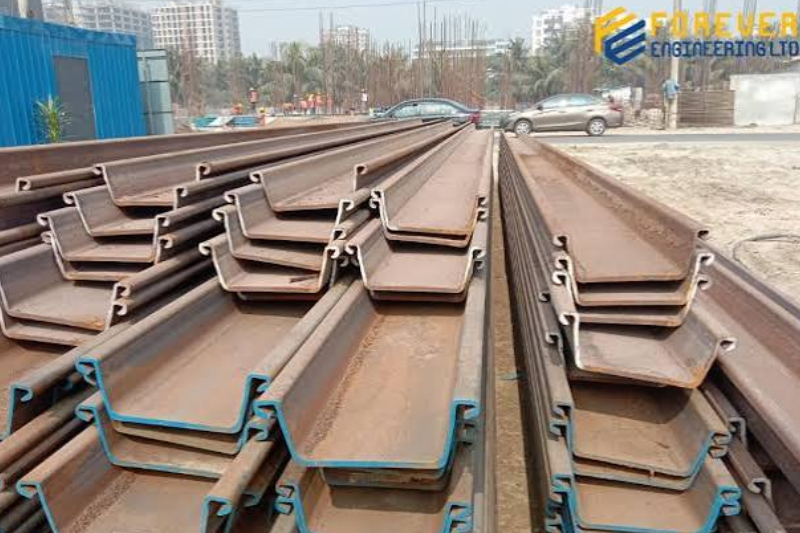
Forever Engineering Ltd. recognizes that successful sheet pile installation starts with understanding the soil conditions and project requirements. Selecting suitable sheet piles and an appropriate installation approach helps contractors plan excavation support and foundation work more effectively. Project teams should consider soil investigation findings, structural requirements, installation equipment, and nearby structures before work begins. For sheet pile supply, project consultation, or pricing information, contact Forever Engineering Ltd. through its website: https://foreverengineeringltd.com/
Conclusion
Sheet pile driving methods for different soil types must be selected according to ground resistance, pile design, installation depth, and site restrictions. Vibratory hammers may suit many sandy and softer ground conditions, while impact driving, hydraulic press-in systems, or approved ground preparation may be needed in more challenging situations. A soil investigation, suitable equipment selection, careful alignment checks, and proper safety measures help improve installation quality. Forever Engineering Ltd. emphasizes the importance of matching sheet pile solutions to project needs for dependable foundation and excavation support.
Frequently Asked Questions (FAQs)
1. Which sheet pile driving method is best for soft soil?
Vibratory driving or hydraulic press-in installation may be suitable for soft soil. The final choice depends on the soil properties, pile design, required depth, and environmental restrictions.
2. Can sheet piles be installed in rocky soil?
Yes, but rocky soil may require specialist methods, such as approved pre-augering or drilling, depending on the rock and obstruction conditions. A geotechnical assessment is important before installation.
3. Is a vibratory hammer suitable for all soil types?
No. Vibratory hammers are commonly used in many sandy and softer ground conditions, but very dense soil, gravel, rock, or sensitive nearby structures may require another approach.
4. Why is soil testing important before sheet pile driving?
Soil testing helps identify soil layers, groundwater conditions, and possible obstructions. This information supports equipment selection, installation planning, and risk reduction.
5. Which sheet pile driving method creates less noise and vibration?
Hydraulic press-in installation generally creates less noise and vibration than conventional impact driving. However, its suitability depends on soil resistance, equipment capacity, and the reaction system available at the site.