
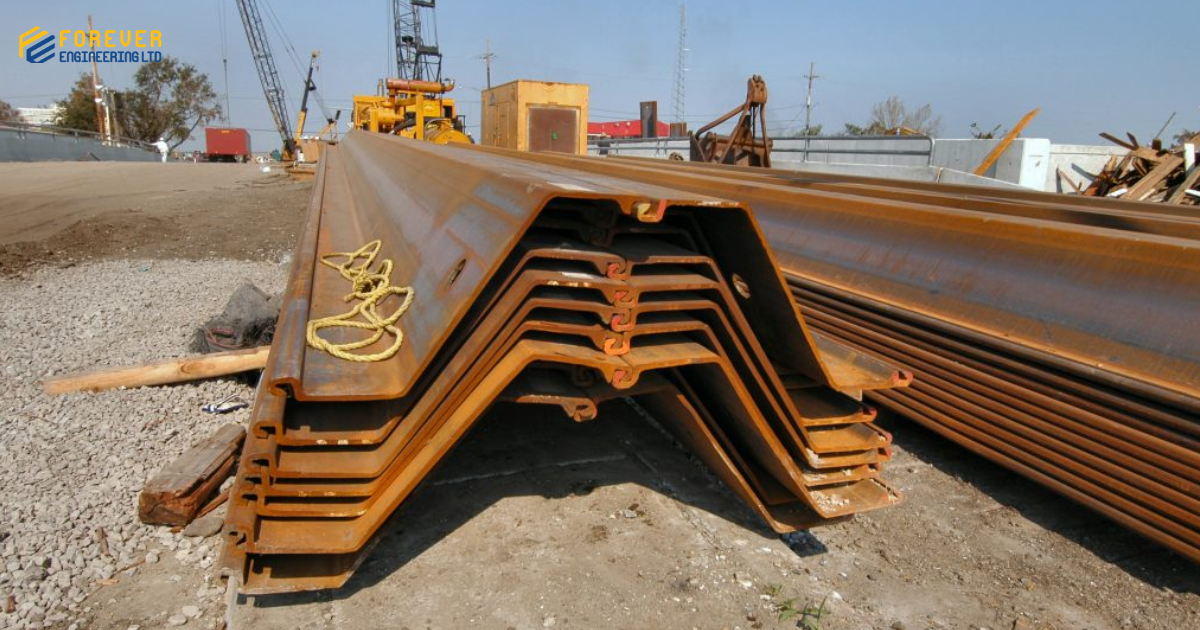
Sheet piles play an important role in modern construction. They provide strong support for soil and help create safe working areas during excavation. Engineers and contractors use them in many projects, including retaining walls, bridge foundations, riverbank protection, ports, basements, and cofferdams. One of the most important factors when selecting a sheet pile is its size. Choosing the correct sheet pile dimensions improves safety, increases strength, and reduces construction costs. A sheet pile that is too small may fail under heavy pressure, while one that is too large may increase the project budget without adding extra value.
At Forever Engineering Ltd., we supply high-quality steel sheet piles for different types of construction projects across Bangladesh. Our experienced engineers help clients select the right dimensions based on soil conditions, project design, and load requirements. This guide explains everything you need to know about sheet pile dimensions, including standard sizes, factors that affect dimensions, and how to choose the right sheet pile for your project.
What Are Sheet Pile Dimensions?
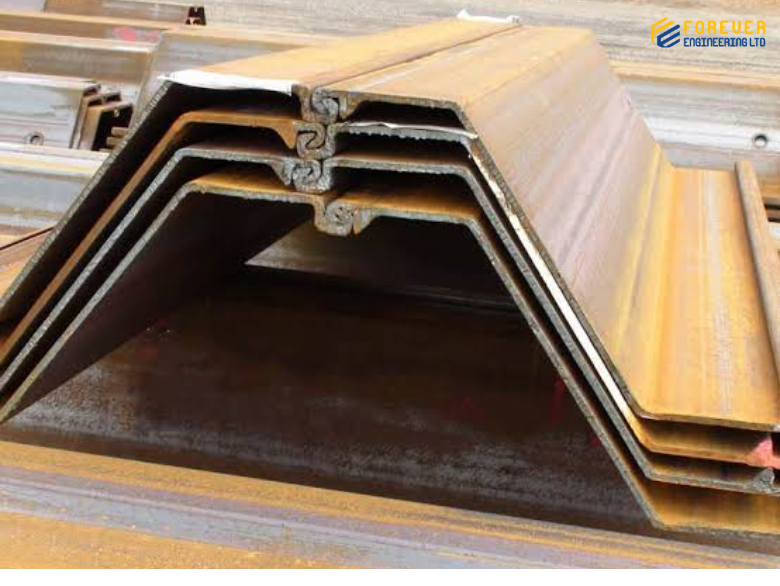
Sheet pile dimensions refer to the physical measurements of a sheet pile. These measurements help engineers determine whether the pile can safely support the required load. The main dimensions include:
- Width
- Height
- Thickness
- Length
- Weight per meter
- Cross-sectional area
- Section modulus
- Moment of inertia
Each dimension affects the performance of the sheet pile. Larger dimensions usually provide higher strength and better resistance against soil pressure. Before selecting any sheet pile, engineers carefully study these measurements to ensure the structure remains stable throughout the project.
Why Are Sheet Pile Dimensions Important?
Selecting the correct sheet pile dimensions is one of the first steps in foundation planning. Proper dimensions improve structural stability and reduce construction risks. Here are some important reasons why dimensions matter.
Understanding the different dimensions helps engineers choose the right pile.
Width
Width refers to the horizontal distance across one sheet pile. A wider sheet pile covers more area with fewer pieces, making installation faster. Common widths range from 400 mm to 900 mm, depending on the manufacturer.
Height
Height refers to the depth of the sheet pile profile. A deeper profile usually provides greater bending resistance. Higher profiles are commonly used for deep excavation and marine construction.
Thickness
Thickness measures the steel plate itself. Thicker steel provides greater durability and higher resistance against corrosion and impact. Projects exposed to seawater often require thicker sheet piles.
Length
Length is the vertical measurement from the top to the bottom of the sheet pile. Standard lengths usually range between the following:
- 6 meters
- 9 meters
- 12 meters
- 15 meters
- 18 meters
- 24 meters
Longer piles provide deeper ground penetration and better stability.
Weight
Weight is generally measured in kilograms per meter. Heavier sheet piles usually provide greater structural strength. However, heavier piles also require larger lifting equipment during installation.
Section Modulus
Section modulus measures the strength of the sheet pile against bending. A larger section modulus means the pile can resist greater soil pressure. This value is especially important for retaining walls.
Moment of Inertia
Moment of inertia measures the stiffness of the sheet pile. Higher stiffness reduces bending and movement during construction. Engineers use this value when designing permanent retaining structures.
Standard Sheet Pile Dimensions
Although dimensions vary by manufacturer, most steel sheet piles follow common industry standards.
Typical dimensions include the following:
| Dimension | Common Range |
| Width | 400 mm to 900 mm |
| Height | 100 mm to 450 mm |
| Thickness | 8 mm to 25 mm |
| Length | 6 m to 24 m |
| Weight | 40 kg/m to 150 kg/m |
These dimensions may change depending on project requirements and design standards. For special infrastructure projects, custom dimensions may also be available.
Different Types of Sheet Piles and Their Dimensions
Different sheet pile profiles have different dimensions and applications.
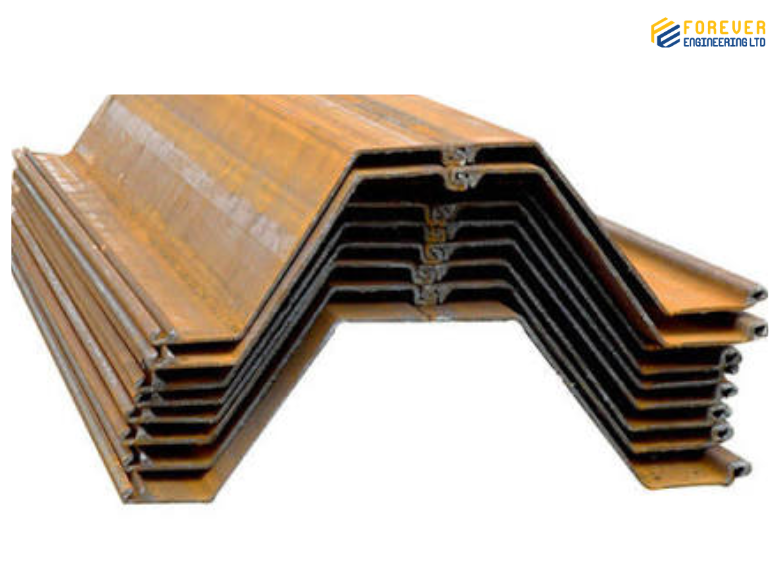
U Type Sheet Piles
U type sheet piles are among the most widely used profiles. They provide excellent bending resistance and are suitable for:
- Riverbank protection
- Basement construction
- Bridge foundations
- Retaining walls
Their width generally ranges from 500 mm to 750 mm. Their thickness depends on the required strength.
Z Type Sheet Piles
Z type sheet piles provide a higher strength-to-weight ratio. They are commonly used in:
- Marine structures
- Deep excavation
- Port construction
- Large retaining walls
Their wider profile allows better distribution of soil pressure. Their dimensions vary according to project requirements.
Straight Web Sheet Piles
Straight web sheet piles mainly resist water pressure. They are widely used in:
- Circular cofferdams
- Water treatment plants
- Marine construction
These piles have different locking systems compared to U and Z profiles.
Box Sheet Piles
Box sheet piles consist of two or more sheet piles connected together. They provide higher stiffness for large projects. These are suitable for:
- Heavy industrial construction
- Large retaining walls
- Port structures
Their overall dimensions are larger than standard sheet piles.
Factors That Affect Sheet Pile Dimensions
Many factors influence the selection of sheet pile dimensions. Engineers study the site before deciding which size will provide the best performance.
Soil Condition
The type of soil is one of the most important factors. Soft clay, loose sand, and filled land require different sheet pile dimensions than hard or rocky soil. Weak soil often needs deeper and stronger sheet piles to provide enough support.
A soil investigation helps engineers understand the ground conditions before construction begins.
Excavation Depth
The deeper the excavation, the stronger the sheet pile should be. Deep excavations create higher earth pressure. Larger sheet pile dimensions help resist this pressure and keep the excavation safe. For shallow projects, smaller sheet piles may be enough. Large commercial or industrial projects usually require longer and heavier sheet piles.
Water Pressure
Projects near rivers, lakes, canals, or coastal areas experience water pressure in addition to soil pressure. In these situations, engineers often select thicker and stronger sheet piles. Proper dimensions help prevent movement and water leakage. Marine projects usually require sheet piles with higher strength and better corrosion resistance.
Load Requirements
Every construction project has different loading conditions. Some retaining walls only support soil, while others support roads, buildings, or heavy machinery. Higher loads require larger sheet pile dimensions to maintain stability.
Project Duration
Temporary and permanent structures often require different sheet pile sizes. Temporary projects may use lighter sheet piles because they remain in the ground for a short period. Permanent structures usually require stronger dimensions to provide long-term performance.
Corrosion Conditions
Steel sheet piles installed in seawater or chemical environments face a higher risk of corrosion. Engineers may select thicker sheet piles to allow for corrosion over time. Protective coatings also help increase the service life.
How to Choose the Right Sheet Pile Dimensions
Choosing the correct sheet pile dimensions requires careful planning. Every construction project has unique requirements. Here are the main steps engineers follow.
Perform a Soil Investigation
The first step is understanding the ground conditions.
Engineers conduct soil tests to determine:
- Soil type
- Groundwater level
- Bearing capacity
- Soil strength
These results help determine the required sheet pile dimensions.
Calculate Earth’s Pressure
Earth pressure changes depending on soil type and excavation depth. Engineers calculate both active and passive earth pressure before selecting sheet piles. Accurate calculations help avoid unnecessary construction costs.
Consider groundwater
Groundwater can reduce soil stability. Projects below the water table often require longer sheet piles to prevent water movement. Proper dimensions improve safety during excavation.
Review Structural Design
Structural engineers calculate the following:
- Bending moment
- Shear force
- Deflection
- Overall stability
These calculations determine the required section modulus and moment of inertia.
Select the Appropriate Profile
Different sheet pile profiles provide different strengths. Engineers compare U type, Z type, and other profiles before making the final decision. The selected profile should match both the project requirements and the site conditions.
Consult an Experienced Supplier
Working with an experienced supplier makes the selection process easier.
At Forever Engineering Ltd., our engineering team helps clients choose the right sheet pile dimensions for every project. We review the project drawings, soil conditions, and design requirements before recommending the most suitable sheet pile solution.
Common Applications Based on Sheet Pile Dimensions
Different projects require different sheet pile sizes.
Basement Excavation
High-rise buildings often require deep basements. Large sheet pile dimensions provide strong support during excavation and protect nearby buildings from soil movement.
Retaining Walls
Retaining walls hold back soil on roads, highways, and commercial sites. The required dimensions depend on wall height and soil pressure. Higher walls usually require stronger sheet piles.
Bridge Foundations
Bridge construction places heavy loads on the foundation. Engineers select larger sheet pile dimensions to improve stability during construction.
Cofferdams
Cofferdams create dry working areas in rivers and lakes. These structures require sheet piles that can resist both soil pressure and water pressure. Longer sheet piles are often used for deeper water.
Riverbank Protection
Riverbanks experience erosion due to flowing water. Steel sheet piles help stabilize the soil and protect the shoreline. The dimensions depend on water depth, soil condition, and flow speed.
Marine Construction
Ports, docks, and jetties require strong sheet piles. Marine environments expose steel to continuous water pressure and corrosion. Engineers often choose thicker sheet piles with higher strength for these projects.
Industrial Buildings
Factories and warehouses often require strong foundations because they support heavy equipment. Proper sheet pile dimensions improve foundation stability and reduce settlement.
Sheet Pile Dimensions for Construction Projects in Bangladesh
Construction projects in Bangladesh face many challenges, including soft soil, seasonal flooding, and high groundwater levels. Because of these conditions, selecting the correct sheet pile dimensions is very important. Projects in Dhaka, Chattogram, Khulna, and other major cities often require sheet piles for:
- Basement excavation
- Flyover construction
- Riverbank protection
- Bridge foundations
- Industrial developments
- Port construction
- Flood control projects
Every site has different soil conditions. A detailed engineering assessment helps determine the correct sheet pile dimensions before installation.
Forever Engineering Ltd. supplies high-quality steel sheet piles for projects across Bangladesh. Our experienced engineers recommend the most suitable dimensions based on the project design and site requirements.
Benefits of Choosing the Right Sheet Pile Dimensions
Selecting the correct sheet pile dimensions provides many advantages throughout the construction process. It improves safety, reduces costs, and increases the overall performance of the structure.
Stronger Structural Stability
Proper sheet pile dimensions provide better resistance against soil pressure and water pressure. This helps the retaining structure remain stable throughout construction. Strong sheet piles reduce the risk of movement, settlement, or failure.
Better Construction Safety
Safety is always a top priority on any construction site. Correctly sized sheet piles help prevent soil collapse during excavation. They also create a safer working environment for engineers, workers, and equipment. This is especially important for deep foundation projects.
Lower Maintenance Costs
High-quality sheet piles with suitable dimensions require less maintenance over time. Proper dimensions reduce bending, deformation, and structural damage, which lowers repair costs.
Faster Installation
Choosing the right dimensions helps contractors complete installation more efficiently. The correct size allows piling equipment to work smoothly and reduces unnecessary delays during construction.
Improved Project Performance
Proper sheet pile dimensions improve the overall quality of the foundation. The structure becomes stronger, more durable, and more reliable throughout its service life.
Cost-Effective Construction
Many people think larger sheet piles always provide better performance. However, oversized sheet piles increase material and transportation costs. Choosing the correct dimensions helps balance safety and project cost.
Common Mistakes When Selecting Sheet Pile Dimensions
Selecting sheet piles without proper planning can create serious construction problems. Here are some common mistakes to avoid.
Ignoring Soil Investigation
Some projects begin without a detailed soil investigation. Without understanding the soil condition, engineers may choose the wrong sheet pile dimensions. This can lead to foundation movement and higher construction costs.
Choosing Based Only on Price
Lower-cost sheet piles may seem attractive at first. However, selecting dimensions based only on price can reduce structural safety. Quality and engineering requirements should always come first.
Using the Same Dimensions for Every Project
Every construction project is different. A sheet pile that works well for one site may not perform well at another location. Always select dimensions according to the project requirements.
Ignoring Groundwater Conditions
Groundwater increases pressure on retaining structures. Projects near rivers, lakes, or coastal areas often require longer and stronger sheet piles. Ignoring groundwater can affect foundation stability.
Not Consulting Experts
Professional engineering advice helps avoid costly mistakes. Experienced suppliers understand different construction conditions and recommend suitable sheet pile dimensions. Working with experts saves both time and money.
Why Choose Forever Engineering Ltd. for Sheet Pile Solutions?
Forever Engineering Ltd. is one of the trusted companies providing complete sheet pile solutions in Bangladesh. We supply high-quality steel sheet piles for residential, commercial, industrial, and government construction projects. Our experienced engineers work closely with contractors, developers, and project owners to recommend the most suitable sheet pile dimensions based on project requirements. We focus on delivering reliable products and professional engineering support from the beginning of the project until completion.
Our Services Include
- Steel sheet pile supply
- Sheet pile installation
- Sheet pile rental
- Sheet pile driving
- Basement excavation support
- Cofferdam construction
- Retaining wall solutions
- Riverbank protection
- Marine construction support
- Engineering consultation
Our goal is to help every client complete their project safely, efficiently, and within budget.
Get a Free Quotation from Forever Engineering Ltd.
Every construction project has different foundation requirements. Choosing the correct sheet pile dimensions is important for ensuring safety, durability, and cost-effective construction.
At Forever Engineering Ltd., our experienced engineers carefully review your project drawings, soil conditions, and construction requirements before recommending the most suitable sheet pile solution. Whether you need steel sheet pile supply, installation, rental, or complete engineering support, our team is ready to assist you with professional service and competitive pricing.
Contact Forever Engineering Ltd. at +880 1711-457346 to discuss the project and receive a free quotation.
Frequently Asked Questions
1. What are sheet pile dimensions?
Sheet pile dimensions refer to the measurements of a sheet pile, including its width, height, thickness, length, weight, section modulus, and moment of inertia. These dimensions determine the strength and performance of the sheet pile.
2. Why are sheet pile dimensions important?
Proper sheet pile dimensions improve structural stability, increase construction safety, and help reduce maintenance costs. They also ensure the retaining structure performs well under soil and water pressure.
3. What is the standard length of steel sheet piles?
Steel sheet piles are commonly available in lengths ranging from 6 meters to 24 meters. The required length depends on the excavation depth and soil conditions.
4. How do engineers choose the right sheet pile dimensions?
Engineers study soil conditions, groundwater level, structural load, excavation depth, and project design before selecting the appropriate sheet pile dimensions.
5. Which projects require steel sheet piles?
Steel sheet piles are widely used in bridge construction, basement excavation, retaining walls, cofferdams, riverbank protection, marine structures, industrial buildings, ports, and infrastructure development projects.