
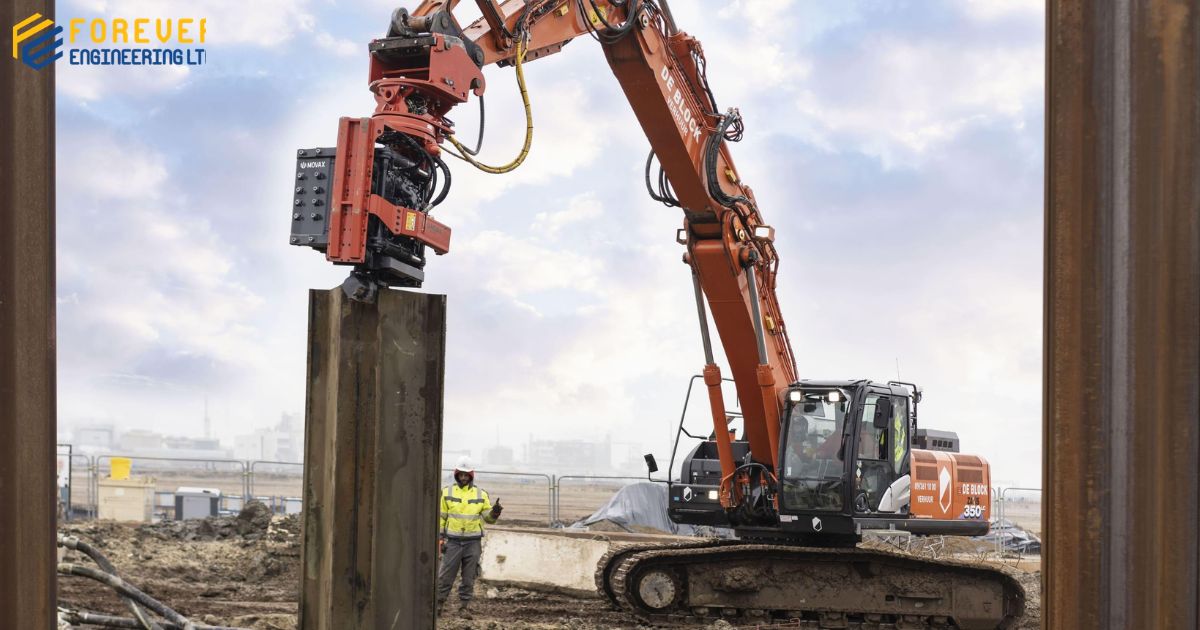
Right LHV Machine Selection helps contractors and engineers choose suitable equipment for their sheet pile projects. An LHV machine uses hydraulic power and vibration to drive sheet piles into the ground. The correct machine can help reduce soil resistance and make pile installation easier. However, not every LHV machine is suitable for every project. Different sites have different soil conditions, pile sizes, and working limitations. In this guide, Forever Engineering Ltd. explains the important factors to consider when selecting an LHV machine for sheet pile installation.
What Is an LHV Machine?
An LHV machine is a hydraulic vibratory hammer used for driving sheet piles into the ground. It creates vibration through a hydraulic system, which helps reduce the resistance between the pile and the surrounding soil. As a result, the sheet pile can move into the ground more easily. An LHV machine generally includes a vibration unit, hydraulic motor, clamping system, and hydraulic power source. Depending on its design, it may be operated with a crane or a compatible excavator. Some machines can also be used for sheet pile extraction. LHV machines are commonly considered for projects such as basement construction, riverbank protection, excavation support, and infrastructure development. The machine setup depends on the project requirements and site conditions.
Why Is Right LHV Machine Selection Important?
Choosing the right LHV machine helps keep sheet pile installation safe and efficient. A machine with insufficient capacity may struggle to drive piles to the required depth. It can also face continuous operating pressure, which may affect productivity and increase the risk of equipment problems.
On the other hand, using a machine that is larger than necessary can increase transportation, setup, and operating costs. Proper selection helps contractors balance machine performance, project requirements, and budget. The correct machine also needs a suitable clamping system and hydraulic power supply. These parts work together to transfer vibration to the sheet pile. If they are not compatible, the machine may not perform as expected.
Important Factors for Right LHV Machine Selection
Before choosing an LHV machine, contractors and engineers should check the following factors carefully.
- Sheet Pile Size: Check the length, width, thickness, profile, and weight of the sheet piles. The machine must have a suitable clamping system that can hold the pile securely during driving.
- Soil Condition: Examine the soil type at the project site. Loose sand, soft clay, dense sand, and hard soil create different levels of driving resistance. The selected machine should have suitable performance for the expected ground conditions.
- Required Installation Depth: Consider how deep the sheet piles need to go into the ground. Longer piles and greater installation depths may require a suitable machine capacity and installation arrangement.
- Machine Capacity: Check the machine’s operating capacity and vibration performance. The equipment should be able to handle the pile size and expected soil resistance without continuous overloading.
- Centrifugal Force: Centrifugal force is an important factor in vibratory hammer performance. It helps create the vibration needed for pile driving. The required force depends on the pile size, soil condition, and project requirements.
- Hydraulic Power and Oil Flow: Check the hydraulic pressure and oil flow required by the machine. The hydraulic power pack or carrier must be able to supply the correct power for stable operation.
- Clamping System: Make sure the clamp is suitable for the sheet pile profile and dimensions. A secure grip helps transfer vibration from the machine to the pile and reduces the risk of slipping during operation.
- Site Access and Working Space: Check the available working area before selecting the machine. Narrow sites, limited crane access, overhead restrictions, and nearby structures may affect the type and size of equipment that can be used.
- Nearby Buildings and Structures: Consider the distance between the installation area and nearby buildings, roads, and underground utilities. Vibration may affect surrounding structures, so engineers should review the risks before starting work.
- Machine Weight and Lifting Capacity: Check the total machine weight and the lifting capacity of the crane or carrier. The supporting equipment must be suitable for safe lifting and operation.
- Project Time and Budget: Consider the project schedule, rental or purchase cost, transportation, setup, and operating expenses. The selected machine should meet the technical requirements while keeping the project within budget.
Different LHV Machine Setups for Sheet Pile Installation
LHV machines can work with different supporting equipment depending on their design and project requirements. The correct setup depends on the machine specifications, pile dimensions, site access, and lifting arrangements.
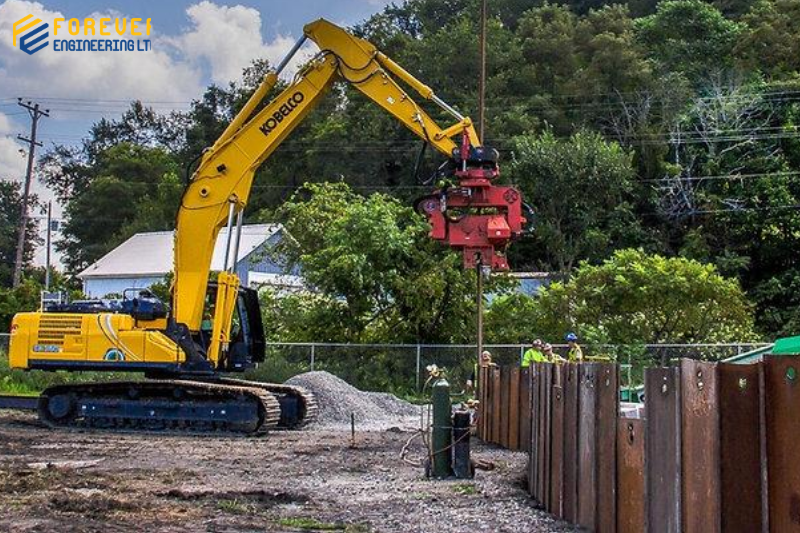
- Crane-Suspended LHV Machine: A crane can lift and position a compatible LHV machine over the sheet pile. This setup can be useful when piles need to be installed at different locations. The crane must have enough lifting capacity and a suitable working radius.
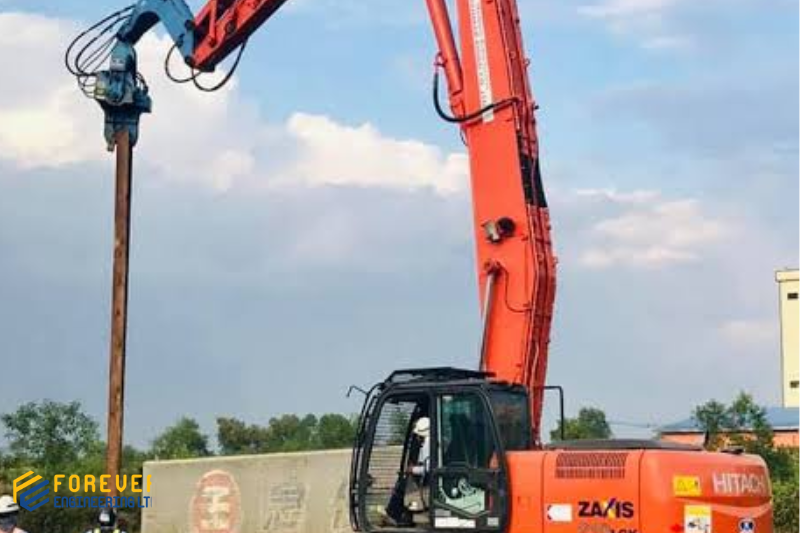
- Excavator-Mounted Vibratory Hammer: Some hydraulic vibratory hammers are designed to work with compatible excavators. This arrangement can be useful on sites where an excavator can move and position the equipment easily. The excavator’s hydraulic system and lifting capacity must match the attachment requirements.
- Hydraulic Power Pack System: Some LHV machines use a separate hydraulic power pack. It supplies the hydraulic energy required to operate the machine. The power pack must provide the pressure and oil flow specified for the selected equipment.
Not every LHV machine supports all these arrangements. Contractors should check the machine specifications and manufacturer instructions before choosing a setup.
How to Check an LHV Machine Before Selection
After identifying the project requirements, contractors should review the machine’s technical specifications and physical condition. This step helps reduce the chance of equipment problems during installation.
- Review Technical Specifications: Check the machine’s operating weight, centrifugal force, frequency, hydraulic pressure, oil flow, and clamping capacity. Compare these details with the sheet pile and project requirements.
- Inspect the Hydraulic System: Check the hydraulic hoses, connections, seals, and other visible parts. Damaged hoses or leaking connections can affect machine performance and create safety risks.
- Check the Clamp: Inspect the clamping jaws and gripping surfaces. The clamp should hold the sheet pile securely without slipping or causing unnecessary damage.
- Check Supporting Equipment: Confirm that the crane, excavator, or hydraulic power pack is suitable for the selected machine. All equipment should be compatible with the required operating arrangement.
- Review Maintenance Records: If the machine is rented or previously used, check its maintenance history and service condition. Regular maintenance helps reduce the risk of unexpected breakdowns.
- Confirm Spare Parts and Technical Support: Check whether important spare parts and technical support are available. This can help reduce delays if maintenance or repair becomes necessary.
Common Mistakes During LHV Machine Selection
Some projects face delays because equipment is selected without checking the actual site and technical requirements. Avoiding these common mistakes can make the installation process easier.
- Choosing Only by Price: Selecting a machine only because it has a lower rental or purchase cost can create problems later. Always compare its technical capacity with the actual project requirements.
- Ignoring Soil Conditions: Using the same machine for every type of soil is not a good approach. Soil resistance can change driving performance, so a proper soil assessment is important.
- Ignoring Sheet Pile Dimensions: A machine may have enough vibration power but an unsuitable clamp. Always check whether the clamping system can safely hold the selected pile profile.
- Overlooking Hydraulic Requirements: If the hydraulic power source cannot provide the required pressure and oil flow, the machine may not perform properly. Check compatibility before starting work.
- Not Checking Site Access: A large machine may not be suitable for a narrow or restricted site. Review access roads, working space, and lifting arrangements before bringing the equipment to the project.
- Skipping Equipment Inspection: Starting work without checking the machine can lead to unexpected problems. Inspect the hydraulic system, clamp, connections, and supporting equipment before operation.
Safety Considerations When Using an LHV Machine
Safe operation is essential during sheet pile installation. LHV machines create vibration and involve heavy lifting equipment, so workers must follow proper safety procedures.
- Check Ground Stability: Make sure the crane or excavator is working on stable ground. Weak or uneven ground can affect equipment stability during lifting and installation.
- Use Proper Lifting Arrangements: Use suitable lifting points and approved lifting accessories. Never exceed the rated capacity of the crane or supporting equipment.
- Secure the Sheet Pile: Make sure the clamp grips the sheet pile correctly before lifting or driving. A loose grip can allow the pile to slip and cause an accident.
- Keep Workers at a Safe Distance: Keep unnecessary workers away from the installation area. Only trained and authorised workers should remain near the operating equipment.
- Monitor Vibration: Pay attention to vibration effects on nearby buildings, roads, and underground services. Stop and review the work if unexpected movement or damage is noticed.
- Follow Manufacturer Instructions: Operate the machine according to its technical manual and safety requirements. Trained operators should handle the equipment.
How Forever Engineering Ltd. Supports Sheet Pile Projects
Forever Engineering Ltd. understands that selecting suitable equipment is an important part of sheet pile installation. Every project has different requirements, including soil conditions, pile dimensions, installation depth, and site limitations. These details should be checked before deciding which machine and installation method are suitable. Proper planning helps contractors avoid equipment mismatches and unnecessary delays. Forever Engineering Ltd. can provide sheet pile-related consultation and technical support to help contractors, consultants, and project owners understand their project requirements. Whether the work involves excavation support, basement construction, riverbank protection, or infrastructure development, the equipment selection process should begin with a clear understanding of the site and engineering requirements.
Conclusion
Right LHV Machine Selection is important for safe, efficient, and cost-effective sheet pile installation. Before choosing a machine, contractors should consider sheet pile dimensions, soil conditions, installation depth, machine capacity, hydraulic requirements, and site access. It is also important to check the clamping system, supporting equipment, and machine condition before starting work. A suitable machine can reduce installation difficulties and help the project move forward smoothly. Forever Engineering Ltd. encourages proper project assessment and equipment selection to support dependable sheet pile solutions.
Frequently Asked Questions
1. What is an LHV machine used for?
An LHV machine is mainly used for driving sheet piles into the ground through hydraulic vibration. Some compatible machines can also be used for sheet pile extraction.
2. What factors are important for Right LHV Machine Selection?
The main factors include sheet pile size, soil condition, installation depth, centrifugal force, hydraulic power, clamping capacity, machine weight, and site access.
3. Can an LHV machine work in hard soil?
It depends on the soil resistance, machine capacity, pile dimensions, and installation method. A soil assessment is necessary to determine whether the selected machine is suitable.
4. What is the role of centrifugal force in an LHV machine?
Centrifugal force helps create the vibration used to drive sheet piles into the ground. The required force depends on the soil condition and project requirements.
5. Can an LHV machine be attached to an excavator?
Some hydraulic vibratory hammers are designed for excavator mounting. However, the excavator’s hydraulic system, lifting capacity, and attachment compatibility must be checked first.
6. Why should hydraulic oil flow be checked before using an LHV machine?
The machine needs the correct hydraulic pressure and oil flow to operate properly. An incompatible power source can reduce performance or cause operating problems.
7. How can I select the right LHV machine for my project?
Start by checking the soil report, sheet pile dimensions, required installation depth, and site conditions. Then compare these requirements with the machine’s technical specifications.