
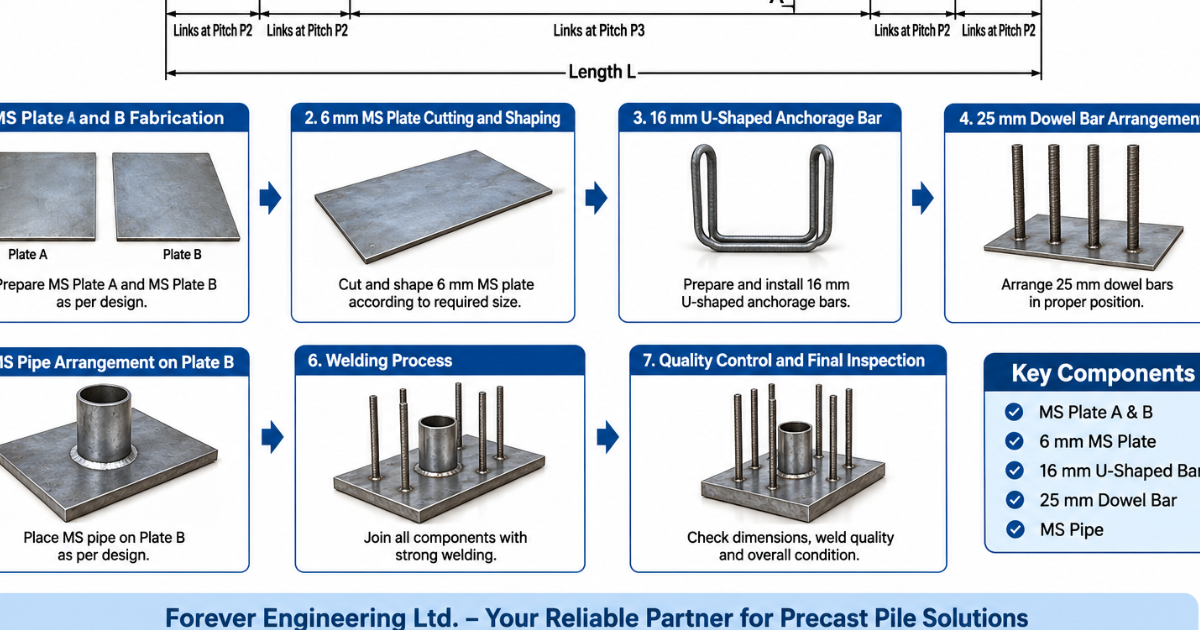
The precast pile joint plate manufacturing process includes several steps, such as MS plate fabrication, steel plate cutting and shaping, anchorage bar installation, dowel bar arrangement, pipe fitting, and welding. Each component must be prepared according to the required measurements and design. Proper fabrication is important because incorrect measurements or weak welding can create problems during pile installation. Forever Engineering Ltd. understands the importance of proper fabrication and quality checking in precast pile production. This article explains the main steps involved in manufacturing precast pile joint plates, from preparing the steel components to final inspection.
What Is a Precast Pile Joint Plate?
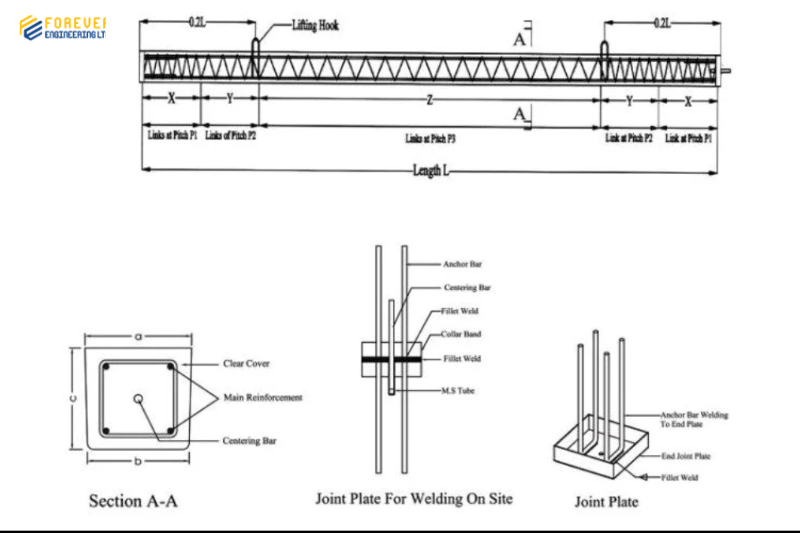
A precast pile joint plate is a steel component used to connect two precast concrete pile sections. It is fitted at the end of a pile section during the manufacturing process. When two pile sections are joined at the construction site, the joint plates help create a connection between them. A joint plate may include MS plates, U-shaped anchorage bars, dowel bars, and MS pipes. These components are arranged and welded according to the approved design. The size, thickness, and position of each part depend on the pile specifications and joint design.
Precast Pile Joint Plate Manufacturing Process
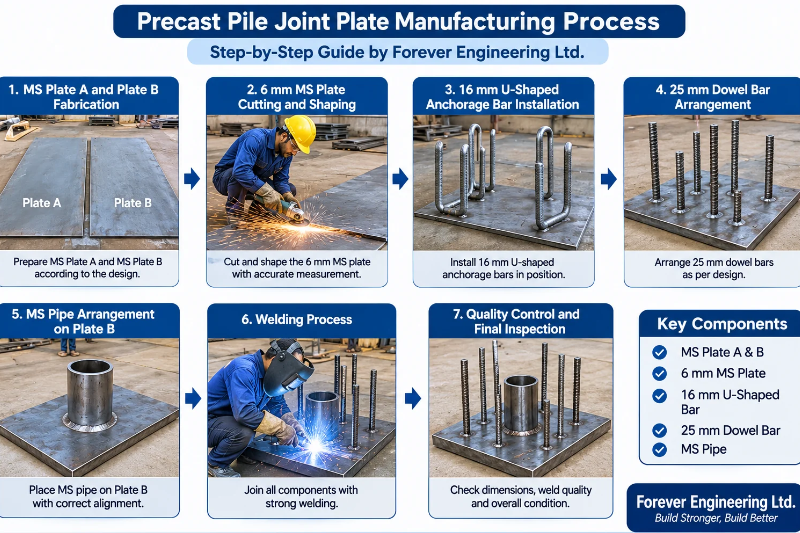
The manufacturing process requires careful cutting, shaping, fitting, and welding. Each component must be prepared properly before the final assembly. The main steps are described below.
- MS Plate A and Plate B Fabrication: The first step is preparing MS Plate A and MS Plate B according to the required dimensions and design. Workers check the fabrication drawing and mark the cutting positions on the steel plates. The shape and size of each plate must be correct so that the other components can be fitted properly. Accurate measurement at this stage helps reduce mistakes during assembly.
- 6 mm MS Plate Cutting and Shaping: The 6 mm MS plate is cut according to the required size and shape. Workers use suitable cutting tools to prepare the plate pieces based on the fabrication drawing. After cutting, the edges are checked and shaped where necessary. Correct cutting and shaping help the plate fit with the other steel components during assembly.
- 16 mm U-Shaped Anchorage Bar Installation: The 16 mm U-shaped anchorage bars are prepared and placed in their specified positions. These bars help anchor the joint plate inside the concrete pile. Their shape, spacing, and position must follow the approved design. Workers should check the size and position of each bar before fixing it in place.
- 25 mm Dowel Bar Arrangement: The 25 mm dowel bars are arranged according to the joint design. These bars form an important part of the connection between the pile sections. Workers must check their position, spacing, and alignment before welding. Proper arrangement helps ensure that the joint components fit together as planned.
- MS Pipe Arrangement on Plate B: The MS pipe is placed on Plate B according to the required design and measurements. Workers check its position and alignment before fixing it in place. Correct positioning helps the pipe fit with the other joint components and prevents fitting problems during assembly.
- Welding Process: After arranging all the components, the welding process begins. The MS plates, anchorage bars, dowel bars, and MS pipe are joined according to the approved fabrication drawing. Before welding, workers check the position of each component. Proper welding helps keep the steel parts firmly connected. Weak or incomplete welds can affect the quality of the finished joint plate.
- Quality Control and Final Inspection: After welding, the completed joint plate is inspected before it is used in pile production. Workers check the plate dimensions, welding quality, bar positions, pipe alignment, and overall condition. Any visible defects or measurement problems should be corrected before the joint plate moves to the next production stage.
Why Is Quality Important in Joint Plate Manufacturing?
The quality of a precast pile joint plate affects how properly two pile sections connect. If the plates are not fabricated according to the required design, the pile sections may not fit together correctly. Poor welding, incorrect measurements, or misplaced bars can also create problems during pile installation. Proper fabrication helps reduce these risks. Each component needs to be checked during the manufacturing process. Cutting, shaping, fitting, and welding should follow the approved design. Final inspection is also important to make sure the completed joint plate meets the required specifications.
Common Problems During Joint Plate Manufacturing
Several problems can occur during the fabrication process if workers do not follow the required measurements and assembly instructions. These issues can affect the final shape, fitting, and quality of the joint plate.
- Incorrect Plate Size: Wrong measurements can make the joint plate difficult to fit into the pile mold. Workers should check the dimensions before and after cutting.
- Poor Welding: Weak or incomplete welding can affect the connection between steel components. Welded areas should be checked carefully before the plate is approved.
- Wrong Bar Position: Incorrect placement of anchorage bars or dowel bars can affect the joint arrangement. Workers should follow the fabrication drawing during fitting.
- Misaligned MS Pipe: If the MS pipe is not placed correctly on Plate B, it may create problems during assembly. Its position should be checked before welding.
- Uneven Plate Shape: Improper cutting or shaping can affect the overall dimensions of the joint plate. Accurate marking and careful fabrication help avoid this problem.
- Lack of Inspection: Skipping quality checks can allow fabrication defects to pass to the next production stage. Every completed joint plate should be inspected before use.
Precast Pile Joint Plate Manufacturing by Forever Engineering Ltd.
Forever Engineering Ltd. understands that precast pile joint plates need proper fabrication and careful inspection. Each component, including MS plates, U-shaped anchorage bars, dowel bars, and MS pipes, must be prepared according to the required design. The main fabrication stages include plate cutting, shaping, component arrangement, welding, and final inspection. Careful attention to these steps helps maintain consistency and reduce common fabrication problems. For precast pile joint plate manufacturing, technical discussion, or project requirements, customers can contact Forever Engineering Ltd. to discuss their needs.
Conclusion
The precast pile joint plate manufacturing process involves several important steps. These include MS Plate A and Plate B fabrication, 6 mm MS plate cutting and shaping, 16 mm U-shaped anchorage bar installation, 25 mm dowel bar arrangement, MS pipe arrangement on Plate B, and welding. Every component must be prepared and positioned according to the approved design. Proper welding and final inspection are also important for maintaining joint plate quality. By following each manufacturing step carefully, manufacturers can prepare joint plates that support proper connections between precast pile sections.
Frequently Asked Questions (FAQs)
- What is a precast pile joint plate?
A precast pile joint plate is a steel component used to connect two precast concrete pile sections during installation.
- What materials are used in precast pile joint plate manufacturing?
The main components in this process include MS plates, 16 mm U-shaped anchorage bars, 25 mm dowel bars, and MS pipes.
- What is the purpose of U-shaped anchorage bars?
U-shaped anchorage bars help anchor the joint plate inside the concrete pile. Their size and position must follow the approved design.
- Why are dowel bars used in pile joint plates?
Dowel bars form part of the connection between pile sections. Their size, spacing, and position depend on the joint design.
- Why is welding important in joint plate manufacturing?
Welding connects the different steel components. Proper welding helps keep the components firmly joined and supports the quality of the finished plate.
- What should be checked during the final inspection?
The final inspection should include plate dimensions, bar positions, pipe alignment, weld quality, and the overall condition of the joint plate.