
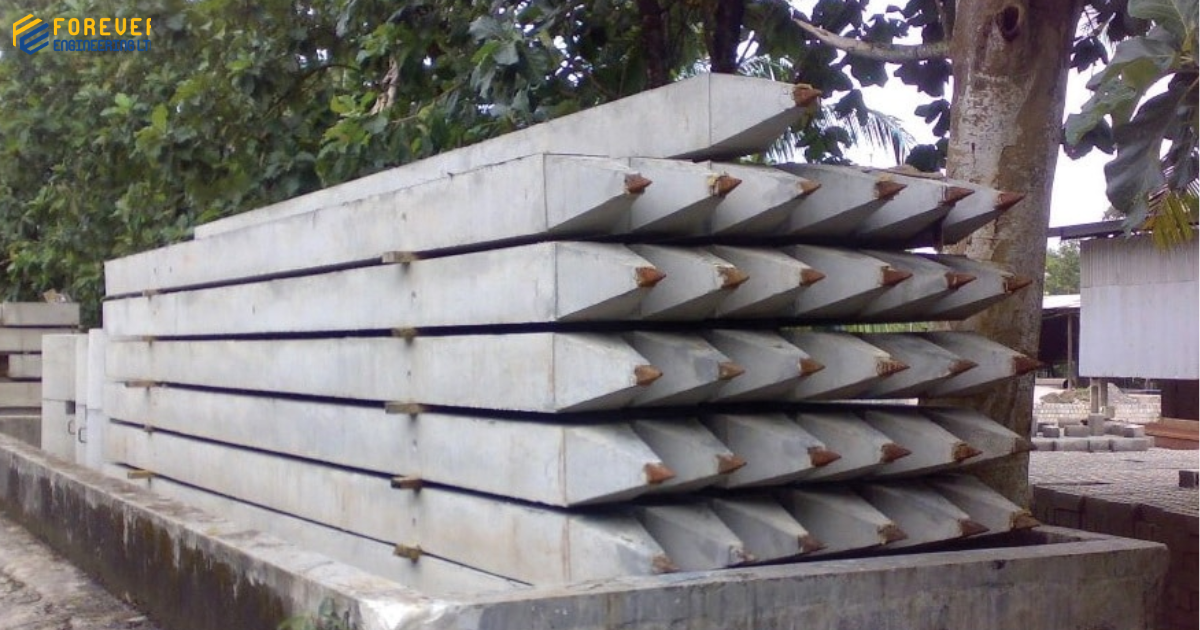
The precast pile casting process is an important part of producing strong and durable precast concrete piles for deep foundation construction. Precast piles are made before they are transported to the construction site and driven into the ground using suitable pile-driving equipment.
A proper casting process helps control pile dimensions, reinforcement placement, concrete quality, curing, and surface condition. The main production stages include reinforcement preparation, mold preparation, concrete mixing, casting, compaction, curing, demoulding, inspection, and storage.
Forever Engineering Ltd. provides precast pile making, casting, and driving services for construction projects in Bangladesh. The company supports projects with precast pile solutions and suitable piling equipment.
What Is the Precast Pile Casting Process?
The precast pile casting process means producing reinforced concrete piles in a controlled casting area before transporting and installing them at the construction site.
The process starts with preparing the reinforcement and mold. Concrete is then mixed according to the required specification and placed into the mold. Proper compaction removes unwanted air pockets and helps produce a dense concrete pile. After casting, the pile is cured until it reaches the required strength before demoulding and storage.
Why Is Proper Precast Pile Casting Important?
Proper casting is important because precast piles must withstand handling, transportation, and driving forces during installation.
Main Benefits of Proper Casting Include:
- Better Concrete Quality: Controlled casting helps maintain consistent concrete quality.
- Correct Dimensions: Proper mold preparation helps maintain the required pile size and shape.
- Strong Reinforcement: Correct reinforcement placement improves structural performance.
- Better Durability: Proper compaction and curing help produce dense and durable concrete.
- Faster Installation: Precast piles can be prepared before they are needed at the construction site.
- Quality Control: Casting in a controlled environment allows better inspection of each pile.
Precast Pile Casting Solutions by Forever Engineering
Forever Engineering Ltd. provides precast pile making, casting, and driving services. The company states that it offers complete precast pile services and focuses on quality and safety during piling work.
Forever Engineering also has project experience involving precast pile making and driving, including projects in Gazipur, Mirsharai, and other locations in Bangladesh.
What Materials Are Used for Precast Pile Casting?
The materials used for casting depend on the approved pile design and project requirements.
Concrete: Concrete provides the main strength and mass of the pile. It must be prepared according to the approved mix design and required strength. Properly mixed and compacted concrete helps the pile withstand handling, transportation, and driving loads.
Steel Reinforcement: Reinforcement bars help resist tensile and bending stresses in the pile. The bars are arranged according to the approved design and securely tied before concrete placement. Proper reinforcement also helps the pile handle stresses during lifting and driving.
Moulds: Steel or other suitable moulds are used to maintain the required pile shape and dimensions. The mould should be clean, properly aligned, and strong enough to hold the fresh concrete. A suitable release agent can also help prevent concrete from sticking to the mold.
Spacers: Spacers help maintain the correct reinforcement position and concrete cover. They prevent the reinforcement from moving during concrete placement and compaction. Proper spacing helps maintain the required distance between the reinforcement and the mold surface.
Water: Water is required for concrete mixing and curing. The water used for concrete should be suitable for the required concrete quality and should not contain harmful materials. Proper curing helps the concrete develop the required strength after casting.
Admixtures: Approved admixtures may be used when required by the concrete specification. They can be selected to improve certain concrete properties, such as workability or setting characteristics. Any admixture should be used according to the approved specification and manufacturer’s instructions.
Precast Pile Casting Process: Step-by-Step
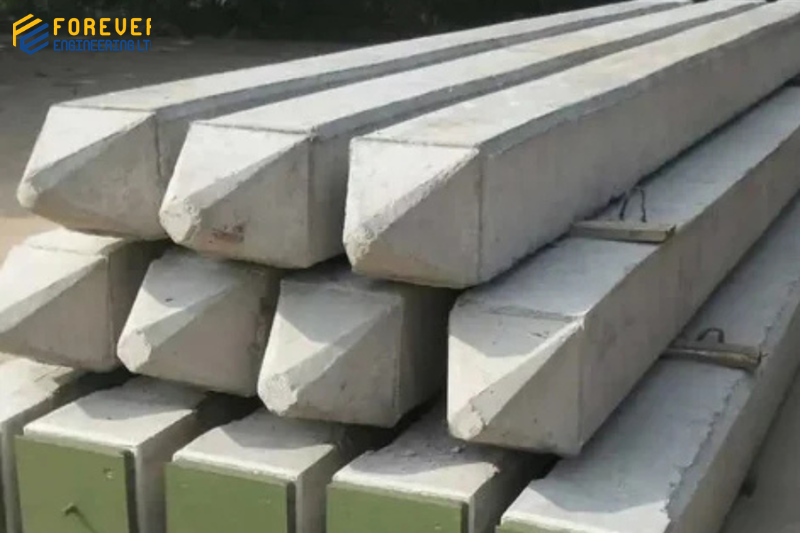
The precast pile casting process should follow the approved design, concrete specification, reinforcement details, and quality requirements.
- Review the Pile Design: The first step is to review the approved pile design. Engineers check the required pile length, cross-section, reinforcement, concrete grade, connection details, and other specifications. This information guides the complete casting process.
- Prepare the Casting Area: The casting area should be clean, level, and suitable for pile production. Proper space is needed for mold setup, reinforcement work, concrete placement, curing, inspection, and storage. A well-organized casting area helps workers complete each production stage safely.
- Prepare the Reinforcement: Steel reinforcement is cut and arranged according to the approved reinforcement drawing. Workers must maintain the correct bar size, spacing, length, and position. Proper reinforcement placement is important for the strength and durability of the finished pile.
- Assemble the Reinforcement Cage: The prepared reinforcement bars are assembled into the required reinforcement cage. The cage should remain stable during concrete placement. Spacers are used where required to maintain the specified concrete cover.
- Prepare the Mould: The mould is cleaned before casting. Any old concrete, dirt, or unwanted material should be removed. A suitable release agent can be applied to the mold to make demolding easier. The mold must be checked for damage and correct dimensions before casting.
- Place the Reinforcement in the Mould: The reinforcement cage is positioned carefully inside the mold. Workers must check the alignment, concrete cover, reinforcement position, and any required embedded components before closing the mold.
- Close and Check the Mould: The mould sides are fixed securely after placing the reinforcement. Before concrete placement, workers should check the mold dimensions, alignment, reinforcement position, joints, and cleanliness.
- Prepare the Concrete: Concrete is mixed according to the approved mix design. The concrete materials are properly batched and mixed to achieve the required consistency and strength. Controlled concrete mixing helps maintain consistent quality before casting.
- Place Concrete into the Mould: Fresh concrete is placed carefully into the prepared mould. Concrete should be placed in a controlled manner to avoid disturbing the reinforcement cage. Proper placement helps maintain the required pile shape and concrete cover.
- Compact the Concrete: Concrete compaction is an important stage of the casting process. Vibration or another approved compaction method helps remove trapped air and improves concrete density. Proper compaction can help reduce voids and improve the quality of the finished pile.
- Finish the Concrete Surface: After placing and compacting the concrete, the exposed surface is finished according to the required specification. The surface should be checked for visible defects and should maintain the required pile dimensions.
- Cure the Pile: Curing starts after concrete placement and finishing. The concrete must remain sufficiently moist and protected during the curing period so that it can develop the required strength. Water curing or another approved curing method can be used according to the project specification.
- Demould the Pile: The pile should not be removed from the mould until the concrete reaches the required strength for safe handling. The mould is opened carefully, and suitable lifting equipment is used when required. Proper handling helps prevent damage to the pile during demoulding.
- Inspect the Finished Pile: After demoulding, the pile should be inspected for cracks, surface defects, dimensions, reinforcement exposure, and other visible problems. Any defect should be reviewed according to the approved quality control procedure.
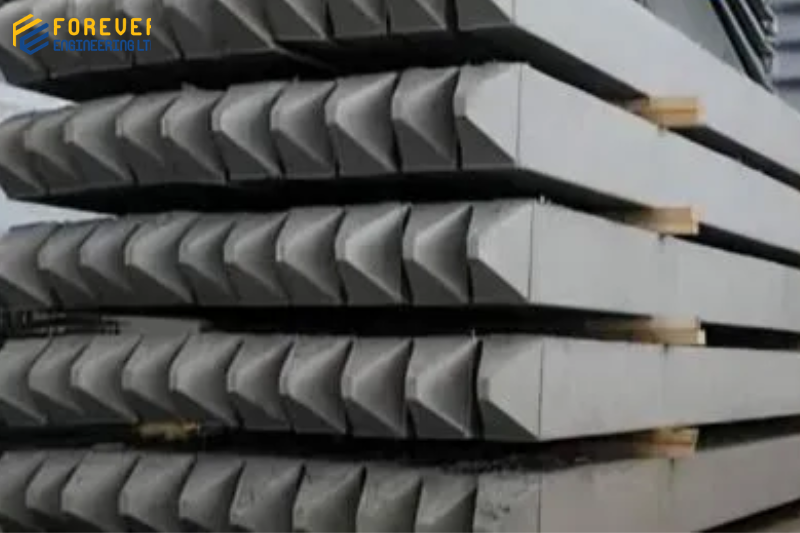
- Store the Pile Properly: Finished piles are moved to a suitable storage area. They should be supported properly to prevent unnecessary bending, damage, or contact with unsuitable surfaces. Proper storage also makes handling and transportation easier.
- Transport the Pile to the Site: After the pile reaches the required handling condition and passes inspection, it can be transported to the construction site. Transportation should use suitable equipment and lifting arrangements to prevent damage to the pile.
- Drive the Precast Pile: At the construction site, the precast pile is positioned and driven into the ground using suitable piling equipment. The selected driving method and equipment should match the pile design, ground conditions, and project requirements.
Quality Checks During Precast Pile Casting
Quality control should continue throughout the precast pile casting process.
Important Quality Checks Include:
- Check mold dimensions before casting.
- Check reinforcement size and spacing.
- Check reinforcement cover.
- Check concrete materials and mix.
- Check concrete placement.
- Check concrete compaction.
- Check curing conditions.
- Check pile dimensions after demoulding.
- Inspect surface defects.
- Check lifting points and handling condition.
- Record production and inspection information.
Common Applications of Precast Piles
Precast piles are used for deep foundation systems where the project requires piles to transfer structural loads into suitable soil layers.
Common Applications Include:
- Residential buildings
- Commercial buildings
- Industrial buildings
- Factories
- Bridges
- Infrastructure projects
- Large foundation structures
- Buildings on weak soil
- Heavy structures
- Commercial developments
Forever Engineering provides precast pile solutions for different construction projects and has completed precast pile casting and driving projects in Bangladesh.
Safety During Precast Pile Casting
Safety is important during reinforcement work, mold preparation, concrete placement, lifting, storage, transportation, and pile driving.
Important Safety Measures Include:
- Use proper personal protective equipment.
- Keep the casting area clean and organized.
- Check molds before use.
- Handle reinforcement carefully.
- Use safe lifting equipment.
- Keep workers away from suspended loads.
- Follow safe concrete placement procedures.
- Do not demould piles before reaching the required handling strength.
- Use proper lifting points.
- Store piles on stable supports.
- Keep unauthorized workers away from lifting operations.
- Follow site safety procedures during pile transportation and driving.
Why Choose Forever Engineering for Precast Pile Casting?
Forever Engineering Ltd. provides precast pile making, casting, and driving services. The company states that its precast pile services focus on quality, safety, and project requirements.
Key Reasons to Consider Forever Engineering Include:
- Precast pile casting services
- Precast pile driving services
- Project-based piling solutions
- Experienced piling team
- Suitable piling equipment
- Quality-focused production
- Construction project support
- Precast pile solutions in Bangladesh
Contact Forever Engineering for Precast Pile Casting
For precast pile casting process support, pile casting, or precast pile driving services, contact Forever Engineering Ltd. with your project requirements.
Phone: +880 1894 615871, +880 1894 615872
Email: info@foreverengineeringltd.com
Conclusion
The precast pile casting process includes several important stages, from design review and reinforcement preparation to mold preparation, concrete casting, compaction, curing, demoulding, inspection, storage, and transportation.
Proper control at every stage helps produce strong and durable precast piles that can be safely handled and installed. Selecting an experienced piling company can also help contractors manage casting and driving requirements more effectively.
Forever Engineering Ltd. provides precast pile casting and driving services for construction projects in Bangladesh, with project-specific support and suitable piling equipment.
Frequently Asked Questions
1. What is the Precast Pile Casting Process?
It is the process of producing reinforced concrete piles before transporting them to the construction site for installation.
2. What are the main steps in precast pile casting?
The main steps include reinforcement preparation, mold preparation, concrete mixing, casting, compaction, curing, demoulding, inspection, storage, and transportation.
3. Why is reinforcement important in precast piles?
Reinforcement helps the pile resist tensile and bending stresses and provides structural strength.
4. Why is concrete compaction necessary?
Compaction helps remove trapped air and improves the density and quality of concrete.
5. How is a precast pile cured?
Curing can be carried out using approved methods such as water curing while maintaining suitable moisture conditions for concrete strength development.
6. When can a precast pile be demoulded?
A pile should be demoulded only after the concrete reaches the required strength for safe handling according to the project specification.
7. Where are precast piles used?
Precast piles are commonly used for buildings, bridges, industrial structures, and other projects that require deep foundations.
8. Can precast piles be cast before site installation?
Yes. Precast piles are produced before transportation to the construction site, where they are installed using suitable pile-driving equipment.
9. Does Forever Engineering provide precast pile casting?
Yes. Forever Engineering provides precast pile making, casting, and driving services.
10. How can I get a precast pile casting quotation?
You can contact Forever Engineering with your project details, pile requirements, and foundation requirements to discuss the suitable precast pile solution.