
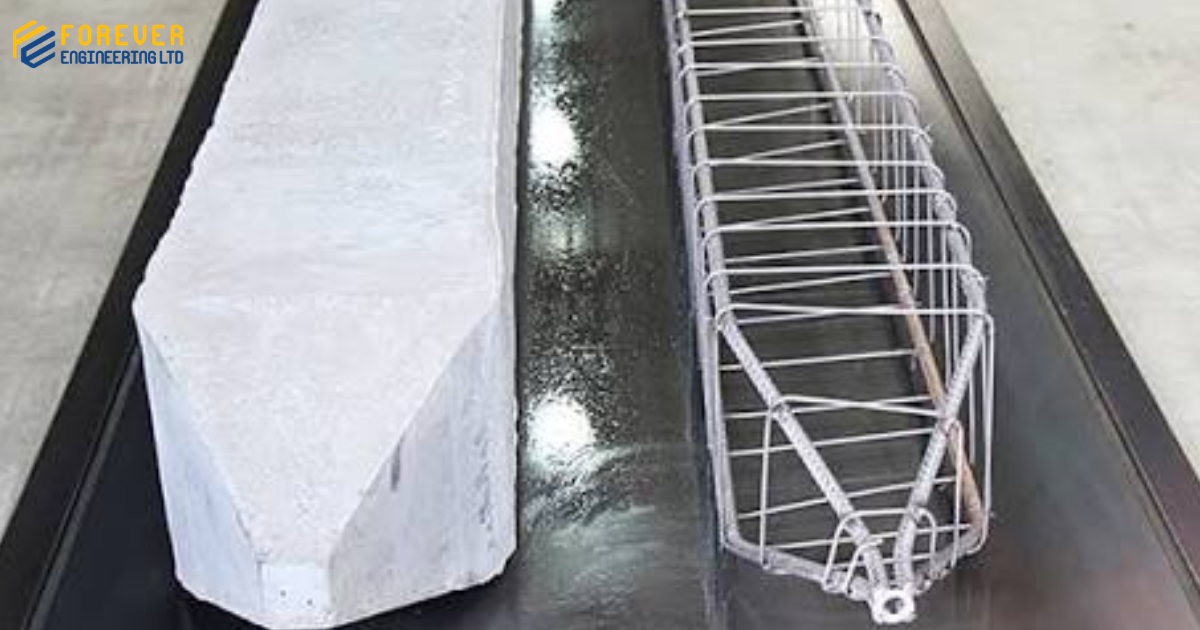
Precast concrete pile manufacturing is a controlled process used to produce strong and durable concrete piles for deep foundation construction. The process includes reinforcement preparation, mold preparation, concrete mixing, casting, compaction, curing, demoulding, quality inspection, storage, and transportation. Proper control at each stage helps produce piles with the required strength, dimensions, and durability.
Precast concrete piles are manufactured in a controlled production environment before they are transported to the construction site. This allows manufacturers to maintain better control over materials, concrete quality, reinforcement placement, curing, and finished pile dimensions.
What Is Precast Concrete Pile Manufacturing?
Precast concrete pile manufacturing means producing concrete piles in a factory or controlled casting yard instead of casting them directly inside the ground. Reinforcement is prepared according to the design and placed inside a mold, and concrete is then cast around it.
The concrete is compacted and cured under controlled conditions. After gaining enough strength, the pile is removed from the mold, inspected, stored, and transported to the construction site for installation.
Main Materials Used in Precast Concrete Pile Manufacturing Include:
- Cement: Cement acts as the main binding material in the concrete mix and helps develop the required strength.
- Fine and Coarse Aggregates: Sand and coarse aggregates form the main body of concrete and affect strength, workability, and durability.
- Water: Water is required for cement hydration and for producing a workable concrete mix.
- Steel Reinforcement: Steel bars or reinforcement cages provide additional strength and help the pile resist structural and handling loads.
- Admixtures: Suitable admixtures may be used to improve concrete workability, setting time, or other required properties.
- Moulds: Strong moulds are used to maintain the required pile length, shape, and dimensions during casting.
Why Is Precast Concrete Pile Manufacturing Important?
Proper manufacturing is important because piles become part of the permanent foundation system. Poor material control, incorrect reinforcement placement, weak concrete, or improper curing can affect the pile’s performance.
A controlled manufacturing process also helps maintain consistent dimensions and quality between different piles. Quality control normally includes material checks, reinforcement inspection, concrete testing, dimensional inspection, and final visual inspection.
Proper Manufacturing Helps With:
- Consistent Pile Quality: Controlled production helps maintain similar quality across multiple piles.
- Required Concrete Strength: Proper batching, mixing, placement, and curing help concrete achieve the specified strength.
- Correct Dimensions: Accurate molds help produce piles with the required length, width, diameter, and shape.
- Better Reinforcement Placement: Proper reinforcement positioning helps maintain the required structural performance.
- Improved Durability: Good materials and curing practices help protect the pile from early cracking and long-term deterioration.
- Faster Site Work: Ready-made piles can be transported to the site after reaching the required production and quality stage.
Precast Concrete Pile Manufacturing Solutions by Forever Engineering Ltd.
Forever Engineering Ltd. focuses on reliable foundation and piling solutions for construction projects. The manufacturing process should follow the project design, required pile dimensions, concrete specifications, reinforcement details, and installation requirements.
For a precast pile project, proper planning is important from production through transportation and final pile driving. This helps reduce handling problems and supports better coordination between manufacturing and site installation.
What Factors Affect Precast Concrete Pile Manufacturing?
Several factors can affect the quality, production time, and cost of precast concrete piles.
- Pile Design: The required pile size, length, shape, reinforcement, and design load affect the manufacturing process.
- Concrete Grade: The specified concrete strength determines the mix design and quality requirements.
- Reinforcement: Bar diameter, spacing, cage arrangement, and cover must follow the approved design.
- Mould Quality: Moulds must maintain the correct shape and dimensions during casting.
- Concrete Mix: The cement, aggregates, water, and admixtures must be properly proportioned for the required performance.
- Compaction: Proper compaction helps reduce air voids and produces dense concrete.
- Curing Method: Curing conditions directly affect concrete strength development and durability.
- Production Equipment: Mixing, lifting, casting, compacting, and curing equipment can affect production efficiency.
- Quality Control: Regular testing and inspection help identify manufacturing defects before delivery.
- Handling: Incorrect lifting or handling can cause cracks or damage before the pile reaches the construction site.
- Transportation: Pile length, weight, route conditions, and lifting arrangements affect delivery planning.
- Project Requirements: Soil conditions, pile capacity, installation method, and site conditions can influence the required pile specifications.
What Is Included in Precast Concrete Pile Manufacturing?
The manufacturing process includes several connected activities. Each stage needs proper planning because an error in one stage can affect the following stages.
Main Manufacturing Activities Include:
- Design Review: The approved drawings and specifications are reviewed before production.
- Material Preparation: Cement, aggregates, steel, water, and other materials are prepared and checked.
- Reinforcement Fabrication: Steel bars are cut, bent, and assembled into the required reinforcement cage.
- Mould Preparation: The mould is cleaned, checked, and prepared for casting.
- Reinforcement Placement: The reinforcement cage is positioned correctly inside the mould.
- Concrete Mixing: Concrete materials are batched and mixed according to the approved mix design.
- Concrete Casting: Fresh concrete is placed into the prepared mould.
- Compaction: Vibration or another suitable method is used to remove trapped air and improve concrete density.
- Curing: The concrete is kept under suitable curing conditions to develop the required strength.
- Demoulding: The pile is carefully removed from the mould after gaining sufficient strength.
- Inspection: The finished pile is checked for dimensions, surface condition, cracks, and other requirements.
- Storage and Delivery: Approved piles are stored safely and transported to the project site.
How Is a Precast Concrete Pile Manufactured?
The exact process can vary depending on the pile type and production system. Common precast pile production includes reinforcement cage preparation, moulding, concrete placement, compaction, curing, inspection, and demoulding. Some pile types may also use prestressing or centrifugal production methods.
Review the Pile Design: The first step is to review the approved pile drawings, dimensions, reinforcement details, concrete grade, and other project requirements.
Prepare the Casting Area: The production area is cleaned and organized so workers can safely prepare materials, reinforcement, molds, and equipment.
Prepare the Reinforcement: Steel bars are cut and bent according to the reinforcement details shown in the approved design.
Assemble the Reinforcement Cage: The reinforcement bars are tied or assembled to create the required cage shape and spacing.
Prepare the Mould: The mould is cleaned and checked for damage, alignment, dimensions, and proper release-agent application.
Place the Reinforcement in the Mould: The reinforcement cage is carefully positioned inside the mould while maintaining the required concrete cover.
Close and Check the Mould: The mould is closed and checked to make sure it remains properly aligned and secure during concrete casting.
Prepare the Concrete: Cement, aggregates, water, and approved admixtures are mixed according to the specified concrete mix.
Place Concrete into the Mould: Fresh concrete is placed into the mould around the reinforcement cage in a controlled manner.
Compact the Concrete: Concrete is compacted to reduce trapped air and help produce a dense and uniform pile body.
Finish the Concrete Surface: The exposed concrete surface is finished as required, and identification information may be marked on the pile.
Cure the Pile: The concrete is cured under suitable temperature and moisture conditions to support strength development and durability. Controlled curing is a key part of precast production.
Demould the Pile: After the concrete reaches the required handling strength, the pile is carefully removed from the mold.
Inspect the Finished Pile: The pile is checked for dimensions, straightness, surface defects, cracks, reinforcement-related issues, and other specified requirements.
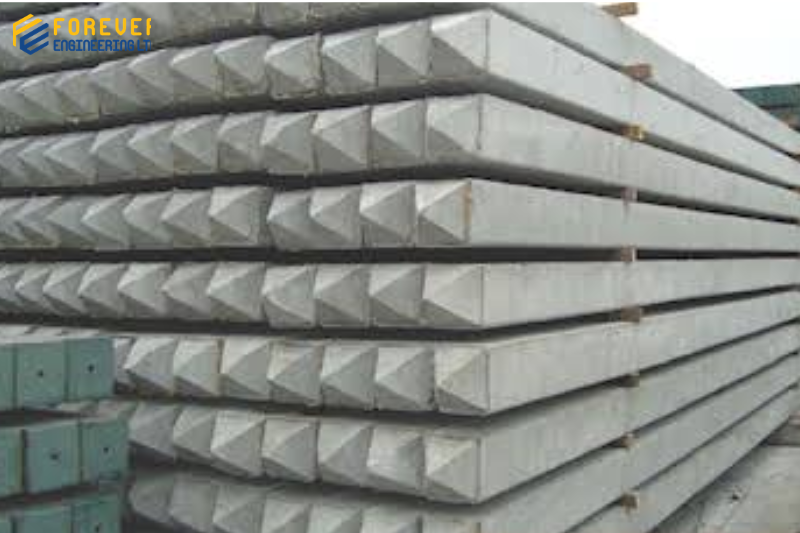
Store the Pile Properly: Approved piles are placed on suitable supports and stored in a way that reduces the risk of damage.
Transport the Pile to the Site: Piles are loaded and transported using suitable lifting and transportation arrangements.
Prepare for Pile Installation: At the project site, the piles are checked and prepared for the selected driving or installation method.
Precast Concrete Pile Applications in Construction
Precast concrete piles are commonly used where deep foundation support is required. Their applications depend on the design load, soil conditions, pile type, and project requirements.
Common Applications Include:
- Residential Buildings: Precast piles can provide foundation support for buildings constructed on weak or compressible soil.
- Commercial Buildings: They can support larger structural loads in commercial construction.
- High-Rise Buildings: Deep foundation piles can transfer structural loads to stronger soil or bearing layers.
- Industrial Buildings: Factories and industrial structures may require piles for heavy structural and equipment loads.
- Bridges: Precast piles can be used for bridge foundations and supporting structures.
- Road Infrastructure: They may support structures such as flyovers, elevated roads, and other infrastructure.
- Warehouses: Piles can provide foundation support for large warehouse structures.
- Marine Structures: Suitable precast piles can be used for selected marine and waterfront structures.
- Utility Structures: They may support structures that require stable deep foundations.
- Infrastructure Projects: Precast piles can be used in different large-scale civil engineering projects.
- Weak Soil Areas: They are useful where shallow soil layers cannot provide the required foundation capacity.
How Can You Improve Precast Pile Manufacturing Efficiency?
Efficient production requires good coordination between design, material supply, labour, equipment, quality control, and delivery.
Consider These Factors:
- Use Approved Materials: Proper material selection helps maintain concrete and reinforcement quality.
- Maintain Moulds: Regular mould inspection and maintenance help maintain accurate pile dimensions.
- Control Concrete Batching: Accurate batching helps maintain consistency between different concrete batches.
- Plan Reinforcement Work: Preparing reinforcement in advance can reduce production delays.
- Monitor Curing: Controlled curing helps the pile develop the required strength before handling.
- Maintain Equipment: Well-maintained equipment can reduce unexpected production interruptions.
- Follow Quality Checks: Inspection at different production stages helps identify problems early.
- Plan Storage: Proper storage prevents unnecessary damage to finished piles.
- Coordinate Transportation: Delivery should be planned according to pile size, weight, route, and installation schedule.
- Maintain Production Records: Recording pile details, casting dates, testing results, and inspections improves traceability.
How Is Precast Concrete Pile Manufacturing Supported by Forever Engineering Ltd.?
Forever Engineering Ltd. can help project owners and contractors plan suitable piling solutions according to project requirements. Proper coordination between pile specifications, manufacturing, transportation, and installation is important for successful foundation work.
The required pile type, size, length, reinforcement, concrete strength, and installation method should be selected according to engineering design and site conditions.
Benefits of Choosing Properly Manufactured Precast Concrete Piles
Proper manufacturing can provide several benefits for foundation construction.
Key Benefits Include:
- Consistent Quality: Controlled production helps maintain consistent pile dimensions and concrete quality.
- Reliable Strength: Proper concrete mixing, compaction, and curing support the required structural strength.
- Accurate Dimensions: Quality moulds help maintain the required pile shape and size.
- Faster Installation: Ready-made piles can reduce the need for on-site concrete casting.
- Better Quality Control: Factory production allows inspection and testing at different stages.
- Controlled Production: Manufacturing in a planned environment reduces the effect of changing site conditions.
- Durability: Proper materials and curing can improve long-term concrete performance.
- Reduced Site Work: Most manufacturing activities are completed before the piles arrive at the construction site.
- Suitable for Large Projects: Controlled production can support projects requiring many piles.
- Better Planning: Manufacturing schedules can be coordinated with transportation and pile installation.
Safety During Precast Concrete Pile Manufacturing
Safety is important because the manufacturing process involves heavy reinforcement, moulds, concrete, lifting equipment, and finished piles.
Important Safety Measures Include:
- Use Proper PPE: Workers should use helmets, safety shoes, gloves, eye protection, and other required PPE.
- Control Lifting Operations: Heavy moulds, reinforcement cages, and finished piles should be lifted using suitable equipment.
- Keep Work Areas Clean: Remove unnecessary materials and obstacles from production areas.
- Inspect Equipment: Cranes, lifting accessories, mixers, vibrators, and other equipment should be checked regularly.
- Follow Concrete Safety Procedures: Workers should use suitable protection when handling fresh concrete.
- Secure Reinforcement: Loose or exposed reinforcement should be managed to reduce injury risks.
- Control Mould Movement: Moulds should be properly secured during casting and handling.
- Maintain Safe Storage: Piles should be stored on stable supports and arranged to prevent rolling or falling.
- Use Safe Lifting Points: Finished piles should be lifted from approved locations according to the handling design.
- Control Vehicle Movement: Delivery vehicles and lifting equipment should operate under proper site control.

Why Choose Forever Engineering Ltd. for Precast Pile Solutions?
Choosing the right foundation partner is important when a project requires reliable precast pile solutions. Forever Engineering Ltd. can support contractors and project owners with piling-related planning and project requirements.
Key Reasons to Consider Forever Engineering Ltd. Include:
- Project-Focused Solutions: Pile requirements can be planned according to the specific project.
- Technical Support: Proper technical guidance can help contractors understand pile requirements.
- Quality-Focused Approach: Manufacturing and foundation work require proper attention to materials and quality checks.
- Installation Planning: Manufacturing should be coordinated with transportation and pile installation.
- Reliable Project Support: Proper communication can help reduce delays during different project stages.
- Foundation Experience: Experience in piling work helps support better project planning and execution.
Contact Forever Engineering Ltd. for Precast Concrete Pile Solutions
If you need Precast Concrete Pile Manufacturing for a building, industrial project, bridge, infrastructure project, or other foundation work, proper planning is important from manufacturing to installation.
Contact Forever Engineering Ltd. to discuss your project requirements, pile specifications, manufacturing needs, transportation, and installation support. You can request a project consultation and quotation based on your foundation requirements.
Phone: +880 1894 615871 / +880 1894 615872
Email: info@foreverengineeringltd.com
Conclusion
Precast Concrete Pile Manufacturing is an important process for producing strong and reliable deep foundation elements. The process includes design review, reinforcement preparation, mould preparation, concrete casting, compaction, curing, demoulding, inspection, storage, and transportation.
Every stage needs proper control to achieve the required pile quality. Good manufacturing practices can help improve concrete strength, dimensional accuracy, durability, handling, and installation performance. Quality control should continue from raw material inspection through final pile delivery.
For construction projects that require precast concrete piles, proper coordination between manufacturing and site installation is important. Forever Engineering Ltd. can support project owners and contractors with suitable piling solutions based on project requirements.
Frequently Asked Questions
1. What is Precast Concrete Pile Manufacturing?
Precast concrete pile manufacturing is the process of producing concrete piles in a controlled factory or casting yard before transporting them to the construction site for installation.
2. What materials are used to manufacture precast concrete piles?
Common materials include cement, fine aggregate, coarse aggregate, water, steel reinforcement, and suitable concrete admixtures.
3. Why is curing important in precast pile manufacturing?
Curing provides suitable moisture and temperature conditions for concrete strength development and helps improve durability.
4. How is reinforcement prepared for a precast pile?
Steel reinforcement is cut, bent, and assembled according to the approved pile design before being placed inside the mold.
5. What is the purpose of the pile mold?
The mold holds the reinforcement and fresh concrete in the required shape and dimensions during the casting process.
6. How is concrete compacted in a precast pile?
Concrete can be compacted using suitable vibration or other approved methods to reduce trapped air and improve concrete density.
7. How are finished precast piles checked?
Finished piles can be inspected for dimensions, straightness, surface condition, cracks, concrete quality, and other project requirements.