
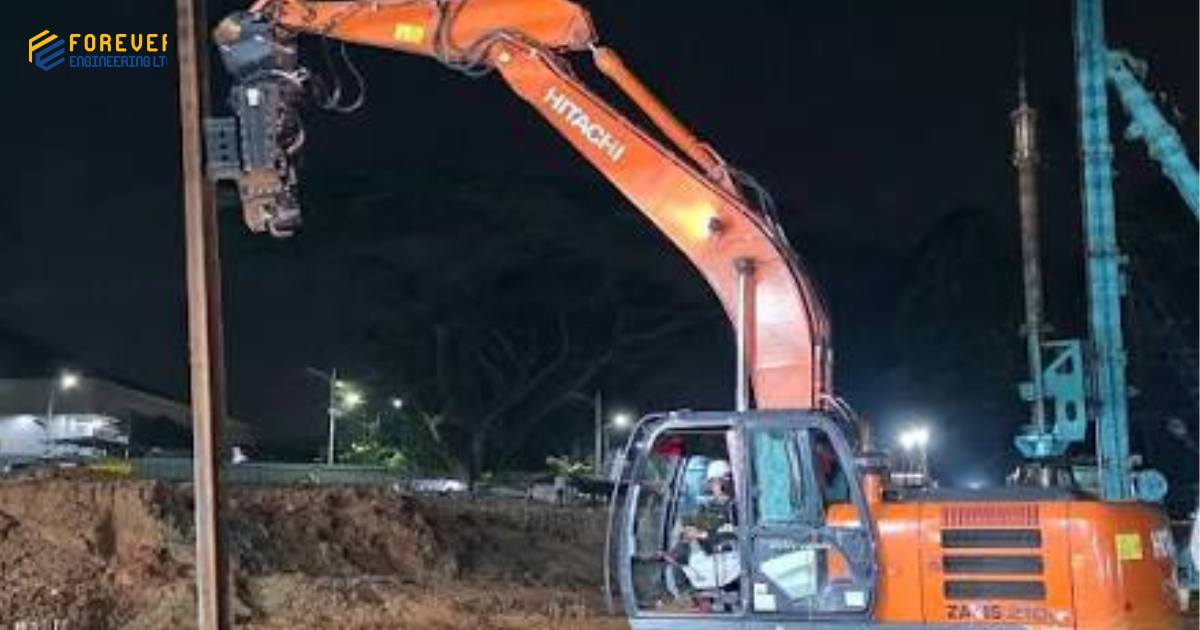
LHV machine parts play an important role in sheet pile installation. Each part has a different job, but all parts work together to help drive steel sheet piles into the ground. Some parts provide power, some create vibration, and others help hold and control the piles. Knowing how these parts work can help engineers, contractors, and machine operators handle the equipment properly. It also helps them find problems early and keep the machine in good condition. Forever Engineering Ltd. helps construction teams understand sheet pile installation needs and choose suitable equipment for their projects.
What Is an LHV Machine?
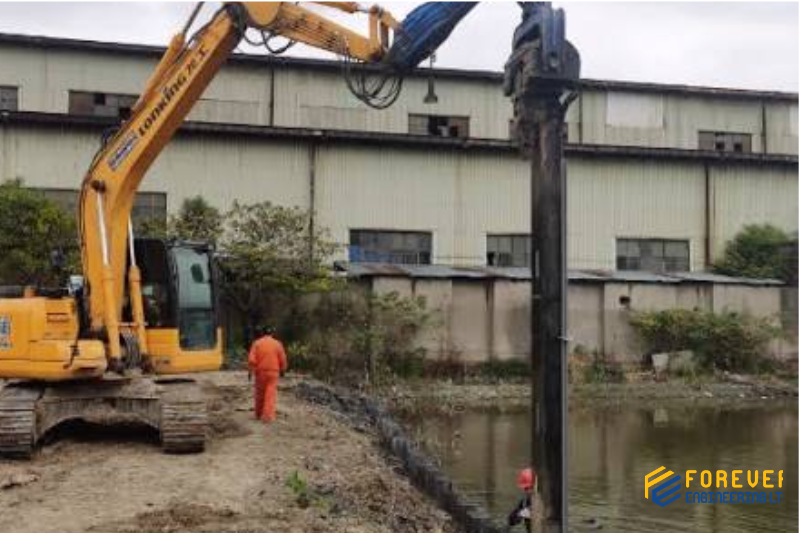
An LHV machine is used for sheet pile installation and removal. It uses hydraulic power to create vibration, which helps push steel sheet piles into the ground. The vibration reduces the resistance between the pile and the soil, making installation easier in suitable ground conditions. This machine can be useful for basement construction, foundation work, retaining walls, and other construction projects. Its performance depends on the machine model, soil type, sheet pile size, and working conditions.
Main LHV Machine Parts and Their Functions
LHV machine parts work together to make sheet pile installation easier and more controlled. Each part has a specific function, so a problem with one part can affect the whole machine. Here are the main parts commonly found in hydraulic vibratory pile-driving systems.
- Hydraulic Power Pack: The hydraulic power pack supplies the power needed to run the machine. It usually contains a motor or engine, hydraulic pump, oil tank, and other parts. It sends pressurized oil to the working unit so the machine can operate properly.
- Vibratory Hammer: The vibratory hammer is the main working part of the machine. It creates strong, rapid vibrations that help the steel sheet pile move into the soil. It can also help remove sheet piles when the machine is set up for extraction.
- Hydraulic Motor: The hydraulic motor uses pressurized oil to create movement. In a vibratory hammer, it drives the parts that produce vibration. If the motor does not work properly, the machine may lose power or fail to perform as expected.
- Clamping System: The clamping system holds the steel sheet pile tightly during installation. It transfers vibration from the hammer to the pile. A firm grip helps keep the pile in place and reduces unwanted movement during the driving process.
- Eccentric Weight Assembly: This part helps create the vibration needed for sheet pile driving. It contains rotating weights that produce vibration when the machine runs. The vibration helps reduce soil resistance and allows the pile to move downward.
- Hydraulic Hoses and Fittings: Hydraulic hoses carry oil between the power pack and the working parts. Fittings connect the hoses to the machine. If a hose is damaged or a fitting becomes loose, oil may leak and affect machine performance. Regular checks help prevent these problems.
- Control Panel: The control panel allows the operator to control the machine. Depending on the model, it may have controls for starting, stopping, and adjusting machine settings. It also helps the operator monitor the machine during work.
- Lifting Points and Suspension System: Lifting points and suspension parts help lift and position the equipment. They connect the machine to a suitable crane or other approved lifting system, depending on the setup. These parts must be checked before lifting to make sure the equipment can be handled safely.
- Guide Frame or Leader System: Some sheet pile installation systems use a guide frame or leader to keep the hammer in the correct position. It helps the operator maintain proper alignment while driving the pile. Good alignment is important because a pile that moves out of position may cause problems during installation.
- Hydraulic Oil Tank and Filters: The oil tank stores the hydraulic oil needed to run the machine. The filters remove dirt and small particles from the oil. Clean oil helps protect the pump, motor, and valves from damage and keeps the hydraulic system working smoothly.
- Cooling System: The cooling system helps control the temperature of the hydraulic oil and other working parts. The machine can become hot during long working hours. Proper cooling helps prevent overheating and supports steady machine performance.
- Hydraulic Control Valves: Hydraulic control valves control the flow and pressure of oil inside the machine. They send oil to the parts that need power. If a valve becomes damaged or blocked, the machine may not work smoothly.
How Do LHV Machine Parts Work Together?
Each part of an LHV machine has a different job, but they must work together during sheet pile installation. First, the hydraulic power pack supplies pressurised oil to the hydraulic motor. The motor drives the vibratory hammer, which creates vibration through its internal mechanism. The clamping system transfers this vibration to the steel sheet pile and helps it move into the soil. The operator controls the process and checks the pile’s position during installation. When all parts work properly, the job can be completed more smoothly and with better control.
Why Is It Important to Understand LHV Machine Parts?
Understanding LHV Machine Parts helps engineers, contractors, and operators use the equipment correctly. It also makes it easier to spot problems before they cause delays on the construction site.
- Better machine operation: When operators understand each part, they can use the machine more confidently and correctly.
- Improved safety: Checking clamps, hoses, lifting points, and other parts helps reduce the risk of accidents.
- Less downtime: Finding small problems early can prevent major breakdowns and costly work delays.
- Better installation results: Properly working parts help keep sheet piles aligned and support a smoother installation process.
- Easier maintenance: Knowing the parts makes it easier to understand where a problem may be coming from.
- Longer machine life: Regular checks and proper care help reduce wear and keep the equipment in good condition.
Common Problems With LHV Machine Parts
Like other construction machines, an LHV machine can develop problems after regular use. Dirt, wear, poor maintenance, and incorrect operation can affect its performance. Finding these problems early can help avoid bigger repairs.
- Hydraulic oil leakage: Oil may leak from damaged hoses, loose fittings, or worn seals. Stop the machine safely and have the damaged parts repaired before using it again.
- Weak vibration: The machine may produce weak vibration because of hydraulic problems, motor faults, or wear inside the hammer. A qualified technician should inspect the system.
- Clamp slipping: The clamp may fail to hold the pile properly if it is worn, damaged, or unsuitable for the pile profile. Check the clamp and make sure it is fitted correctly.
- Overheating: Low oil levels, dirty filters, or cooling problems can cause the machine to become too hot. Check the system according to the manufacturer’s instructions.
- Unusual noise: Strange sounds may come from loose connections or damaged internal parts. Stop the machine if the noise suggests a fault and arrange an inspection.
Maintenance Tips for LHV Machine Parts
Regular maintenance helps keep LHV machine parts in good condition. It also helps reduce unexpected breakdowns during important construction work. Forever Engineering Ltd. encourages construction teams to follow the machine manufacturer’s maintenance instructions and arrange professional servicing when needed.
- Check the machine before use: Look for damaged hoses, loose fittings, worn clamps, and other visible problems before starting work.
- Check the hydraulic oil: Keep the oil at the correct level and use the type recommended by the manufacturer.
- Clean and replace filters: Dirty filters can affect oil flow and damage machine parts, so check them at the recommended times.
- Watch the temperature: Keep an eye on the machine during operation. If it becomes too hot, stop safely and find the cause.
- Check bolts and connections: Make sure the required fasteners and connections are secure according to the manufacturer’s instructions.
- Keep a maintenance record: Write down inspection dates, repairs, and replaced parts. This helps the team plan future maintenance.
How to Choose the Right LHV Machine Parts
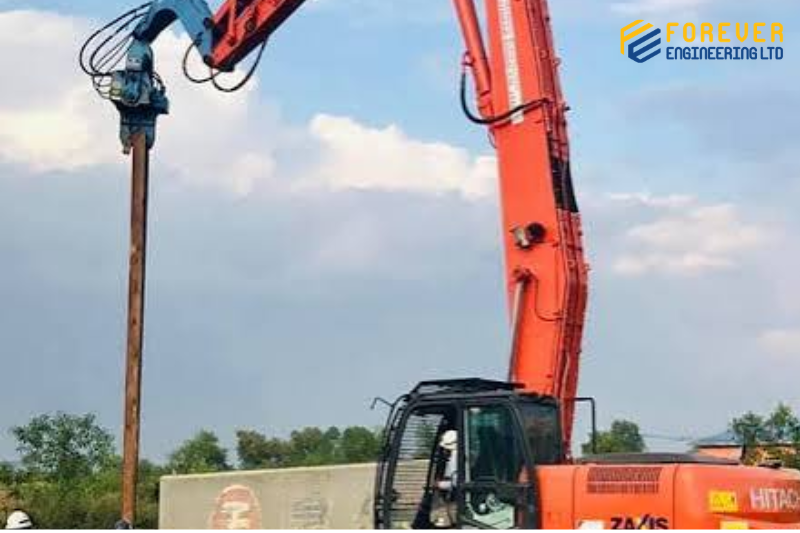
Choosing the right LHV machine parts is important for safe and reliable operation. Before buying replacement parts, check the machine model, part specifications, hydraulic requirements, and the type of sheet pile work. The parts must fit the machine and meet the manufacturer’s requirements. Using the wrong parts may reduce performance or damage other components. Forever Engineering Ltd. can help contractors and project teams understand their sheet pile installation needs and find suitable equipment solutions for their work.
Conclusion
LHV machine parts are important for smooth and safe sheet pile installation. The hydraulic power pack supplies power, the motor drives the working mechanism, the vibratory hammer creates vibration, and the clamping system holds the pile during installation. Other parts help control the machine, carry hydraulic oil, and support safe operation. When these parts are checked and maintained regularly, the machine can work more reliably and avoid unnecessary delays. Forever Engineering Ltd. supports construction teams with sheet pile installation guidance and suitable equipment solutions for different project needs.
Frequently Asked Questions (FAQs)
- What are the main LHV machine parts?
The main parts include the hydraulic power pack, vibratory hammer, hydraulic motor, clamping system, eccentric weight assembly, hoses, control panel, and other supporting components.
- What does the hydraulic power pack do?
The hydraulic power pack supplies pressurized oil to run the motor and other working parts of the machine.
- Which part creates vibration in an LHV machine?
The eccentric weight assembly inside the vibratory hammer creates vibration when driven by the hydraulic motor.
- How often should LHV machine parts be checked?
Visible parts should be checked before each use. Other maintenance work should follow the manufacturer’s recommended schedule.
- What happens if LHV machine parts are damaged?
Damaged parts can reduce machine performance, delay sheet pile installation, and create safety risks. Faulty parts should be inspected and repaired or replaced before work continues.
- How can I choose the right LHV machine parts?
Check the machine model and manufacturer’s specifications before choosing replacement parts. If you are unsure, ask a qualified technician for help.