
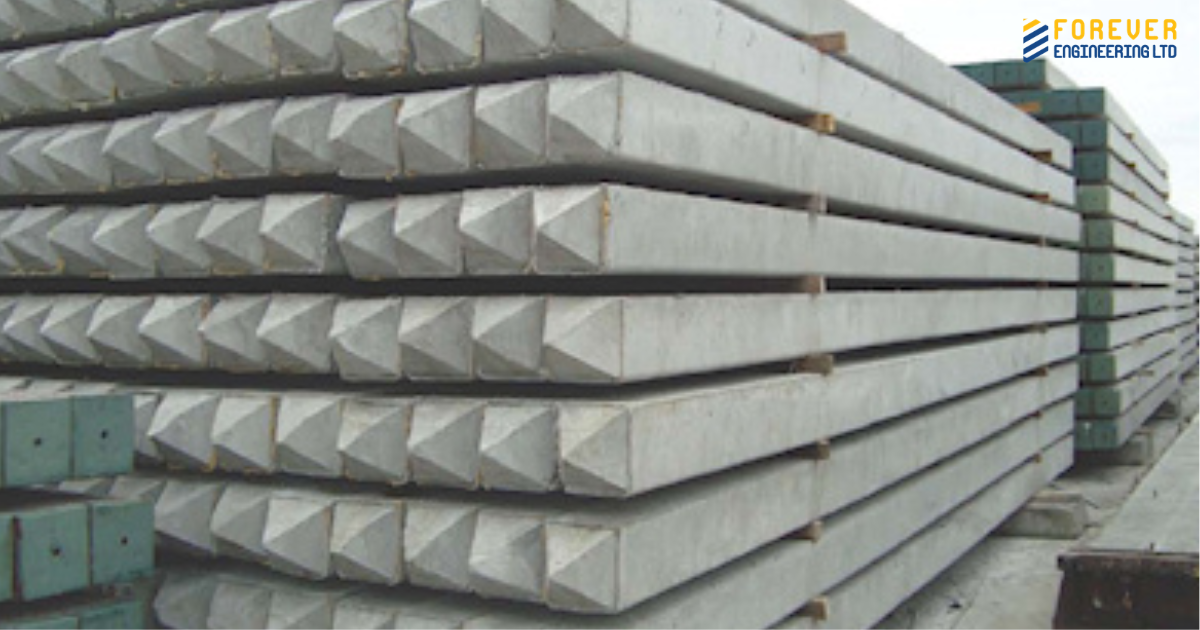
How Deep Can Precast Piles Be Driven?
Precast piles can be driven deep into the ground until they reach strong soil that can safely support a structure. The required depth depends on soil conditions, building load, pile size, and foundation design. In Bangladesh, precast piles are often driven between 30 and 100 feet or more, depending on project requirements. By reaching stronger soil layers, precast piles help create stable foundations, reduce settlement, and improve the long-term safety of buildings, bridges, factories, and other structures.

Why is the depth of the heap important?
The pile depth is an important factor for foundation performance. If the pile is too short, it will not reach the required soil stratum. This may impact the stability of the structure. Proper precast pile foundation design and soil investigation help engineers determine the correct pile depth for each project.
Benefits of Correct Pile Depth
- A more solid base
- Increased building stability
- Settlement reduced
- More Safety
- Better load sharing
- Higher longevity
That’s why engineers determine the required pile depth before construction begins.
What Factors Determine the Depth of a Precast Pile?
Several factors affect how deep a precast pile should be driven. Engineers evaluate soil conditions, structural load, pile dimensions, and foundation requirements before selecting the final pile depth. The goal is to ensure that the precast pile reaches a strong soil layer that can safely support the structure and provide long-term stability. A properly designed precast pile foundation helps reduce settlement, improve load transfer, and increase the overall safety of the building.
1. Soil Conditions
Soil condition is one of the most important factors.
Some locations have strong soil close to the surface. Other locations may have very soft soil that extends deep underground.
Engineers perform soil investigations to identify:
- Soil layers
- Soil strength
- Groundwater conditions
- Bearing capacity
The pile must reach a soil layer that can safely support the structure.
2. Building Load
Heavier structures require stronger foundations.
Large buildings, factories, and bridges often need deeper piles than small residential buildings.
Examples of heavy structures include:
- High-rise buildings
- Industrial facilities
- Bridges
- Flyovers
- Power plants
The greater the load, the more important it becomes to reach strong soil layers.
3. Pile Size
Pile dimensions can also influence driving depth.
Common pile sizes include:
- 250 mm × 250 mm
- 300 mm × 300 mm
- 350 mm × 350 mm
- 400 mm × 400 mm
Larger piles can often support greater loads and may be used in deeper foundation systems.
4. Foundation Design
Every project has different requirements.
Engineers design the foundation based on:
- Soil report
- Structural load
- Site conditions
- Safety requirements
The final pile depth comes from these engineering calculations.
What is the typical depth of precast piles in Bangladesh?
The depth of precast piles varies from project to project.
Typical pile depths include:
Small Residential Projects
Approximate depth:
- 30 to 50 feet
Used for:
- Houses
- Small apartment buildings
- Residential developments
Medium Commercial Projects
Approximate depth:
- 50 to 80 feet
Used for:
- Office buildings
- Shopping centers
- Commercial structures
Large Industrial Projects
Approximate depth:
- 80 to 120 feet or more
Used for:
- Factories
- Warehouses
- Industrial plants
Bridge and Infrastructure Projects
Approximate depth:
- 100 feet or more depending on site conditions
Used for:
- Bridges
- Flyovers
- Railway structures
- Marine projects
Actual depth always depends on soil conditions and engineering design.
How do engineers determine pile depth?
Engineers use several methods to determine how deep a pile should be driven.
Soil Investigation
The first step is a soil test.
Soil investigation provides information about:
- Soil layers
- Soil strength
- Groundwater level
- Foundation conditions
This information helps engineers select the proper pile depth.
Engineering Analysis
Engineers study the project requirements and calculate the expected loads.
They evaluate:
- Building weight
- Soil resistance
- Pile capacity
- Safety factors
These calculations help determine the required pile length.
Driving Records
During pile installation, engineers monitor the pile driving process.
They observe:
- Penetration rate
- Hammer performance
- Final set of pile
- Driving resistance
These measurements help confirm that the pile has reached the required depth and soil layer.
What happens if a pile is not driven deep enough?
A pile that does not reach strong soil may not perform properly.
Possible problems include:
- Foundation settlement
- Structural movement
- Cracks in walls
- Uneven floors
- Increased maintenance costs
Proper pile depth helps prevent these issues and improves long-term performance.
Can precast piles be extended for greater depth?
Yes. Engineers can increase pile length when deeper foundations are required.
Pile sections can be joined together using approved connection methods.
Benefits of pile extension:
- Greater depth capability
- Improved foundation support
- Suitable for difficult soil conditions
- Better project flexibility
This allows engineers to reach deeper soil layers when necessary.

How are precast piles driven into the ground?
Special equipment drives precast piles into the ground.
The installation process generally includes:
Site Preparation
Workers prepare the construction site and mark pile locations.
Pile Positioning
The pile is carefully placed in the correct position.
Pile Driving
A pile hammer drives the pile into the ground.
Depth Verification
Engineers monitor the driving process and verify the required depth.
Quality Inspection
The completed pile installation is checked to ensure compliance with project requirements.
This process helps create a strong and reliable foundation.
Why do engineers prefer precast piles?
Precast piles offer many advantages for foundation construction.
Benefits include:
- Deep foundation support
- High load capacity
- Quick installation
- Better quality control
- Long service life
- Reliable performance
- Reduced settlement
- Strong structural support
These advantages make precast piles a popular choice for many construction projects in Bangladesh.
Which projects use deep precast piles?
Deep precast piles are commonly used in many types of projects.
Residential Buildings
Apartment buildings and housing developments often use precast pile foundations.
Commercial Buildings
Hotels, shopping malls, and office towers require strong foundation systems.
Industrial Projects
Factories and warehouses often use deep piles to support heavy equipment and structures.
Bridge Construction
Bridge foundations frequently require deep piles to provide stability.
Infrastructure Projects
Roads, flyovers, railway projects, and power plants use precast piles to create durable foundations.
Marine Projects
Ports, jetties, and waterfront structures often require deep piles because of difficult soil conditions.
Why is proper pile depth important for foundation safety?
The strength of a building starts with its foundation.
When a pile reaches the correct depth, it can transfer loads safely to strong soil layers below the surface.
Benefits include:
- Improved structural safety
- Better load distribution
- Reduced settlement
- Increased durability
- Longer building life
- Reliable foundation performance
For this reason, engineers always pay close attention to pile depth during foundation design and construction.
Precast pile solutions in Bangladesh
Precast piles provide strong and dependable foundations for many construction projects throughout Bangladesh. The depth of a precast pile depends on soil conditions, building load, and engineering requirements. Some piles may be driven 30 feet deep, while others may reach 100 feet or more.
At Forever Engineering Ltd., we manufacture quality precast piles for residential, commercial, industrial, bridge, and infrastructure projects. Our experienced team works with engineers and contractors to provide suitable piling solutions based on site conditions and project requirements.
We focus on producing strong, durable, and reliable precast piles that help create safe foundations across Bangladesh.
FAQ: How Deep Can Precast Piles Be Driven?
1. How deep can precast piles be driven?
Precast piles can be driven from around 30 feet to more than 100 feet depending on soil conditions and project requirements.
2. What determines the depth of a precast pile?
Soil condition, building load, pile size, and foundation design determine the required pile depth.
3. Why do piles need to reach deep soil layers?
Deep soil layers are often stronger and can safely support the weight of a structure.
4. Can precast piles be extended?
Yes. Engineers can connect pile sections to achieve greater depths when necessary.
5. Which projects require deep precast piles?
High-rise buildings, bridges, factories, warehouses, and infrastructure projects often require deep piles.
6. How do engineers know when the pile has reached the correct depth?
Engineers use soil reports, design calculations, and pile driving records to verify the required depth.