
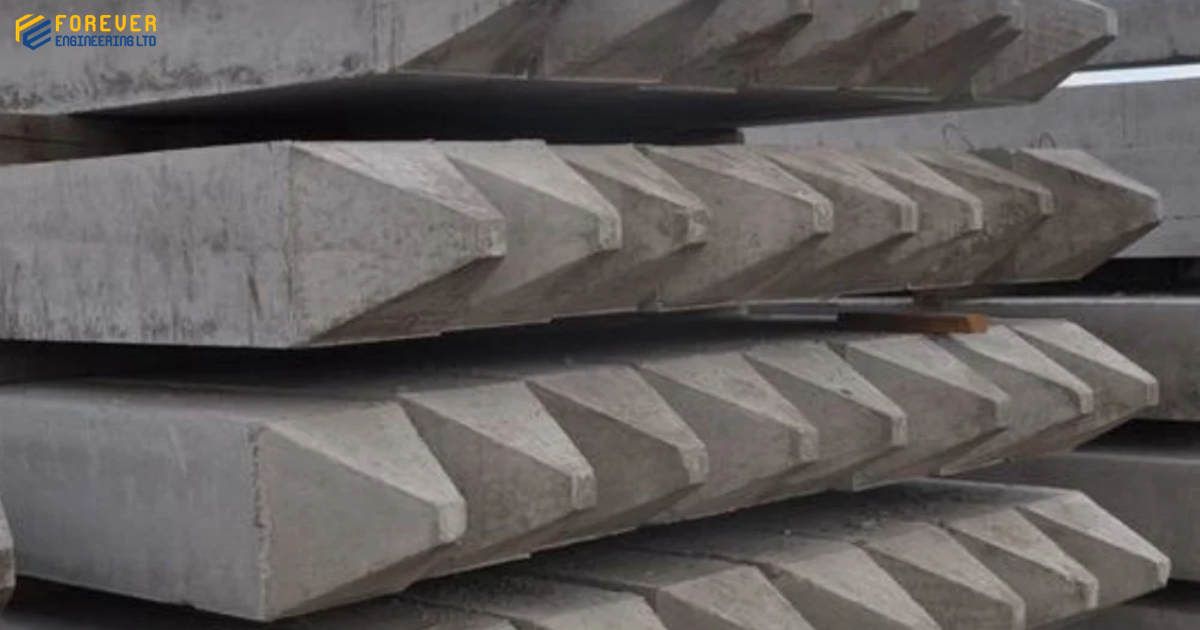
How to Choose the Right Precast Pile Size?
Choosing the precast pile size is super important when building foundations. If the pile is too small, it might not hold the building’s weight safely. On the other hand, a pile that is too big will cost more to build. That’s why engineers are very careful when picking the pile size for a project.
In Bangladesh many construction sites have soil. So buildings, factories, bridges, and other structures need foundations to stay safe and stable. The precast pile size helps to transfer the building’s weight to stronger soil layers deep down. There are things to think about when choosing a pile size. These include the soil conditions, how much weight the building will put on the pile, the foundation design, and what kind of project it is. If contractors, engineers, and project owners understand these things, they can make choices when building.
Why Is Choosing the Right Precast Pile Size Important?
The pile size directly affects foundation performance. If the pile size is not suitable for the project, foundation problems may occur in the future.
Benefits of choosing the pile size:
- A correct pile size gives foundation strength.
- It makes the building more stable.
- The load capacity is higher.
- There is a settlement.
- It keeps people safer.
- The structure lasts longer.
A chosen pile size helps ensure that the structure performs well for many years, with the pile size being right. The pile size is crucial; choosing the pile size helps.

Factors That Affect Precast Pile Size Selection
Several important factors determine the correct precast pile size for a project. Engineers carefully study these factors before selecting the pile dimensions. The right pile size helps provide a strong foundation, improves building stability, and ensures long-term performance
1. Soil Conditions
Soil condition is one of the most important factors when selecting pile size. Some sites have strong soil near the surface, while others have soft soil that extends deep underground.
Engineers conduct soil investigations to determine:
- Soil layers
- Soil strength
- Groundwater conditions
- Bearing capacity
Sites with weak soil may require larger piles to provide adequate support.
2. Building Load
The weight of the structure plays a major role in pile selection. Heavy structures require piles that can safely carry greater loads.
Examples of heavy structures include:
- High-rise buildings
- Factories
- Warehouses
- Bridges
- Power plants
Lighter structures such as small residential buildings may require smaller pile sizes.
3. Foundation Design
Every project has different foundation requirements.
Engineers design the foundation based on:
- Soil report
- Structural load
- Safety requirements
- Site conditions
The foundation design helps determine the most suitable pile dimensions.
4. Project Type
Different projects require different foundation systems.
For example:
- Houses may use smaller piles
- Commercial buildings may require medium-sized piles
- Industrial projects often require larger piles
- Bridges may need heavy-duty piles
The project type affects the final pile size selection.
5. Load Carrying Capacity
Each pile size has a different load carrying capacity.
Engineers select a pile size that can safely support the expected loads.
A pile must be strong enough to carry the structure without excessive settlement or movement.

Common Precast Pile Sizes in Bangladesh
Precast piles are available in different dimensions.
The most common sizes include:
250 mm × 250 mm
This size is often used for:
- Small residential buildings
- Houses
- Light structures
Benefits:
- Economical
- Easy to install
- Suitable for smaller loads
300 mm × 300 mm
This is one of the most commonly used pile sizes.
Applications:
- Apartment buildings
- Commercial buildings
- Medium-sized projects
Benefits:
- Good load capacity
- Reliable performance
- Suitable for many construction projects
350 mm × 350 mm
This size is commonly used for larger projects.
Applications:
- Commercial complexes
- Factories
- Large buildings
Benefits:
- Higher load capacity
- Improved foundation strength
- Better stability
400 mm × 400 mm
This size is often used for heavy structures.
Applications:
- Bridges
- Industrial facilities
- Infrastructure projects
Benefits:
- High load carrying capacity
- Strong foundation support
- Suitable for difficult soil conditions
How Do Engineers Determine the Right Pile Size?
Engineers use several methods to select the correct pile size.
Soil Testing
The first step is soil investigation.
The soil report provides information about:
- Soil strength
- Soil layers
- Groundwater level
- Bearing capacity
This information helps engineers understand foundation requirements.
Structural Analysis
Engineers calculate the total load that the foundation must support.
They consider:
- Building weight
- Live loads
- Equipment loads
- Future expansion loads
The pile size must be able to support these loads safely.
Safety Factors
Engineers always include safety factors in their calculations.
This helps ensure that the foundation remains safe under different conditions.
Benefits:
- Improved safety
- Better reliability
- Reduced structural risk
What Happens If the Wrong Pile Size Is Selected?
Choosing the wrong pile size can create serious foundation problems.
Possible issues include:
- Foundation settlement
- Structural movement
- Cracks in walls
- Uneven floors
- Reduced building stability
- Higher maintenance costs
Proper engineering design helps avoid these problems.
Can Larger Piles Always Be Used?
Some people believe that larger piles are always better. However, this is not always true.
Using larger piles than necessary can increase:
- Material costs
- Transportation costs
- Installation costs
The goal is to choose the most suitable pile size, not simply the largest one.
A properly designed foundation balances safety and cost efficiency.
Why Is Soil Investigation Important?
Soil investigation provides valuable information about site conditions.
Benefits include:
- Accurate foundation design
- Proper pile selection
- Improved safety
- Better load distribution
- Reduced construction risk
Without soil testing, engineers may not have enough information to select the correct pile size.
Which Projects Use Different Pile Sizes?
Residential Buildings
Most residential projects use smaller or medium-sized piles depending on the building height and soil condition.
Commercial Buildings
Commercial projects often require medium to large pile sizes because of higher structural loads.
Industrial Projects
Factories and warehouses usually require larger piles to support heavy equipment and machinery.
Bridge Construction
Bridge foundations often use large piles because they must support very heavy loads.
Infrastructure Projects
Roads, flyovers, power plants, and railway structures frequently use larger pile sizes.
Why Do Engineers Prefer Precast Piles?
Precast piles offer several advantages that make them a popular choice.
Benefits include:
- High load capacity
- Better quality control
- Quick installation
- Long service life
- Reduced settlement
- Reliable foundation performance
- Strong structural support
These advantages help improve the safety and durability of construction projects.
Importance of Professional Engineering Advice
Selecting the right pile size requires professional knowledge and experience.
Engineers evaluate:
- Soil conditions
- Building load
- Foundation design
- Safety requirements
Professional guidance helps ensure that the foundation performs properly throughout the life of the structure.
Precast Pile Solutions in Bangladesh
Choosing the right precast pile size is essential for creating a safe and durable foundation. The correct pile size depends on soil conditions, structural loads, foundation design, and project requirements. A properly selected pile improves stability, reduces settlement, and supports long-term building performance.
At Forever Engineering Ltd., we manufacture quality precast piles for residential, commercial, industrial, bridge, and infrastructure projects throughout Bangladesh. Our experienced team works closely with engineers, contractors, and project owners to provide suitable piling solutions based on project needs and soil conditions.
We focus on producing strong, durable, and reliable precast piles that help create safe foundations across Bangladesh.
FAQ: How to Choose the Right Precast Pile Size
1. What determines the right precast pile size?
Soil condition, building load, foundation design, and project requirements determine the correct pile size.
2. What are the common precast pile sizes in Bangladesh?
Common sizes include 250 mm × 250 mm, 300 mm × 300 mm, 350 mm × 350 mm, and 400 mm × 400 mm.
3. Why is soil testing important for pile selection?
Soil testing helps engineers understand soil strength and determine the most suitable pile size.
4. Can a larger pile carry more load?
Yes. Larger piles generally have higher load carrying capacity than smaller piles.
5. What happens if the wrong pile size is used?
The foundation may experience settlement, structural movement, and reduced performance.
6. Who should select the pile size?
Qualified engineers should determine the pile size based on soil reports and structural requirements.