
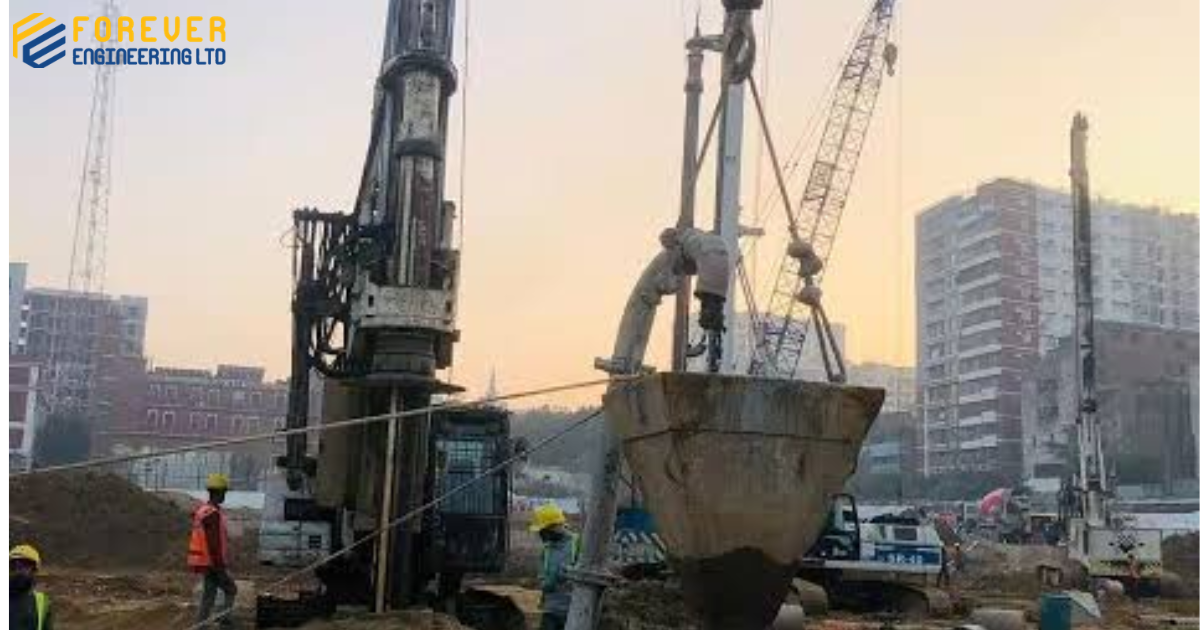
The cast in situ piling cost per foot is an important consideration for property owners, developers, contractors, and engineers planning a construction project in Bangladesh. Pile foundations are commonly used for residential buildings, commercial structures, industrial facilities, and other projects that need strong foundation support. The cost of cast in situ piling is not the same for every project. It depends on pile diameter, depth, soil conditions, reinforcement steel, concrete quality, machinery, and labor. The location of the project and the services included in the contractor’s quotation can also affect the total cost. Forever Engineering Ltd. provides piling and foundation solutions for construction projects. Understanding the factors that affect piling prices can help project owners prepare a realistic budget and discuss their requirements with a suitable contractor.
What Is Cast in Situ Piling?
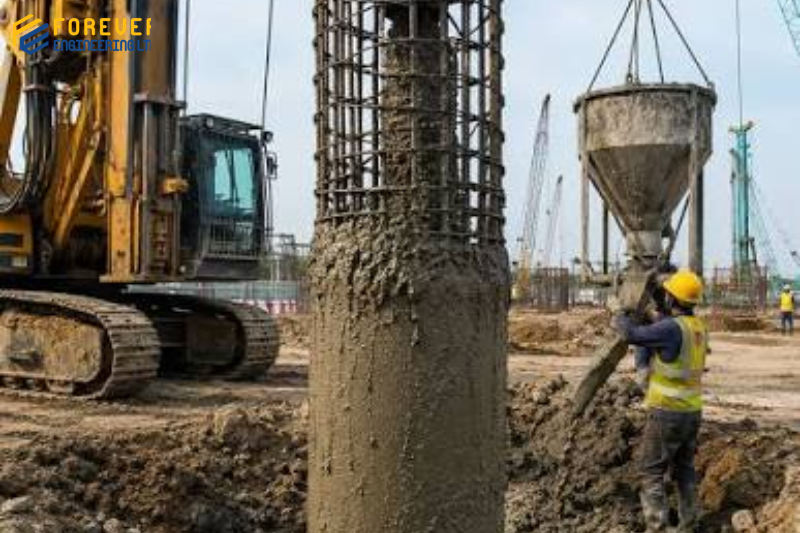
Cast in situ piling is a foundation method in which concrete piles are constructed directly in the ground at the project site. In a common bored pile method, workers drill a hole to the required depth, place a steel reinforcement cage, and pour concrete into the borehole. Temporary casing or drilling fluid may be needed to keep the hole stable, depending on the soil and groundwater conditions. After the concrete hardens, the pile becomes part of the building’s foundation and transfers structural loads to suitable soil layers.
What Is the Cast-in-Situ Piling Cost per Foot in Bangladesh?
The cast-in-situ piling cost per foot in Bangladesh depends on the design and construction requirements of each project. A smaller pile for a residential building may require fewer materials than a large-diameter pile designed for a commercial or industrial structure. The cost can also change depending on whether the quotation covers only boring or includes concrete, reinforcement steel, equipment, labor, testing, and other related work. For this reason, project owners should not compare quotations based only on the price per foot. They should check the pile diameter, required depth, materials, and included services to understand the actual cost. A reliable estimate should be prepared using the approved foundation design and site investigation results.
Factors That Affect Cast in Situ Piling Cost per Foot
Several factors influence the final price of cast-in-situ piling. Understanding them helps engineers and property owners plan their budgets more accurately.
Pile Diameter: The diameter of a pile directly affects the amount of concrete and reinforcement steel required. Larger piles usually need more materials and may require equipment with greater capacity, increasing the cost per foot.
Pile Depth: Deeper piles require more drilling time, concrete, and often more reinforcement steel. If the soil investigation shows that stronger soil layers are located deeper underground, the project may need longer piles and a higher budget.
Soil Conditions: Soil type and groundwater level can affect drilling speed and the construction method. Loose sand, soft soil, unstable boreholes, or underground obstructions may require additional support, casing, or drilling fluid, which can increase the overall cost.
Reinforcement Steel: The amount and arrangement of steel depend on the structural design, pile dimensions, and expected loads. Changes in steel prices, reinforcement cage fabrication, transportation, and placement can also affect the final quotation.
Concrete Quality: The required concrete grade and mix design influence material costs. The project must use concrete that meets the engineer’s specifications, and proper placement is important to achieve the required pile strength and durability.
Machinery and Equipment: Cast in situ piling may require drilling rigs, cranes, concrete pumps, tremie pipes, and other equipment. Machine size, operating time, transportation, and site conditions can affect equipment costs.
Labour and Technical Supervision: Skilled operators, workers, engineers, and supervisors are needed to complete piling work properly. Labor costs may vary according to the project location, working conditions, project size, and installation method.
Project Location and Accessibility: A site with limited access may create difficulties when transporting machinery, reinforcement cages, and concrete. Travel distance, equipment mobilization, unloading, and working space can add to the overall cost.
How Pile Diameter and Depth Affect the Price
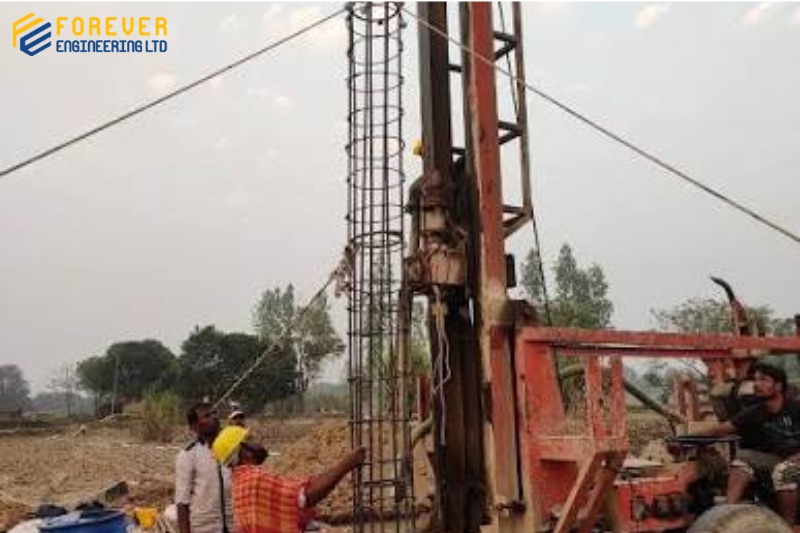
Pile diameter and depth are two of the most important factors when calculating the cast-in-situ piling cost per foot. A larger pile has a greater cross-sectional area, so it generally requires more concrete per foot of length. It may also need additional reinforcement, depending on the structural design. Pile depth affects the total quantity of drilling and construction work. For example, a pile that extends 60 feet into the ground requires more drilling and usually more materials than a pile with the same diameter that extends 40 feet. However, the final rate per foot does not always increase in direct proportion to depth because equipment setup, mobilization, and other fixed costs may be shared across the work. Engineers should determine the correct diameter and depth from the soil investigation and foundation design rather than selecting smaller piles only to reduce the initial cost.
How Soil Conditions Influence Piling Costs
Soil conditions play a major role in determining the cost of cast in situ piling in Bangladesh. Different sites can have different soil layers, groundwater levels, and underground conditions, even within the same area. These differences affect the time, equipment, and methods needed to construct the piles. For example, unstable soil may require temporary casing or drilling fluid to prevent the borehole from collapsing. High groundwater levels can also make drilling and concrete placement more challenging. If the equipment encounters hard layers or buried obstructions, additional time or special methods may be required. A soil investigation helps engineers understand these conditions before construction begins. It also provides important information for choosing the pile diameter, depth, and construction method.
Materials Included in Cast in Situ Piling Cost
Materials can make up a significant part of the total piling budget. Before accepting a quotation, project owners should understand which materials are included in the price.
- Concrete: The cost depends on the required concrete grade, total volume, mix design, delivery method, and placement requirements. Consistent concrete quality is essential for the strength and durability of the completed pile.
- Reinforcement Steel: Steel bars form the reinforcement cage inside the pile. The quantity depends on the approved design, and the quotation should clarify whether steel supply, cutting, bending, tying, and cage placement are included.
- Casing or Drilling Fluid: Some soil conditions require temporary casing or drilling fluid to support the borehole. Whether these items are needed depends on the construction method and site conditions.
- Additional Construction Materials: Binding wire, spacers, admixtures, and other materials may be required for the piling work. Their cost depends on the project specifications and the items included in the contractor’s quotation.
Equipment and Labor Costs
Equipment and labor are important parts of the cast-in-situ piling cost per foot. Drilling rigs are used to form the boreholes, while cranes or lifting equipment may be needed to position reinforcement cages. Concrete pumps, tremie pipes, and other tools may also be required, depending on the construction method. The cost of equipment depends on the type of machinery, its capacity, rental period, fuel consumption, transportation, and mobilization requirements. Labor expenses depend on the number of workers, their skills, working hours, and the level of technical supervision needed. Projects with difficult access or limited working space may require additional planning and equipment arrangements. Choosing suitable machinery and preparing the site properly can help reduce unnecessary delays and extra expenses.
Additional Costs to Consider Before Starting Piling Work
The price per foot may not cover every expense associated with a pile foundation. Project owners should check whether the following items are included in the quotation.
- Equipment Mobilization and Demobilization: Moving heavy machinery to the site and removing it after the work is complete can add to the project budget. These charges may be separate from the per-foot piling rate.
- Pile Testing: Pile integrity tests and load tests may be required by the project specifications or engineer. The type and number of tests depend on the foundation design and applicable requirements.
- Removal of Excavated Soil: Drilling produces soil and other material that may need to be collected, transported, and disposed of properly. The cost depends on the quantity and the site’s disposal arrangements.
- Groundwater and Borehole Support: Temporary casing, drilling fluid, or other support measures may be necessary for certain ground conditions. These requirements should be discussed before the contractor prepares the final price.
- Pile Cap and Related Foundation Work: Pile caps, excavation, and other foundation activities may be priced separately. Project owners should confirm whether the quotation covers only pile construction or the wider foundation package.
How to Calculate Cast in Situ Piling Cost per Foot
The total cost of cast in situ piling is generally calculated from the quantity of piling work and the agreed rate, along with any additional charges that are not included in that rate.
Basic calculation:
Total piling cost = Total pile length × Rate per foot
For example, if a project requires 10 piles, each 50 feet long, the total pile length is 500 feet. If the contractor provides a confirmed rate of Tk. 1,500 per foot for the specified scope, the basic piling cost would be Tk. 750,000. This is only a mathematical example, not a current market quotation. The actual rate must be confirmed with the contractor, and the estimate should state whether concrete, steel, testing, mobilization, and other costs are included.
How to Reduce Cast in Situ Piling Costs
Project owners can manage piling expenses through proper planning without compromising the safety or quality of the foundation.
- Complete a Soil Investigation: A soil investigation helps engineers select suitable pile dimensions and depths. This reduces the risk of incorrect estimates, unnecessary drilling, and costly design changes during construction.
- Prepare a Clear Foundation Design: The contractor should receive the approved pile layout, diameter, depth, reinforcement details, and concrete specifications. Clear information makes it easier to prepare an accurate quotation and plan the required resources.
- Compare Complete Quotations: Ask contractors to explain what is included in their rates. Comparing the same scope of work helps avoid choosing a low initial price that later increases through additional charges.
- Plan Equipment and Material Delivery: Proper scheduling can reduce equipment waiting time, material shortages, and unnecessary site delays. Good coordination between the contractor, suppliers, and site team helps keep the project on schedule.
- Maintain Quality Control: Proper supervision and the required testing help identify construction problems early. Cutting costs by ignoring design requirements or quality checks can create greater expenses and safety risks later.
How to Choose a Cast in Situ Piling Contractor in Bangladesh
Choosing a suitable contractor is important for controlling costs and achieving reliable foundation performance. Project owners should consider the contractor’s relevant experience, available equipment, technical knowledge, site management, and ability to follow the approved design. Before confirming an order, ask for a written quotation that clearly states the pile specifications, rate per foot, included materials, equipment charges, testing requirements, and payment terms. It is also helpful to discuss the expected schedule and how additional work will be priced if site conditions differ from the original plan. Forever Engineering Ltd. can be contacted to discuss piling and foundation requirements for your construction project in Bangladesh. Sharing the available soil investigation report, pile design, project location, and required quantities can help the company understand the scope of work and discuss suitable solutions.
Conclusion
The cast-in-situ piling cost per foot depends on several factors, including pile diameter, depth, soil conditions, reinforcement steel, concrete quality, equipment, labor, and project location. Additional expenses such as machinery mobilization, pile testing, and borehole support may also affect the final budget. For an accurate estimate, project owners should use the approved foundation design and soil investigation results. They should also compare quotations based on the same scope of work rather than choosing a contractor only because the initial rate is lower. Forever Engineering Ltd. supports piling and foundation projects in Bangladesh. Contact the company to discuss your project requirements and obtain pricing information based on the scope of work.
Frequently Asked Questions (FAQs)
1. What is the Cast in Situ Piling Cost per Foot in Bangladesh?
There is no single rate for every project. The cost depends on pile diameter, depth, soil conditions, materials, machinery, labour, and the services included in the contractor’s quotation.
2. Which factors have the biggest impact on piling costs?
Pile diameter, pile depth, soil conditions, reinforcement steel, and concrete requirements are major cost factors. Equipment mobilisation, site access, and additional construction work can also affect the final price.
3. Does the piling rate per foot include concrete and steel?
Not always. Some quotations include materials, while others cover only certain parts of the piling work. Always confirm whether concrete, reinforcement steel, labour, equipment, and testing are included.
4. Does soil condition affect cast in situ piling prices?
Yes. Unstable soil, high groundwater levels, hard layers, and underground obstructions can increase construction time or require additional equipment and support methods.
5. How can I get an accurate piling cost estimate?
Provide the contractor with the soil investigation report, pile diameter, required depth, pile quantity, reinforcement details, project location, and required scope of work. This information helps the contractor prepare a more suitable quotation.
6. Does Forever Engineering Ltd. provide piling solutions in Bangladesh?
Forever Engineering Ltd. provides piling and foundation-related services for construction projects. Contact the company to discuss your requirements and ask about suitable services and pricing.