
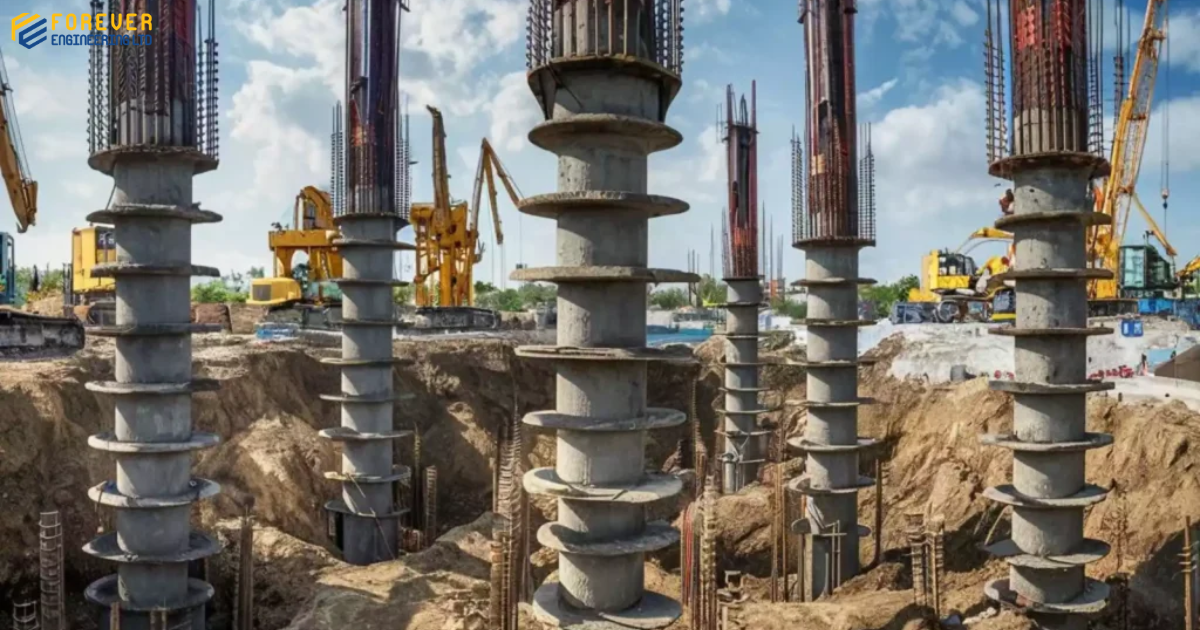
What Is Cast-in-Situ Pile Load-Bearing Capacity in Bangladesh?
Cast-in-situ Pile Load-Bearing Capacity in Bangladesh is one of the most important factors in foundation design. It determines how much load a cast in situ pile can safely support without failure. In Bangladesh, engineers carefully calculate Cast in Situ Pile Load Bearing Capacity before designing residential, commercial, industrial, and infrastructure projects. A proper understanding of pile capacity helps prevent settlement, structural damage, and foundation failure.
The load-carrying capacity of cast-in-situ piles is very important for engineers, contractors, and project owners. It helps them to make good foundations for buildings that will last many years. Whether the project is a residential building, commercial complex, factory, bridge, or power plant, the correct pile capacity is of great importance for the safety and performance of the structure.

What Is a Cast in Situ Pile?
A Cast in Situ pile is a reinforced concrete pile that is constructed directly at the project site. Contractors create the pile by drilling a hole into the ground to the required depth and diameter. After drilling, they place a steel reinforcement cage inside the hole and pour concrete into it.
As the concrete hardens, it forms a strong and durable foundation element that can support heavy structural loads. Because the pile is built inside the ground, it becomes an important part of the building’s foundation system.
Why Is Load Bearing Capacity Important?
Every structure creates loads that act on the foundation.
These loads include:
- Dead load from the building structure
- Live load from people & furniture
- load of equipment
- Roof load
- Wind pressure
- Water tank weight
- Future load for expansion
All these loads must be safely carried by the foundation.
If the load exceeds the pile capacity, the following problems may occur:
- Settlement of building
- cracks on walls.
- Uneven floor;
- Damage to columns and beams
- Higher maintenance costs
- Increased maintenance costs
Proper pile design avoids these problems and also contributes to the safety of the structure.
How Does a Cast-in-Situ Pile Transfer Load?
A cast in situ pile transfers load through two main methods.
End Bearing
End bearing develops when the bottom of the pile reaches a strong soil layer. The pile transfers the building load directly to that strong layer. In this case, the pile acts like a column that carries the load from the structure to the soil below. End bearing is very effective when dense sand or hard soil exists at deeper levels.
Skin Friction
Skin friction develops along the outer surface of the pile. The surrounding soil grips the pile surface and creates friction. This friction helps support part of the building load. Longer piles usually develop more skin friction because they have a larger contact area with the soil. Many cast in situ piles in Bangladesh depend on both end bearing and skin friction to achieve the required load capacity.
Factors That Affect Cast-in-Situ Pile Load-Bearing Capacity
Several important factors influence the load carrying capacity of a cast in situ pile.
Soil Condition
Soil condition is the most important factor.
Engineers perform soil investigations before designing a foundation.
They examine:
- Soil layers
- Soil strength
- Soil density
- Groundwater level
- Soil type
Strong soil can support greater loads. Weak clay soils generally require longer piles to achieve the required capacity.
Pile Diameter
Pile diameter directly affects pile capacity.
A larger diameter pile provides the following:
- More end bearing area
- Greater surface area for skin friction
- Better load distribution
Common pile diameters used in Bangladesh include:
- 450 mm
- 500 mm
- 600 mm
- 750 mm
- 1000 mm
Larger piles can generally carry higher loads.
Pile Length
Pile length also affects load capacity. Longer piles reach deeper soil layers and develop greater skin friction.
Proper pile length helps:
- Improve stability
- Increase capacity
- Reduce settlement
- Improve safety
Engineers determine pile length based on soil investigation results.
Concrete Strength
Concrete quality plays a major role in pile performance.
High-strength concrete improves:
- Durability
- Compressive strength
- Long-term performance
Poor-quality concrete can reduce pile capacity and shorten foundation life.
Reinforcement Steel
Steel reinforcement helps strengthen the pile.
The reinforcement cage allows the pile to resist the following:
- Compression forces
- Bending forces
- Tension forces
Proper reinforcement placement is essential for achieving the required pile strength.
Groundwater Conditions
Groundwater affects both soil behavior and pile construction. High groundwater levels can create challenges during drilling and concreting. Engineers carefully study groundwater conditions before construction begins.
Typical Cast-in-Situ Pile Capacity in Bangladesh
The actual pile capacity varies from project to project.
The following values provide general examples.
450 mm to 500 mm Diameter Piles
Typical load capacity:
60 to 120 tons
Common applications:
- Residential buildings
- Small commercial projects
- Low-rise structures
600 mm Diameter Piles
Typical load capacity:
120 to 250 tons
Common applications:
- Apartment buildings
- Office buildings
- Medium industrial projects
750 mm to 1000 mm Diameter Piles
Typical load capacity:
250 to 500 tons or more
Common applications:
- Factories
- Bridges
- High-rise buildings
- Power plants
- Heavy industrial structures
Actual capacity should always be verified through engineering design and pile load testing.
Soil Investigation Before Pile Design
A soil investigation is one of the most important steps in foundation design.
Engineers use soil testing to understand underground conditions.
The investigation provides information about:
- Soil profile
- Bearing layers
- Soil strength
- Groundwater level
- Settlement characteristics
Without proper soil testing, engineers cannot accurately determine pile capacity.
A detailed soil report helps ensure a safe and economical foundation design.

Methods Used to Determine Pile Capacity
Engineers use different methods to determine the load-bearing capacity of cast in situ piles.
Static Analysis
Engineers calculate pile capacity using soil data collected during site investigation.
This method estimates:
- End bearing resistance
- Skin friction resistance
- Total pile capacity
Dynamic Analysis
Engineers sometimes use field data collected during construction to evaluate pile performance.
This method helps verify design assumptions.
Pile Load Test
A pile load test provides the most reliable information about actual pile capacity.
Engineers apply loads to a test pile and measure settlement.
The results help confirm whether the pile can safely support the required design load.
For large projects, load testing is highly recommended.
Importance of Safety Factors
Engineers do not design piles exactly at their maximum capacity.
Instead, they apply safety factors.
A safety factor provides additional protection against unexpected conditions.
Benefits include:
- Improved structural safety
- Reduced risk of failure
- Better long-term performance
- Greater reliability
Safety factors are a standard part of foundation engineering practice.
Common Problems That Reduce Pile Capacity
Several construction issues can reduce pile performance.
Poor Concrete Quality
Low-quality concrete may contain defects that weaken the pile.
Proper mix design and quality control help prevent this problem.
Borehole Collapse
Weak soil may collapse into the borehole during drilling.
This can affect pile shape and reduce capacity.
Proper drilling methods help avoid borehole collapse.
Incorrect Reinforcement Placement
Improper placement of reinforcement cages can weaken the pile structure.
Careful supervision is necessary during construction.
Concrete Segregation
Concrete segregation occurs when materials separate during pouring.
This creates weak zones inside the pile.
Proper concreting techniques help maintain pile quality.
Poor Construction Supervision
Lack of quality control can lead to several foundation defects.
Regular inspections help ensure the pile meets design requirements.
Cast-in-situ Pile Load Testing in Bangladesh
Pile load testing is one of the most important steps in foundation construction. Engineers use this test to verify the actual load carrying capacity of a pile before full construction begins.
A load test helps confirm that the pile can safely support the design load. It also helps identify any problems before the structure is built.
During a pile load test, engineers place a controlled load on the pile. They gradually increase the load and measure how much the pile settles.
The test provides valuable information about:
- Actual pile capacity
- Settlement behavior
- Foundation performance
- Soil response
- Safety of the design
Many large projects in Bangladesh perform pile load testing before starting the main foundation work.
Benefits of Pile Load Testing
Pile load testing offers several advantages.
These include:
- Improved foundation safety
- Better design accuracy
- Reduced construction risk
- Greater confidence in pile performance
- Verification of engineering calculations
The results help engineers make informed decisions about the foundation system.
Applications of Cast in Situ Piles in Bangladesh
Cast in situ piles are used in many different types of construction projects across Bangladesh.
Residential Buildings
Many apartment buildings and housing projects use cast in situ piles.
In cities such as Dhaka, Chattogram, Khulna, and Sylhet, soil conditions often require deep foundations.
Cast in situ piles provide the following:
- Strong support
- Reduced settlement
- Better stability
- Long service life
These benefits make them suitable for residential construction.
Commercial Buildings
Commercial buildings often carry large loads.
Examples include:
- Shopping malls
- Office towers
- Hotels
- Hospitals
- Educational institutions
Cast-in-situ piles help support these structures safely.
The piles transfer loads to stronger soil layers and improve building stability.
Industrial Buildings
Factories and industrial facilities create heavy foundation loads.
Industrial structures often contain the following:
- Heavy machinery
- Storage systems
- Production equipment
- Steel structures
- Water tanks
These loads require strong foundations.
Cast-in-situ piles provide the required support and help reduce settlement.
Many industrial projects in Bangladesh use cast-in-situ pile foundations because of their strength and durability.
High-Rise Buildings
As cities continue to grow, the demand for high rise buildings increases.
Tall buildings create enormous loads on foundations.
Cast in situ piles provide the following:
- High load carrying capacity
- Better stability
- Improved safety
- Long-term performance
Many modern high-rise buildings depend on deep pile foundations.
Bridges and Flyovers
Bridge structures require strong foundations because they carry large loads from vehicles and traffic.
Cast-in-situ piles are commonly used for:
- Bridge piers
- Flyovers
- Highway structures
- Railway bridges
These piles provide reliable support under demanding conditions.
Power Plants
Power plants contain heavy equipment and important infrastructure.
Foundation failure is not acceptable in these facilities.
Cast in situ piles help support:
- Turbines
- Equipment platforms
- Control buildings
- Utility structures
Their high load capacity makes them suitable for critical projects.
Advantages of Cast in Situ Piles
Many engineers choose cast in situ piles because they offer several important advantages.
Flexible Pile Length
One major advantage is flexibility.
Engineers can adjust pile depth according to actual soil conditions.
If stronger soil is found deeper than expected, the pile can be extended.
This flexibility improves foundation performance.
Suitable for Heavy Loads
Cast in situ piles can support large structural loads.
Large diameter piles can carry hundreds of tons.
This makes them suitable for:
- Factories
- High-rise buildings
- Bridges
- Industrial structures
Less Vibration
Driven piles often create vibration during installation.
Cast-in-situ piles create much less vibration.
This benefit is important in crowded urban areas where nearby buildings may be affected.
Suitable for Different Soil Conditions
Cast-in-situ piles perform well in many soil types.
Engineers can use them in:
- Clay soils
- Sandy soils
- Mixed soils
- Soft ground conditions
This versatility makes them a popular foundation choice.
Long Service Life
A properly constructed cast in situ pile foundation can last for many decades.
Good quality concrete and reinforcement help improve durability.
This reduces future maintenance costs.
Challenges During Construction
Although cast in situ piles offer many benefits, proper construction is essential.
Several challenges can affect foundation quality.
Groundwater Problems
High groundwater levels may create difficulties during drilling.
Water entering the borehole can affect concrete placement.
Contractors use special methods to manage groundwater conditions.
Soil Collapse
Some soil layers may collapse during drilling.
This can change the shape of the pile and reduce capacity.
Proper casing systems help prevent collapse.
Concrete Placement Issues
Concrete must be poured carefully.
Poor placement can create the following:
- Voids
- Weak zones
- Honeycombing
These defects may reduce pile strength.
Construction Delays
Bad weather can affect pile construction.
Heavy rain may interrupt drilling and concreting operations.
Proper planning helps reduce delays.
Why Cast-in-Situ Piles Are Suitable for Bangladesh
Bangladesh has unique soil conditions.
Many regions contain:
- Soft clay
- Loose soil
- High groundwater levels
- Compressible layers
These conditions can create challenges for shallow foundations.
Cast in situ piles solve these problems by transferring loads to deeper and stronger soil layers.
Additional benefits include the following:
- High load capacity
- Better stability
- Long service life
- Reliable performance
- Reduced settlement
Because of these advantages, cast in situ piles remain one of the most widely used foundation systems in Bangladesh.
How to Choose the Right Pile Contractor
The quality of construction greatly affects pile performance.
Even a good design can fail if construction quality is poor.
When selecting a contractor, consider the following factors.
Experience
Choose a contractor with experience in pile foundation work.
Experienced contractors understand local soil conditions and construction challenges.
Modern Equipment
Good equipment improves construction quality and efficiency.
Modern drilling machines help create accurate pile dimensions.
Quality Control
The contractor should follow strict quality control procedures.
This includes:
- Concrete testing
- Reinforcement inspection
- Site supervision
- Construction monitoring
Technical Support
A reliable contractor should provide technical assistance throughout the project.
This helps solve problems quickly and maintain construction quality.
Safety Standards
Foundation work involves heavy equipment and complex operations.
Contractors should follow proper safety procedures at all times.
Future Demand for Cast-in-Situ Piles in Bangladesh
The construction industry in Bangladesh continues to grow rapidly.
New projects include:
- Residential developments
- Commercial complexes
- Industrial zones
- Economic zones
- Infrastructure projects
As urbanization increases, demand for strong foundations will continue to grow.
Cast in situ piles will remain an important solution because they provide the following:
- Reliable performance
- High load capacity
- Flexibility
- Long-term durability
Engineers will continue to use these piles for many future projects.
Conclusion
Understanding Cast-in-situ Pile Load-Bearing Capacity is essential for safe and successful construction projects in Bangladesh. The load-bearing capacity of a pile depends on several factors, including soil conditions, pile diameter, pile length, concrete strength, reinforcement design, and construction quality.
Cast in situ piles transfer loads through end bearing and skin friction, allowing them to support buildings on soft and challenging soil conditions. Their ability to carry heavy loads makes them suitable for residential buildings, commercial projects, factories, bridges, power plants, and high-rise structures.
Proper soil investigation, accurate engineering design, quality construction, and pile load testing all play important roles in achieving reliable foundation performance. When designed and installed correctly, cast in situ piles can provide safe and durable support for many decades.
For Bangladesh, where soft soil conditions are common, cast in situ piles remain one of the most trusted and effective foundation solutions available today.
Why Choose Forever Engineering Ltd. for Cast-in-situ Pile foundations?
At Forever Engineering Ltd., we provide high-quality Cast in Situ pile solutions for industrial building foundations across Bangladesh. Our team works closely with engineers, contractors, and project owners to deliver reliable foundation systems that support industrial growth and long-term project success.
Our Cast in Situ pile foundations are designed to provide high load-bearing capacity, excellent stability, and long-term durability, making them suitable for factories, warehouses, power plants, textile mills, and other industrial structures built on challenging soil conditions throughout Bangladesh.
With experienced engineers, modern equipment, and strict quality control procedures, we ensure that every Cast in Situ pile foundation meets project requirements and delivers dependable performance for many years.
Frequently Asked Questions
What is Cast-in-Situ Pile Load-Bearing Capacity?
Cast-in-situ pile load-bearing capacity is the maximum load a cast-in-situ pile can safely carry without failure.
What factors affect pile load capacity?
Soil condition, pile diameter, pile length, concrete strength, reinforcement steel, and groundwater level all affect pile capacity.
How is pile capacity calculated?
Engineers use soil investigation reports, structural load calculations, and pile design methods to determine pile capacity.
Why is pile load testing important?
Pile load testing verifies the actual capacity of a pile and helps ensure foundation safety.
Are cast in situ piles suitable for soft soil?
Yes. Cast in situ piles perform very well in soft soil because they transfer loads to deeper and stronger soil layers.
Can cast in situ piles support factories and high-rise buildings?
Yes. Properly designed cast-in-situ piles can support factories, warehouses, bridges, power plants, and high-rise structures.
How long can a cast in situ pile foundation last?
With proper design, quality construction, and regular maintenance, a cast-in-situ pile foundation can provide reliable service for many decades.