
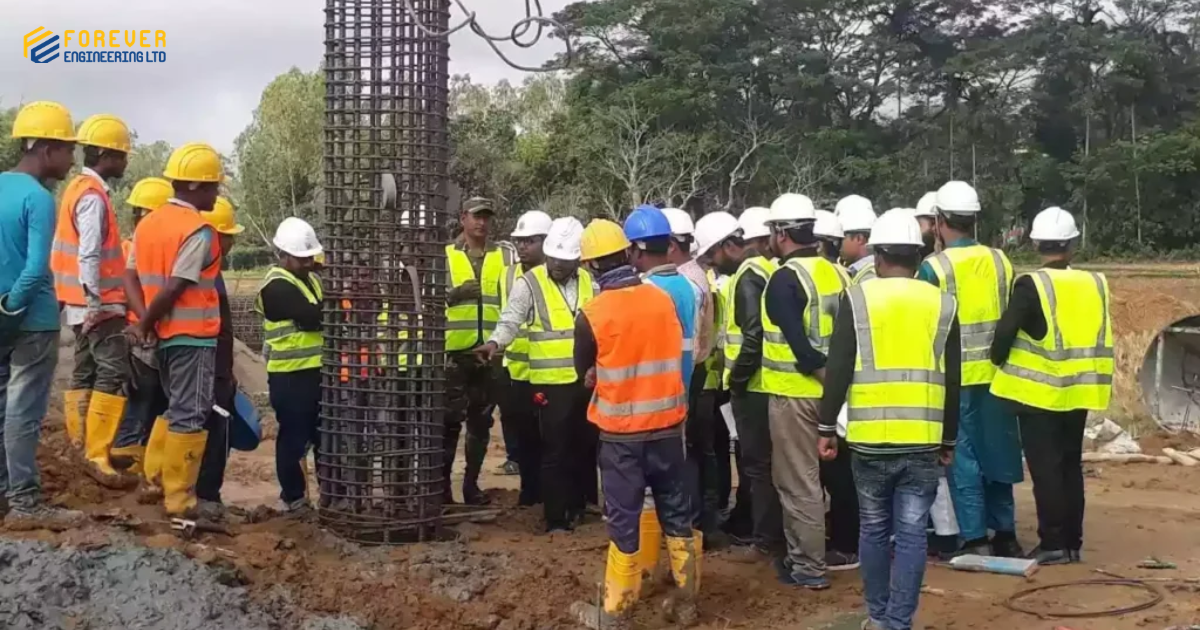
Cast-in-Situ Pile for High-Rise Buildings
A Cast-in-Situ Pile for High-Rise Buildings is one of the most trusted foundation solutions. Workers construct these piles directly at the project site by drilling a hole, placing reinforcement steel, and pouring concrete into the ground. This process creates a strong reinforced concrete pile that transfers the building load to deep and stable soil layers.
In Bangladesh, many commercial towers, apartment buildings, hospitals, hotels, shopping malls, and office buildings use cast-in-situ piles because the country has soft soil in many areas. These piles improve building stability and help reduce settlement.
This guide explains everything you need to know about cast-in-situ piles for high-rise buildings, including their benefits, construction process, applications, and the reasons why engineers prefer them for tall structures.

What Is a Cast-in-Situ Pile for High-Rise Buildings?
A cast-in-situ pile is a reinforced concrete pile that workers build directly inside the ground at the construction site. Instead of bringing ready-made piles from a factory, contractors create the pile after drilling the required depth.
The construction team first drills a borehole according to the engineering design. They then lower a reinforcement steel cage into the hole. After placing the reinforcement, they pour concrete using proper methods until the pile is completely filled.
Once the concrete becomes strong enough, the pile forms part of the building foundation. It safely transfers the building load from the surface to stronger soil or rock layers below the ground.
High-rise buildings create very heavy loads. Because of this, engineers often select cast-in-situ piles to provide long-term strength and stability.
Why Do High-Rise Buildings Need Deep Foundations?
Every building transfers its weight to the ground through its foundation. Small houses often use shallow foundations because they carry less weight. High-rise buildings are different because they place enormous pressure on the soil.
If engineers build a tall building on weak surface soil without proper foundations, several problems may occur.
These problems include:
- Uneven settlement
- Foundation cracks
- Structural movement
- Wall cracks
- Floor damage
- Reduced building safety
Deep foundations solve these problems by transferring loads to stronger soil layers located much deeper underground.
Cast-in-situ piles provide this deep support and help keep the building stable for many years.
Why Are Cast-in-Situ Piles Used for High-Rise Buildings?
Engineers choose cast-in-situ piles because they perform well under heavy structural loads. They also allow engineers to adjust the pile depth according to actual soil conditions.
Some of the main reasons include the following.
High Load Bearing Capacity
Tall buildings produce large vertical loads. Cast-in-situ piles carry these loads safely and distribute them to stronger soil layers.
This makes them suitable for residential towers, office buildings, hotels, hospitals, and commercial complexes.
Better Stability
A stable foundation helps protect the building from settlement and movement.
Cast-in-situ piles improve overall structural stability because they anchor the building deep into the ground.
Flexible Construction
Every construction site has different soil conditions.
Engineers can increase or reduce pile depth during construction if soil conditions change. This flexibility is one of the biggest advantages of cast-in-situ piles.
Suitable for Soft Soil
Many parts of Bangladesh have clay, loose sand, and soft soil.
These soil conditions cannot safely support tall buildings using shallow foundations.
Cast-in-situ piles transfer the load to deeper and stronger soil, making them an excellent solution for difficult ground conditions.
Long Service Life
Properly designed and constructed cast-in-situ piles can last for many decades.
They resist heavy loads, environmental conditions, and normal building movements.
A durable foundation reduces future repair costs and improves the life of the building.
How Cast-in-Situ Piles Support High-Rise Buildings
Every pile transfers the building load from the pile cap to the ground.
The load moves through the pile in two main ways.
End Bearing
Some piles reach very strong soil or rock. The bottom of the pile rests on this hard layer and transfers most of the building load directly to it. This method provides excellent support for very heavy structures.
Skin Friction
Sometimes the pile does not reach rock. Instead, the soil around the pile grips the concrete surface. This friction helps carry the building load safely into the surrounding soil. Many cast-in-situ piles use both end bearing and skin friction to provide maximum support.
Cast-in-Situ Pile Construction Process for High-Rise Buildings
Proper construction is essential for foundation safety. Every step must follow engineering standards.
Site Preparation
The construction team first prepares the site. They remove obstacles, level the ground, and position the drilling equipment according to the pile layout. Accurate pile positioning helps maintain the structural design.
Soil Investigation
Before drilling begins, engineers perform a soil investigation.
The soil report provides important information about:
- Soil layers
- Groundwater level
- Bearing capacity
- Required pile depth
- Suitable pile diameter
This information helps engineers design a safe foundation.
Borehole Drilling
Workers drill the ground to the required depth using a rotary drilling rig. The borehole diameter depends on the structural design. Engineers continuously monitor the drilling process to ensure the required depth is achieved.
Reinforcement Cage Installation
After drilling, workers lower the reinforcement steel cage into the borehole. The reinforcement provides additional strength and helps the pile resist heavy structural loads. The cage must remain properly centered before concrete placement.
Concrete Pouring
Workers pour concrete into the borehole using tremie pipes when necessary. Continuous concrete pouring prevents weak joints inside the pile. Good quality concrete improves pile strength and durability.
Curing and Inspection
After concrete placement, the pile needs enough time to gain strength. Engineers inspect the completed pile before connecting it to the pile cap. Quality inspections help ensure the foundation meets design requirements.
Advantages of Cast-in-Situ Pile for High-Rise Buildings
High-rise buildings need a foundation that can carry heavy loads for many years. A Cast-in-Situ Pile for High-Rise Buildings offers many advantages that make it one of the best choices for modern construction.
Excellent Load-Bearing Capacity
One of the biggest benefits of cast-in-situ piles is their high load bearing capacity.
These piles can safely support the weight of tall residential towers, commercial buildings, hotels, hospitals, and industrial structures. They transfer heavy loads to deeper and stronger soil layers, which improves the overall stability of the building.
Better Foundation Stability
A stable foundation protects the entire structure.
Cast-in-situ piles reduce the risk of uneven settlement by distributing the building load evenly. This helps keep the building level and prevents future structural damage.
Suitable for Different Soil Conditions
Every construction site has different soil conditions.
Some locations have soft clay, while others contain sand or mixed soil. Engineers can design cast-in-situ piles according to the soil report, making them suitable for almost every type of ground condition.
Flexible Pile Depth
The required pile depth may change after drilling begins.
With cast-in-situ piles, engineers can increase the depth if they find weak soil during construction. This flexibility helps achieve the required bearing capacity without changing the entire foundation design.
Strong and Durable
A properly constructed cast-in-situ pile has a long service life.
Quality concrete and reinforcement steel help the pile resist heavy loads, groundwater, and environmental conditions. This reduces maintenance costs and increases the life of the building.
Less Noise During Construction
Some foundation systems create high levels of noise and vibration.
Cast-in-situ piles produce less vibration because workers drill the ground instead of driving ready-made piles into the soil.
This makes them a good choice for projects near schools, hospitals, offices, and residential areas.
Custom Design
Every building has different structural requirements.
Engineers can customize the pile diameter, length, and reinforcement according to the building design and soil condition. This provides better performance and improves construction quality.
Applications of Cast-in-Situ Pile for High-Rise Buildings
Cast-in-situ piles support many types of heavy structures. Their strength and flexibility make them suitable for different construction projects.
Some common applications include:
- High-rise apartment buildings
- Commercial office towers
- Hotels
- Shopping malls
- Hospitals
- Educational institutions
- Government buildings
- Industrial factories
- Warehouses
- Mixed-use developments
These structures require strong foundations because they carry heavy loads every day.

Factors to Consider Before Building Cast-in-Situ Piles
Several important factors affect the performance of cast-in-situ piles. Engineers carefully study these factors before construction begins.
Soil Investigation
A soil investigation is one of the first steps in foundation design.
Engineers examine:
- Soil layers
- Groundwater level
- Soil strength
- Bearing capacity
- Rock depth
The soil report helps determine the correct pile length and diameter.
Building Load
Every building creates a different amount of load.
A twenty-story building needs a stronger foundation than a five-story building.
Engineers calculate the total building load before selecting the pile design.
Pile Diameter
Pile diameter affects the strength of the foundation.
Larger piles usually carry heavier loads because they contain more concrete and reinforcement.
Engineers choose the pile diameter according to the structural design.
Pile Length
The pile must reach soil that can safely support the building.
If the upper soil is weak, engineers increase the pile depth until it reaches stronger soil layers.
Groundwater Level
Groundwater can affect drilling and concrete placement. Construction teams use proper methods to keep the borehole stable and ensure good concrete quality.
Quality of Materials
Foundation quality depends on the materials used.
Engineers always recommend:
- High-quality cement
- Clean sand
- Strong aggregates
- Certified reinforcement steel
- Proper concrete mix
Quality materials improve the strength and durability of the pile.
Common Challenges During Cast-in-Situ Pile Construction
Although cast-in-situ piles provide many benefits, construction teams may face several challenges.
Soft Soil
Soft soil may collapse during drilling. Contractors use temporary casing or drilling fluid to keep the borehole stable until concrete placement.
Groundwater
High groundwater levels may enter the borehole. Workers control groundwater carefully to protect concrete quality.
Incorrect Reinforcement Placement
The reinforcement cage must remain in the correct position. Poor placement can reduce pile strength and affect structural performance.
Concrete Segregation
Concrete must remain uniform throughout the pile. Proper pouring methods prevent segregation and improve pile quality.
Construction Delays
Heavy rain, equipment failure, or material shortages may delay the project. Good planning helps reduce these risks and keeps the project on schedule.
Quality Control for Cast-in-Situ Pile Construction
Quality control is essential for every high-rise building project. Engineers inspect each stage of construction to ensure the foundation meets the design requirements.
Important quality control activities include:
- Soil investigation before construction
- Checking pile layout
- Measuring borehole depth
- Inspecting reinforcement cages
- Testing concrete quality
- Monitoring concrete pouring
- Performing pile integrity tests
- Conducting load tests when required
These inspections help ensure a safe and durable foundation.
Why Choose Forever Engineering Ltd.?
Forever Engineering Ltd. provides reliable cast-in-situ pile construction services for residential, commercial, industrial, and high-rise building projects across Bangladesh. Our experienced engineers and skilled construction team follow approved engineering practices to deliver safe and durable foundations.
We focus on:
- Experienced engineering team
- Modern construction equipment
- High-quality materials
- Skilled workers
- Strict quality control
- On-time project completion
- Reliable customer support
Our goal is to provide strong foundations that support buildings safely for many years.
Conclusion
A cast-in-situ pile for high-rise buildings is one of the most reliable foundation systems for modern construction. It provides excellent load-bearing capacity, long-term durability, and strong structural stability. These piles transfer heavy building loads to deeper and stronger soil layers, making them suitable for tall buildings built on soft ground.
Engineers choose cast-in-situ piles because they can adjust the pile depth according to soil conditions and building requirements. With proper soil investigation, quality materials, skilled construction, and careful quality control, these piles provide a safe and dependable foundation for residential, commercial, and industrial high-rise projects. As Bangladesh continues to build more tall buildings, the demand for cast-in-situ pile foundations will continue to grow because they offer strength, flexibility, and long-lasting performance.
Frequently Asked Questions
What is a Cast-in-Situ Pile for High-Rise Buildings?
A cast-in-situ pile is a reinforced concrete pile that workers construct directly at the project site. It supports tall buildings by transferring heavy loads to stronger soil layers.
Why are cast-in-situ piles used for high-rise buildings?
They provide high load-bearing capacity, better stability, and long service life. They also perform well in soft soil conditions.
Are cast-in-situ piles suitable for Bangladesh?
Yes. Many parts of Bangladesh have soft soil, making cast-in-situ piles an excellent foundation solution for high-rise buildings.
How deep should a cast-in-situ pile be?
The required depth depends on the soil investigation report, building load, and engineering design. Engineers determine the correct depth for each project.
How long do cast-in-situ piles last?
A properly designed and constructed cast-in-situ pile can last for several decades with very little maintenance.