
Cast in Situ Pile Contractor in Bangladesh plays an important role in deep foundation construction for residential buildings, commercial structures, industrial projects, and large infrastructure works. A professional contractor manages piling activities based on soil conditions, structural design, and project requirements.
Forever Engineering Ltd. supports construction and foundation projects in Bangladesh. Proper planning, suitable equipment, skilled workers, and quality control help ensure that cast in situ piling meets the project’s requirements.
What Is a Cast in Situ Pile Contractor?
A cast-in-situ pile contractor manages the work involved in constructing piles directly at the project site. The process usually includes drilling or boring into the ground, placing reinforcement, and pouring concrete into the prepared borehole.
The contractor selects suitable equipment and construction methods based on the soil conditions, pile dimensions, groundwater level, and structural design.

What Services Does a Cast in Situ Pile Contractor in Bangladesh Provide?
A professional contractor may provide several services to support the foundation construction process.
- Site Assessment: Review the site conditions and available project information before work begins.
- Pile Installation: Construct piles according to the approved design and project specifications.
- Boring and Drilling: Use suitable equipment to create boreholes at the required locations and depths.
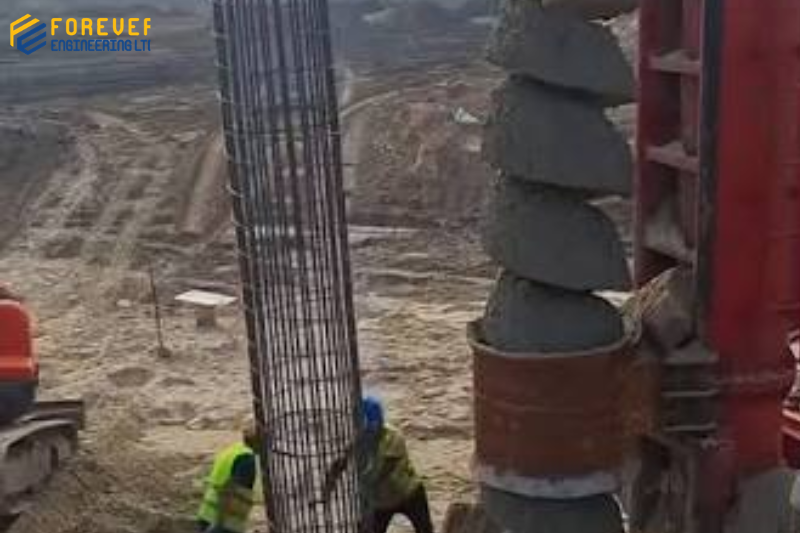
- Reinforcement Placement: Place the designed reinforcement cage inside the borehole.
- Concrete Pouring: Pour concrete using a suitable method to form the pile.
- Quality Control: Check important construction activities and maintain the required records.
- Equipment Support: Arrange suitable machinery, tools, and supporting equipment for the work.
Types of Cast-in-Situ Piles
The suitable pile type depends on the soil profile, structural load, groundwater conditions, and project design.
- Bored Cast in Situ Piles: Workers drill a borehole, place the reinforcement cage, and pour concrete into it.
- Driven Cast in Situ Piles: A casing or shell is driven into the ground, and concrete is placed inside according to the selected construction method.
- Cased Bored Piles: Temporary or permanent casing supports the borehole where ground conditions require it.
- Bentonite or Polymer-Supported Piles: Drilling fluid helps support the borehole in suitable ground conditions until reinforcement and concrete placement.
The design engineer should select the appropriate pile type after reviewing the ground investigation and structural requirements.
What Are the Advantages of Cast in Situ Piling?
Cast in situ piling allows contractors to construct deep foundations at the project location. It can support different pile diameters and depths, depending on the design and available equipment.
This method can also suit sites where transporting and handling long precast piles would be difficult. With proper construction control, it can provide foundation support for buildings and infrastructure projects.
What Equipment Is Used for Cast-in-Situ Piling?
Contractors use different equipment depending on the pile design, soil conditions, and construction method.
- Boring Rig: Drills the borehole to the required depth.
- Casing: Supports the borehole where needed.
- Crane: Lifts reinforcement cages and handles equipment.
- Reinforcement Cage: Provides the steel reinforcement required by the pile design.
- Concrete Pump or Tremie Pipe: Places concrete using a method suitable for the borehole and groundwater conditions.
- Excavation Tools: Help remove soil and clean the borehole base.
- Testing Equipment: Supports the required pile integrity or load testing procedures.
How Long Does Cast in Situ Pile Construction Take?
The construction time depends on the number of piles, pile diameter, depth, soil conditions, groundwater level, equipment capacity, and concrete supply. Some sites may allow continuous drilling, while others need casing or drilling fluid to maintain borehole stability.
Contractors should prepare a realistic work schedule that includes drilling, reinforcement placement, concrete pouring, quality checks, and any required pile testing.
What Is the Cast in Situ Pile Construction Process?
Cast in situ pile construction follows a planned sequence. The exact steps may vary depending on the approved design and site conditions.
- Review the Design: Check the pile layout, diameter, depth, reinforcement details, and project specifications.
- Study the Soil Report: Review the soil layers, groundwater level, and other information that may affect drilling.
- Prepare the Site: Clear the working area and provide a stable platform for the piling rig and supporting equipment.
- Mark the Pile Locations: Set out the pile positions according to the approved drawings.
- Position the Rig: Place the boring rig at the correct location and check its stability and alignment.
- Start Drilling: Drill the borehole to the specified depth using a suitable method.
- Support the Borehole: Use casing or an approved drilling fluid when required by the ground conditions.
- Check the Borehole: Confirm the depth and inspect the borehole condition according to the project procedure.
- Clean the Base: Remove loose soil and debris from the bottom of the borehole where required.
- Prepare the Reinforcement Cage: Check the cage dimensions and reinforcement details against the approved drawings.
- Lower the Cage: Place the reinforcement cage carefully and maintain the required concrete cover.
- Prepare for Concrete Placement: Arrange the concrete supply and suitable pouring equipment before starting the pour.
- Pour the Concrete: Place concrete using an approved method that suits the borehole and groundwater conditions.
- Complete the Pile: Finish the concrete placement according to the construction procedure and required pile level.
- Maintain Records: Record important details such as pile location, depth, concrete placement, and any construction issues.
- Conduct Required Tests: Complete the specified pile integrity, load, or other quality tests as required by the project design.
- Review the Results: Check the records and test results before proceeding with related foundation work.
Which Soil Conditions Affect Cast in Situ Piling?
Soil conditions directly affect the drilling method, borehole stability, and construction sequence. Loose soil, soft clay, dense sand, gravel, and groundwater can create different challenges during piling.
A site investigation helps the contractor understand these conditions before selecting equipment and construction methods. Where boreholes may collapse, the team may need casing or drilling fluid to maintain stability.
What Safety Measures Are Required During Cast-in-Situ Piling?
Cast in situ piling involves heavy machinery, deep boreholes, lifting operations, and concrete placement. Workers must follow the approved site safety plan throughout construction.
- Inspect Equipment: Check the piling rig, crane, lifting accessories, and other machinery before use.
- Secure Boreholes: Protect open boreholes with suitable barriers and prevent unauthorized access.
- Use Trained Operators: Allow only trained and authorized workers to operate the equipment.
- Control Lifting Operations: Keep workers clear of suspended reinforcement cages and other loads.
- Wear PPE: Use helmets, safety shoes, gloves, and other required protective equipment.
- Maintain a Stable Platform: Confirm that the rig and crane have suitable ground support.
- Manage Concrete Work: Follow safe procedures for concrete delivery, pumping, and placement.
- Monitor Site Conditions: Stop work if equipment instability, borehole collapse, or another serious hazard occurs.
How Is Quality Controlled During Cast in Situ Pile Construction?
Quality control starts before drilling and continues until the required inspections and tests are complete. The construction team should check pile positions, borehole depth, reinforcement details, concrete placement, and construction records.
The project specifications determine which inspections and tests are necessary. Contractors should document any unexpected ground conditions or construction difficulties and report them to the responsible engineer.
What Common Problems Can Occur During Cast in Situ Piling?
Several problems may affect pile construction if the team does not plan the work carefully.
- Borehole Collapse: Unstable soil or groundwater may cause the borehole walls to fail.
- Incorrect Pile Depth: Poor setting-out or inadequate depth control may result in a pile that does not meet the design.
- Reinforcement Problems: A damaged or incorrectly positioned cage can affect the required reinforcement arrangement.
- Concrete Placement Issues: Delays or unsuitable placement methods may affect pile quality.
- Equipment Delays: Machinery breakdowns or limited site access can slow the construction schedule.
- Poor Records: Missing construction information can make quality review more difficult.
Proper site investigation, suitable equipment, trained workers, and careful monitoring help reduce these risks.
How Do You Choose a Cast in Situ Pile Contractor in Bangladesh?
When choosing a cast-in-situ pile contractor in Bangladesh, review the contractor’s relevant experience, equipment availability, safety practices, quality control procedures, and project schedule.
- Relevant Experience: Check the contractor’s experience with similar piling projects.
- Equipment Availability: Confirm that the required machinery and supporting equipment are available.
- Technical Knowledge: Ensure the team understands the project drawings, soil report, and construction requirements.
- Safety Practices: Ask about equipment inspections, worker training, and site safety procedures.
- Quality Control: Check how the contractor records construction activities and manages required testing.
- Clear Quotation: Review the scope of work, equipment, labor, testing, and other costs included in the quotation.
- Project Schedule: Confirm that the proposed timeline suits the project requirements.
Where Are Cast in Situ Piles Used?
Cast in situ piles are used in different types of construction where the foundation design requires deep support.
- High-Rise Buildings: Transfer structural loads to suitable soil or deeper bearing layers.
- Commercial Buildings: Support offices, shopping centres, and other commercial structures.
- Industrial Projects: Provide foundation support for factories and industrial facilities.
- Basement Construction: Support building foundations where excavation and ground conditions require deep piles.
- Bridge Projects: Support bridge foundations according to the approved structural design.
- Infrastructure Works: Serve as deep foundation elements for selected public and private construction projects.
Why Choose Forever Engineering Ltd. as Your Cast in Situ Pile Contractor in Bangladesh?
Forever Engineering Ltd. can discuss your foundation requirements and help you understand the planning, equipment, and construction needs for your project. Contact the company to discuss your requirements and request a quotation.
A project-specific assessment helps determine the required pile dimensions, construction method, equipment, schedule, and quality checks. These details also help prepare a more accurate quotation.
Contact Forever Engineering Ltd. for Cast in Situ Piling Services
If you need a Cast in Situ Pile Contractor in Bangladesh, share your project location, soil investigation report, pile layout, required pile depth, and estimated number of piles with Forever Engineering Ltd. This information can help the team review your requirements and discuss the next steps.
Forever Engineering Ltd.
- Phone: +880 1894 615871
- Phone: +880 1894 615872
- Email: info@foreverengineeringltd.com
- Website: https://foreverengineeringltd.com/
Contact the company to discuss your project requirements and request a quotation for your foundation work.
Conclusion
A Cast in Situ Pile Contractor in Bangladesh helps manage deep foundation construction according to the project design and ground conditions. Proper drilling, reinforcement placement, concrete pouring, safety practices, and quality checks all play important roles in pile construction.
Forever Engineering Ltd. can discuss your foundation requirements and help you plan the next steps for your project.
Frequently Asked Questions
1. What is a cast in situ pile?
A cast in situ pile is a concrete pile formed directly inside a prepared borehole or casing at the construction site.
2. What does a cast in situ pile contractor do?
The contractor manages activities such as drilling, borehole support, reinforcement placement, concrete pouring, and construction quality checks.
3. Where are cast in situ piles used?
They are used in building foundations, industrial structures, bridges, basements, and other projects that require deep foundations.
4. Which equipment is required for cast in situ piling?
Common equipment includes a boring rig, casing where needed, a crane, reinforcement cage, and suitable concrete placement equipment.
5. How is the required pile depth determined?
The structural design engineer determines the required depth based on structural loads, ground investigation results, and project requirements.
6. Can cast in situ piles be constructed in wet soil?
Yes, when the design and ground conditions permit it. The contractor may need casing, drilling fluid, and a suitable concrete placement method.
7. How is cast in situ pile quality checked?
Quality checks may include borehole inspections, reinforcement checks, concrete records, pile integrity testing, and load testing where specified.
8. What affects cast in situ piling costs?
Costs depend on pile diameter, depth, soil conditions, reinforcement, concrete quantity, equipment, site access, testing, and project size.
9. How long does cast in situ pile construction take?
The duration depends on the number and size of piles, ground conditions, equipment capacity, concrete supply, and required testing.
10. How can I request a piling quotation from Forever Engineering Ltd.?
Contact Forever Engineering Ltd. by phone or email and share your project location, drawings, soil report, pile details, and estimated quantity to discuss a quotation.