
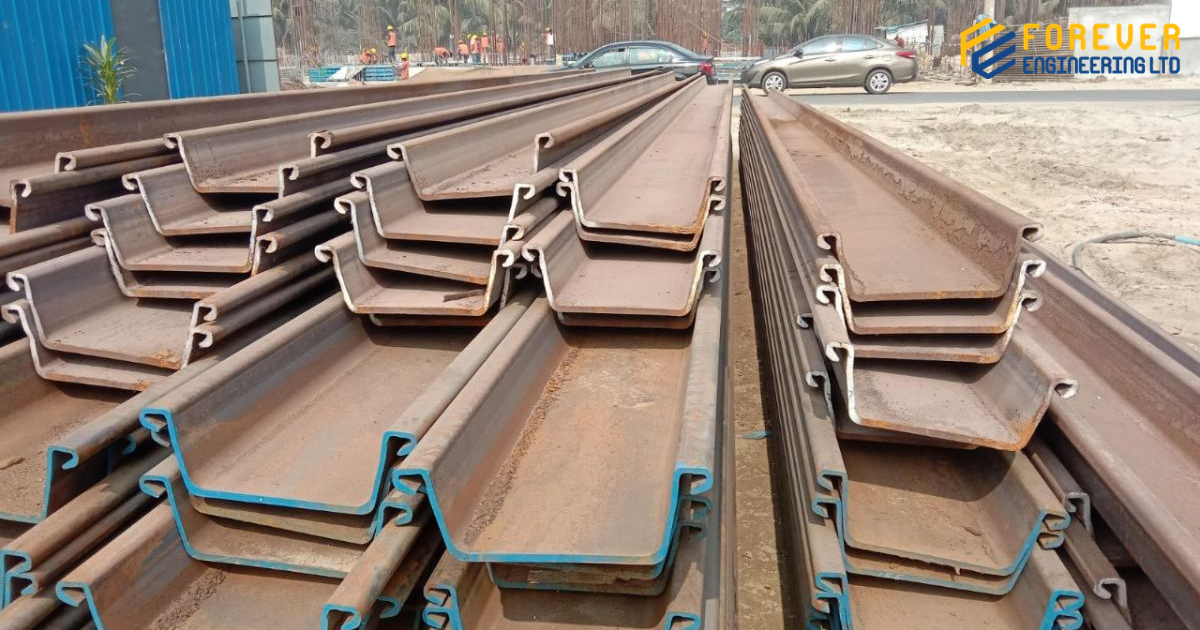
The benefits of sheet piling include improved excavation support, reduced soil movement, better groundwater management, protection of surrounding structures, efficient use of construction space, and flexible applications for temporary or permanent projects.
In Bangladesh, construction companies use sheet piling for basement excavation, deep foundation work, bridge construction, road projects, marine construction, cofferdams, riverbank protection, retaining walls, and other infrastructure projects. Proper sheet pile selection, installation methods, equipment, and site planning are important for achieving a safe and effective sheet piling system.
Forever Engineering Ltd. provides sheet pile supply, installation, and driven piling services for construction projects in Bangladesh. The company supports sheet piling requirements for excavation support, basement construction, retaining structures, bridge projects, marine works, cofferdams, and other construction applications.

What Is Sheet Piling?
Sheet piling is a construction method that uses interlocking steel sheets to create a continuous wall in the ground. The sheets are driven into the soil using suitable piling equipment such as vibratory hammers or impact hammers.
The sheet pile wall helps retain soil and can also reduce groundwater movement into an excavation area. Depending on the project requirements, sheet piles can be used as temporary or permanent structures. The suitable sheet piling system depends on several factors, including excavation depth, soil conditions, groundwater level, nearby structures, loading conditions, pile length, pile profile, and project requirements.
7 Major Benefits of Sheet Piling for Construction Projects
Sheet piling provides several benefits for construction projects where excavation support, soil retention, and groundwater management are required. The following are seven major benefits of using sheet piles.
1. Provides Strong Soil Retention: One of the main benefits of sheet piling is its ability to retain soil around excavation areas. During deep excavation, surrounding soil can move toward the excavation space if proper support is not provided. A properly designed and installed sheet pile wall creates a continuous barrier that helps resist lateral soil pressure. This can make sheet piling suitable for basement excavation, foundation construction, road projects, and other excavation applications.
2. Supports Safer Deep Excavation: Deep excavation can create risks such as soil collapse, ground movement, and instability around the excavation area. Sheet piling can provide support to the excavation sides and help maintain more controlled construction conditions. The required sheet pile section, embedment depth, wall arrangement, and additional bracing depend on the project design and site conditions. For projects with limited working space, sheet piling can also provide an effective way to support excavation while keeping the construction area organized.
3. Helps Control Groundwater Movement: Groundwater can create significant challenges during excavation. Water entering an excavation can affect soil stability, construction activities, equipment operation, and project progress. Interlocking sheet piles can reduce groundwater movement through the sheet pile wall. While sheet piles are not always completely watertight, properly installed interlocking systems can help limit water entry depending on soil and groundwater conditions. For projects with high groundwater levels, additional dewatering or water-control measures may also be required.
4. Protects Nearby Buildings and Structures: Construction activities close to existing buildings, roads, utilities, and other structures require careful excavation planning. Uncontrolled soil movement can affect nearby structures. Sheet piling can help provide a defined excavation boundary and reduce soil movement when properly designed and installed. This makes sheet piling useful for construction projects in crowded urban areas where available space is limited. Before installation, contractors should consider nearby buildings, underground utilities, roads, traffic loads, and other site conditions.
5. Suitable for Different Construction Applications: Sheet piling can be used for many types of construction projects. Its flexible applications make it a practical solution for both temporary and permanent construction requirements. Common applications include:
- Basement construction
- Building foundation excavation
- Bridge foundation projects
- Road and infrastructure construction
- Marine construction
- Cofferdams
- Riverbank protection
- Retaining walls
- Industrial construction
- Utility excavation
- Waterfront structures
The sheet pile type, length, thickness, and installation method should be selected according to the specific project requirements.
6. Can Reduce Construction Space Requirements: Urban construction projects often have limited available space for excavation. Traditional excavation methods may require larger slopes or additional working areas. Sheet pile walls can provide near-vertical excavation support, allowing contractors to use available site space more efficiently where the design and ground conditions permit. This can be particularly useful for basement projects, road construction, utility excavation, and other projects located close to existing structures.
7. Can Be Used for Temporary and Permanent Projects: Sheet piles can be used for both temporary and permanent construction applications depending on project requirements. Temporary sheet piles may be installed to support excavation during construction and later extracted when the permanent structure is completed. Permanent sheet piles can remain in place when they are designed as part of the final construction system. The decision between temporary and permanent sheet piling depends on structural requirements, soil conditions, project design, construction duration, and site conditions.
Why Is Sheet Piling Important for Construction Projects?
Sheet piling is important because construction projects often require excavation in conditions where soil stability, groundwater, nearby structures, and limited working space must be considered. Without suitable excavation support, deep excavation can create risks such as soil movement, ground collapse, water entry, and damage to surrounding structures. A properly planned sheet piling system can help manage these construction challenges. Proper Sheet Piling Helps With:
- Excavation Support: Sheet piles provide support around excavation areas.
- Soil Retention: The continuous wall helps retain surrounding soil.
- Groundwater Management: Interlocking sheet piles can reduce water movement.
- Site Protection: Proper shoring can help protect nearby structures and utilities.
- Space Management: Sheet pile walls can support excavation where available space is limited.
- Construction Efficiency: Suitable installation planning can improve project coordination.
- Temporary Support: Sheet piles can be removed after temporary construction requirements are completed.
Sheet Piling Solutions Offered by Forever Engineering Ltd.
Forever Engineering Ltd. provides sheet piling solutions for construction projects in Bangladesh. The company supports sheet pile supply, installation, driving, and project requirements for different construction applications. Its sheet piling services can support:
- Basement excavation
- Deep excavation
- Building construction
- Bridge construction
- Road projects
- Retaining walls
- Cofferdams
- Marine construction
- Riverbank protection
- Industrial projects
- Infrastructure construction
Forever Engineering Ltd. can support project requirements based on sheet pile size, length, quantity, application, soil conditions, excavation depth, and site requirements.
What Factors Should You Consider Before Using Sheet Piling?
Choosing the correct sheet piling system is important because project performance depends on pile specifications, soil conditions, installation methods, equipment, and construction requirements.
- Soil Conditions: Soil type and ground resistance affect sheet pile selection and installation.
- Excavation Depth: Deeper excavation may require stronger piles, greater embedment, or additional support.
- Groundwater Level: High groundwater may require additional water-control planning.
- Sheet Pile Profile: The pile profile should be suitable for the expected loads and site conditions.
- Pile Length: Sufficient embedment is important for wall stability.
- Nearby Structures: Buildings, roads, utilities, and other structures should be considered.
- Installation Method: Vibratory, impact, press-in, or other methods may be suitable depending on site conditions.
- Equipment Availability: Cranes, hammers, lifting equipment, and other machinery should match the project.
- Site Access: Equipment and materials need suitable access to the construction area.
- Project Duration: Temporary and permanent applications may require different planning.
- Environmental Conditions: Noise, vibration, water, and surrounding conditions should be considered.
- Overall Project Cost: Material, transportation, equipment, labor, installation, and extraction costs should be considered together.
What Is Included in Sheet Piling Services?
A professional sheet piling contractor can provide several services from project planning to sheet pile installation and completion. The exact scope depends on project requirements.
Main Services May Include:
- Site Requirement Review: Understanding excavation depth, soil conditions, groundwater, and surrounding structures.
- Sheet Pile Selection: Selecting suitable pile profiles, lengths, thicknesses, and quantities.
- Material Supply: Supplying sheet piles according to project requirements.
- Transportation: Transporting sheet piles and required equipment to the project site.
- Lifting and Handling: Positioning sheet piles using suitable lifting equipment.
- Sheet Pile Installation: Driving sheet piles into the ground using appropriate equipment.
- Excavation Support: Maintaining the required support system during excavation.
- Sheet Pile Extraction: Removing temporary piles when they are no longer required.
How Can Sheet Piling Improve Construction Project Efficiency?
Proper sheet piling planning can help reduce construction difficulties and improve coordination between excavation, piling, equipment, and other construction activities.
Consider These Factors:
- Plan the Installation Sequence: A proper sequence helps maintain pile alignment and installation quality.
- Select Suitable Equipment: The correct hammer and lifting equipment can improve installation performance.
- Prepare Site Access: Proper access helps cranes, trucks, and equipment operate efficiently.
- Inspect Sheet Piles: Check piles for damage, deformation, and interlock problems before installation.
- Maintain Wall Alignment: Proper alignment helps create a continuous sheet pile wall.
- Coordinate Excavation: Excavation should follow the planned construction and support sequence.
- Monitor Ground Movement: Monitoring can help identify unexpected movement around the excavation.
- Maintain Equipment: Regular equipment inspection can reduce unexpected breakdowns and delays.
Sheet Piling Applications in Construction
Sheet piling is suitable for many construction projects where soil retention, excavation support, groundwater management, or temporary construction barriers are required.
Common Applications Include:
Basement Construction: Sheet piles can provide excavation support around basement construction areas and help reduce soil movement.
Building Construction: Residential, commercial, and industrial buildings may require sheet piling when deep excavation is necessary near existing structures.
Bridge Construction: Sheet piles can be used around bridge foundation excavation and temporary work areas.
Road Construction: Road projects may require sheet piling for excavation, drainage, utility installation, and other infrastructure work.
Marine Construction: Sheet piles are commonly used for waterfront structures, ports, jetties, seawalls, and other marine applications.
Cofferdams: Sheet piles can form enclosed areas that allow construction activities to take place in or near water.
Riverbank Protection: Sheet pile walls can help provide soil retention and stabilization for suitable riverbank and waterfront projects.
Retaining Walls: Sheet piles can be used as retaining structures where soil needs to be supported.
Utility Excavation: Sheet piling can provide temporary support for excavation associated with pipelines, drainage systems, and other underground utilities.
Infrastructure Projects: Large infrastructure projects may require sheet piling for excavation support, retaining structures, and temporary construction works.
How Is Sheet Piling Supported by Forever Engineering Ltd.?
Forever Engineering Ltd. provides sheet piling supply, installation, and driven piling support for construction projects in Bangladesh. The company supports clients with sheet pile requirements for excavation support, basement construction, retaining walls, cofferdams, marine projects, riverbank protection, bridge projects, and other infrastructure applications.
The company can assist clients in considering sheet pile size, length, quantity, application, installation requirements, and site conditions. Forever Engineering Ltd. also provides sheet pile driving and installation support using suitable equipment based on project requirements. For projects requiring sheet piling, clients can discuss their site conditions and construction requirements with the Forever Engineering Ltd. team before starting installation work.
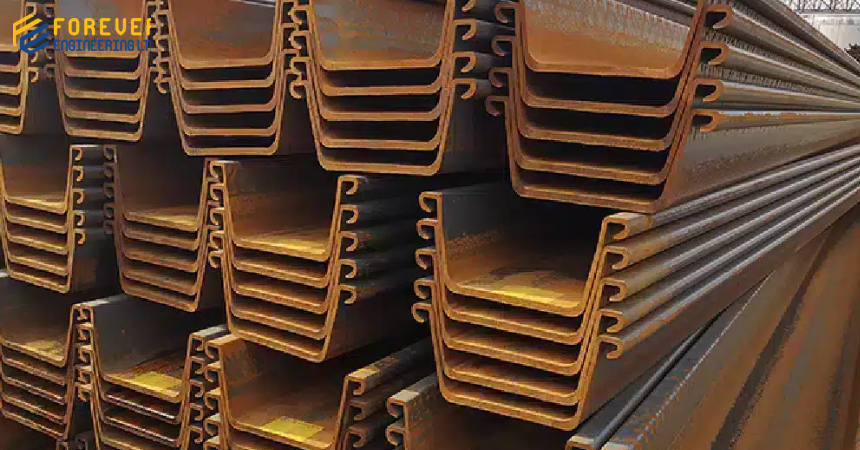
Benefits of Choosing Professional Sheet Piling Services
Working with an experienced sheet piling contractor can provide several benefits throughout the construction process.
Key Benefits Include:
- Better Excavation Support: Properly planned sheet piling can provide support around excavation areas.
- Suitable Material Selection: Professional guidance can help identify suitable sheet pile specifications.
- Efficient Installation: Appropriate equipment and experienced workers can improve installation efficiency.
- Reduced Construction Delays: Proper planning can reduce material, equipment, and coordination problems.
- Better Soil Retention: Correctly installed sheet piles can help control soil movement.
- Groundwater Management: Interlocking sheet piles can help reduce groundwater movement.
- Proper Equipment Use: Suitable piling equipment can improve installation performance.
- Technical Support: Clients can receive project-specific guidance based on site requirements.
- Better Project Coordination: Supply, transportation, installation, and construction activities can be coordinated more effectively.
- Project-Specific Solutions: Sheet piling can be planned according to excavation depth, soil, groundwater, and surrounding conditions.
Safety During Sheet Piling Construction
Sheet piling involves heavy steel materials, cranes, lifting equipment, piling hammers, excavation activities, and other construction operations. Proper safety procedures are necessary throughout the project.
Important Safety Measures Include:
- Inspect sheet piles before lifting and installation.
- Use suitable lifting equipment and accessories.
- Keep workers away from suspended sheet piles.
- Use trained operators for cranes and piling equipment.
- Check ground conditions before positioning heavy equipment.
- Maintain safe access around the excavation.
- Monitor nearby buildings and structures.
- Inspect sheet pile alignment during installation.
- Follow the approved installation sequence.
- Control unauthorized access to the work area.
- Use appropriate personal protective equipment.
- Monitor excessive vibration and unexpected ground movement.
- Stop work if unsafe site conditions are identified.
Why Choose Forever Engineering Ltd. for Sheet Piling Solutions?
Forever Engineering Ltd. provides piling and sheet piling solutions for construction projects in Bangladesh. The company supports sheet pile requirements for excavation, basement construction, retaining structures, bridge projects, marine works, cofferdams, riverbank protection, and infrastructure construction.
Key Reasons to Consider Forever Engineering Ltd. Include:
- Sheet Pile Services: Support for sheet pile supply, installation, and driving requirements.
- Installation Support: Professional support for sheet pile installation projects.
- Project Experience: Experience with piling and construction-related projects.
- Suitable Equipment: Equipment support based on project installation requirements.
- Technical Support: Assistance with sheet pile specifications and project requirements.
- Multiple Applications: Support for basement, excavation, bridge, road, marine, and retaining projects.
- Project-Based Solutions: Planning based on site conditions and construction requirements.
- Professional Coordination: Support throughout material and installation requirements.
- Quotation Support: Clients can discuss their project requirements and request a quotation.
Contact Forever Engineering Ltd. for sheet piling services.
If you are looking for sheet piling services in Bangladesh, Forever Engineering Ltd. can support your project with sheet pile supply, installation, driving, and project-focused piling solutions.
Whether you need sheet piling for basement excavation, deep excavation, retaining walls, bridge construction, road projects, marine works, cofferdams, or other construction applications, discuss your project requirements with the Forever Engineering Ltd. team. You can contact Forever Engineering Ltd. to discuss your project location, excavation requirements, sheet pile specifications, installation requirements, and project schedule and request a quotation.
Conclusion
Sheet piling provides an effective construction solution for projects that require soil retention, excavation support, groundwater management, and protection of surrounding structures. The seven major benefits include stronger soil retention, safer deep excavation, groundwater control, protection of nearby structures, flexible applications, efficient use of construction space, and suitability for temporary or permanent projects.
Forever Engineering Ltd. provides sheet piling and piling support for construction projects in Bangladesh. The company supports applications including basement excavation, building construction, bridge projects, road construction, marine works, cofferdams, riverbank protection, retaining walls, and infrastructure projects.
Before starting a sheet piling project, consider soil conditions, excavation depth, groundwater, pile specifications, installation method, equipment, nearby structures, site access, safety requirements, and overall project cost. Proper planning and professional installation can help improve construction safety, efficiency, and project performance.
Frequently Asked Questions
1. What is sheet piling used for?
Sheet piling is used for soil retention, excavation support, groundwater management, retaining walls, cofferdams, marine construction, basement excavation, bridge projects, and other construction applications.
2. What are the main benefits of sheet piling?
The main benefits include soil retention, excavation support, groundwater control, protection of nearby structures, efficient use of construction space, flexible applications, and temporary or permanent use.
3. Is sheet piling suitable for deep excavation?
Yes. Sheet piling is commonly used for deep excavation support. The required pile profile, length, embedment, and additional support depend on soil conditions, excavation depth, groundwater, and project design.
4. Can sheet piles help control groundwater?
Sheet piles can reduce groundwater movement through the wall, depending on soil conditions and interlock performance. Additional dewatering or water-control systems may be required for some projects.
5. Can sheet piling protect nearby buildings?
Properly designed and installed sheet piling can help reduce soil movement around excavation areas and may help protect nearby buildings, roads, and utilities. Site-specific engineering and monitoring are important.