
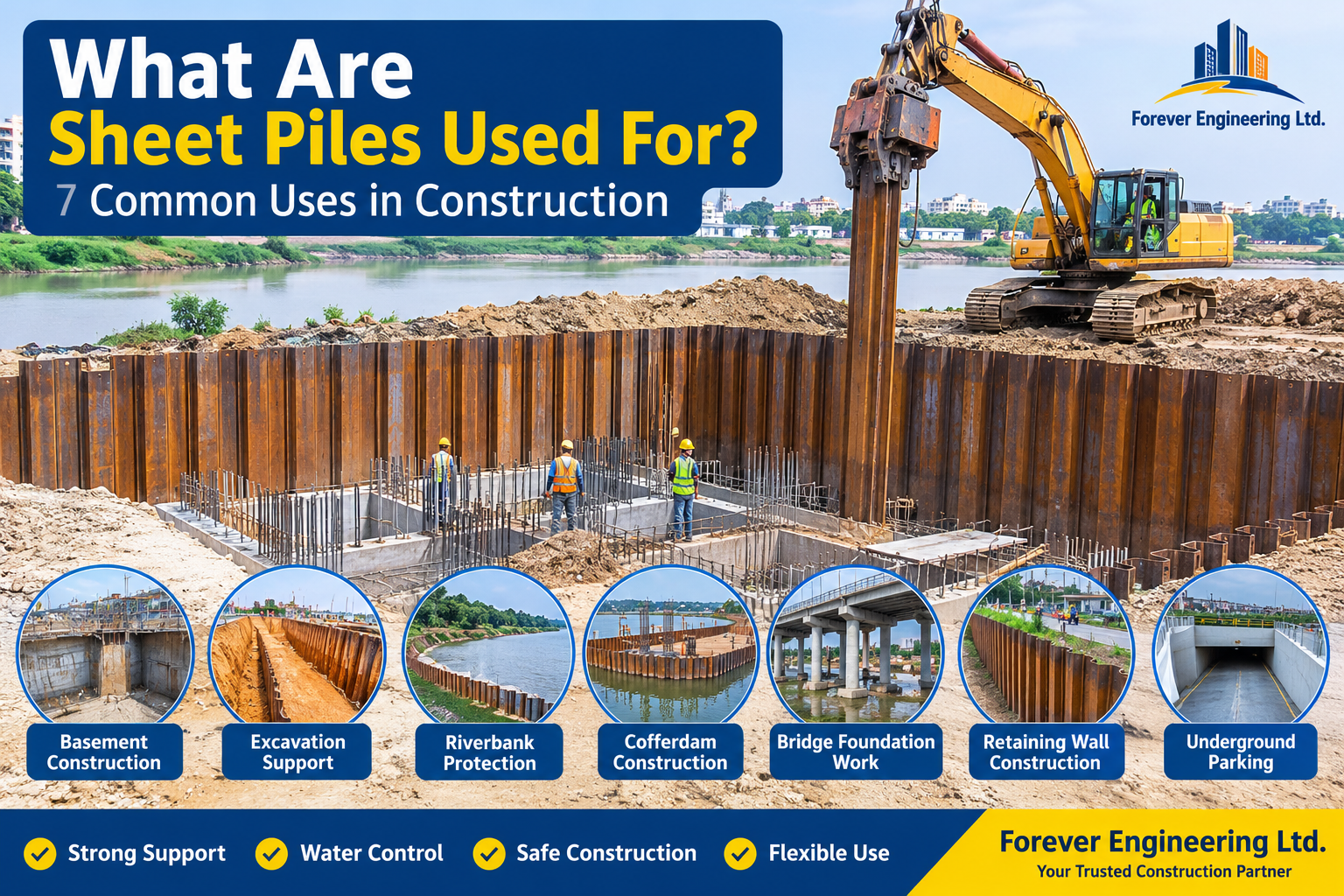
Sheet piles used in construction are important for supporting soil, protecting excavations, and controlling water around building sites. Many people see sheet pile walls near basements, roads, rivers, and bridge construction areas but may not know their purpose. Sheet piles are long sections that are installed into the ground and connected together to form a strong wall. This wall helps hold the soil in place and creates a safer working area for construction. Steel sheet piles are commonly used because they are strong, durable, and suitable for different types of projects. Forever Engineering Ltd. provides sheet pile solutions for various construction needs in Bangladesh.
What Are Sheet Piles?
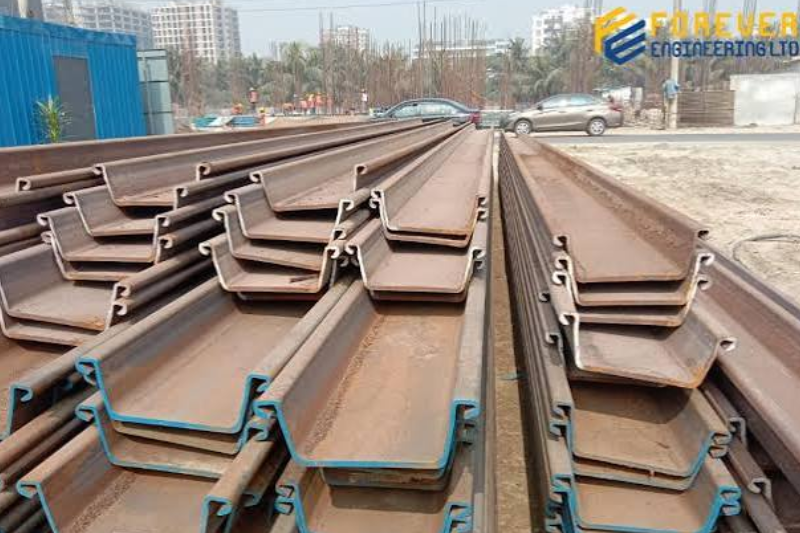
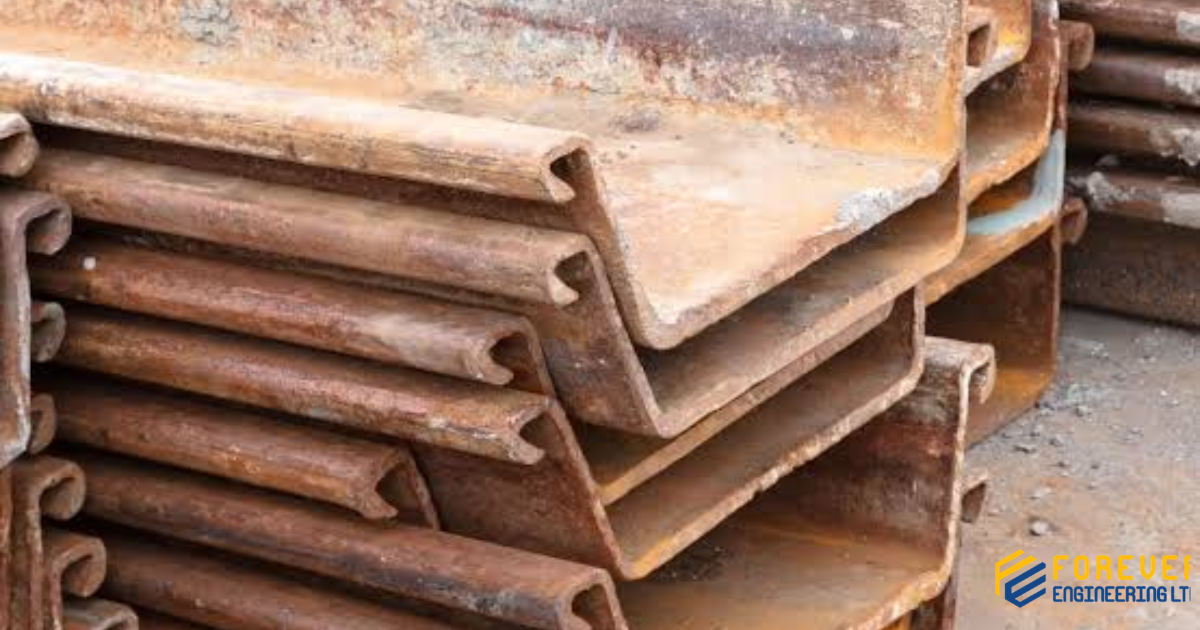
Sheet piles are long building materials made from steel, concrete, or other suitable materials. Steel sheet piles are widely used because they are strong and can be connected through special edges called interlocks. When several sheet piles are installed side by side, they form a continuous wall that helps hold back soil and reduce water movement. These walls are useful when workers need to dig the ground for basements, foundations, or other underground structures. The size, thickness, and length of sheet piles depend on the project design and ground conditions.
What Are Sheet Piles Used For in Construction?
Sheet piles are used in construction when the ground needs support or protection during building work. They help prevent soil from moving into an excavation and can also reduce water entering the construction area. Sheet piles are useful for both temporary and permanent structures, depending on the project requirements. Engineers select the right type of sheet pile after checking the soil, excavation depth, groundwater level, and expected pressure. Their main purpose is to make construction work safer and help protect nearby land and structures.
7 Common Uses of Sheet Piles
- Basement Construction: Sheet piles are used around basement excavations to hold the surrounding soil in place. They help prevent soil from falling into the excavation while workers build underground floors and foundations. This is especially useful in busy areas where there is not enough space for a wide excavation.
- Excavation Support: Sheet piles are used to support the sides of excavations during construction. They help keep the soil stable and reduce the risk of ground movement near the working area. Contractors often use them for deep excavations, trenches, and foundation work where safe soil support is needed.
- Riverbank Protection: Sheet piles are used along riverbanks to help protect the soil from erosion caused by flowing water. They form a strong wall that supports the river edge and helps prevent the bank from breaking down. This application is useful for river protection, drainage projects, and construction near waterways.
- Cofferdam Construction: Sheet piles are used to build temporary enclosures called cofferdams in rivers, canals, and waterlogged areas. A cofferdam helps keep water and soil away from the construction space. Workers can then carry out foundation work, bridge pier construction, or other activities in a more controlled area.
- Bridge Foundation Work: Sheet piles are used during bridge construction to support the soil around foundations and bridge piers. They help protect the excavation from soil movement and water entry while the foundation is being built. This makes them useful for bridge projects near rivers and other water bodies.
- Retaining Wall Construction: Sheet piles are used to build retaining walls where the ground level is different on two sides. The wall helps hold back soil and reduces the chance of ground movement. Sheet pile retaining walls are used near roads, buildings, industrial areas, and waterfront locations.
- Underground Parking and Utility Projects: Sheet piles are used to support excavations for underground parking areas, drainage systems, and utility structures. They help create a stable boundary around the construction area. Their narrow installation space can be helpful in crowded cities where land is limited.
Sheet Piles Used for Temporary and Permanent Construction
Sheet piles can be used for temporary or permanent construction, depending on the project design. Temporary sheet piles are installed to support soil and protect the working area during construction. After the work is completed, they may be removed and reused in another project if their condition is suitable. Permanent sheet piles remain in the ground and become part of the final structure. They are commonly used for retaining walls, riverbank protection, and some basement structures. Engineers decide whether sheet piles should remain or be removed based on the design and site requirements.
Temporary Sheet Piles: Temporary sheet piles are used for short-term construction support. They are commonly installed around excavations, cofferdams, and foundation areas to hold soil in place during work. After construction, these piles can often be extracted and reused if they are not damaged.
Permanent Sheet Piles: Permanent sheet piles stay in the ground after the construction work is finished. They may be used as retaining walls, riverbank protection walls, or parts of basement structures. Permanent sheet piles need proper design and protection against corrosion where required.
Why Are Sheet Piles Important?
Sheet piles are important because they help keep soil stable during construction. When workers dig the ground, nearby soil may move or fall into the excavation. This can create safety risks and damage nearby buildings, roads, or other structures. Sheet pile walls help control this movement and create a safer space for construction. They can also help reduce water entering the working area, depending on the soil and wall design. Properly selected and installed sheet piles support better construction planning and site safety.
Benefits of Using Sheet Piles
Sheet piles offer several benefits for construction projects. Their strong design and flexible use make them suitable for many types of ground support work.
Strong Soil Support: Sheet piles help hold soil in place and resist pressure from the surrounding ground. Their strength depends on the selected section, wall design, and soil conditions. Properly designed sheet pile walls can provide reliable support during excavation and retaining work.
Quick Installation: Sheet piles can often be installed using suitable machines such as vibratory hammers or impact hammers. This can help reduce construction time when the ground conditions are suitable. The actual installation speed depends on pile length, soil type, and equipment.
Less Space Required: Sheet pile walls can be installed close to the excavation boundary. This is useful in crowded construction areas where there is not enough space for a wide excavation. It can help contractors use the available land more efficiently.
Possible Reuse: Temporary steel sheet piles can often be removed and used again in suitable projects. Before reuse, they should be checked for damage, corrosion, straightness, and interlock condition. Proper handling and storage help maintain their quality.
Suitable for Different Projects: Sheet piles are used for basements, riverbanks, bridge foundations, retaining walls, and other construction work. Their size and type can be selected according to the project requirements. This makes them a flexible choice for many construction applications.
How Are Sheet Piles Installed?
Sheet piles are installed by placing them into the ground along the planned wall line. First, the construction team prepares the site and marks the correct position of the wall. Then, suitable equipment is used to drive or press the sheet piles into the ground. Each pile is connected with the next one through its interlocking edges. The installation depth depends on the project design, soil conditions, and the amount of support required.
Vibratory Hammer Installation: A vibratory hammer uses vibration to help move the sheet pile into the ground. It is commonly used for many steel sheet pile projects where soil conditions are suitable. The machine holds the pile and helps reduce soil resistance during installation.
Impact Hammer Installation: An impact hammer drives sheet piles into the ground through repeated blows. It may be used when the soil is dense or when more driving force is needed. Contractors should consider noise and vibration when working near buildings or sensitive structures.
Hydraulic Press-In Installation: A hydraulic press-in machine pushes sheet piles into the ground using hydraulic pressure. It produces less noise and vibration than some traditional driving methods. This method may be suitable for construction areas where noise and vibration need to be controlled.
Important Things to Check Before Using Sheet Piles
Before selecting sheet piles, contractors and engineers should check the project requirements carefully. The correct material and installation method help improve safety and reduce construction problems.
Soil Conditions: Soil type affects how easily sheet piles can be installed and how they support the ground. A soil investigation helps identify soft soil, dense layers, groundwater, and possible obstructions. This information helps engineers select suitable sheet piles.
Excavation Depth: The depth of the excavation affects the required sheet pile length and thickness. Deeper excavations may need longer piles or additional support systems. Engineers should follow the approved design when selecting the pile size.
Groundwater Level: Groundwater can affect the design and installation of sheet pile walls. Some projects may need extra water control, drainage, or sealing arrangements. The required solution depends on the water level and site conditions.
Nearby Buildings: Existing buildings, roads, and underground utilities should be considered before sheet pile installation. Driving equipment can create vibration or ground movement. A suitable installation method helps reduce possible effects on nearby structures.
Sheet Pile Solutions from Forever Engineering Ltd.
Forever Engineering Ltd. provides sheet pile supply and project support for different construction needs in Bangladesh. Sheet piles are commonly used for basement construction, excavation support, foundation work, riverbank protection, and infrastructure projects. Selecting the right sheet pile size and installation method is important for the safety and performance of a project. Forever Engineering Ltd. considers material specifications, soil conditions, structural requirements, and installation needs when supporting customers. The company aims to provide competitive pricing, dependable service, and practical support according to individual project requirements. Contractors, consultants, and project owners can discuss their requirements and request a quotation for suitable sheet pile solutions.
Conclusion
Sheet piles are used in many construction projects to hold soil, support excavations, protect riverbanks, and control water movement around working areas. They are commonly used for basements, retaining walls, cofferdams, bridge foundations, and underground construction. Sheet piles can be temporary or permanent, depending on the project design. Proper material selection, soil investigation, and installation planning help make construction safer and more efficient. Forever Engineering Ltd. provides sheet pile supply and project support for different construction requirements in Bangladesh.
Frequently Asked Questions
- What are sheet piles used for?
Sheet piles are used to hold soil in place, support excavations, protect riverbanks, and reduce water movement around construction areas. They are commonly used in basement construction, retaining walls, cofferdams, and bridge foundations.
- Are sheet piles used for basement construction?
Yes. Sheet piles are often installed around basement excavations to support the surrounding soil. They help prevent soil movement and provide a safer working area during underground construction.
- Can sheet piles protect riverbanks?
Yes. Sheet piles can be installed along riverbanks to help hold the soil and reduce erosion caused by flowing water. Their design depends on the soil, water pressure, and project requirements.
- What is a sheet pile cofferdam?
A sheet pile cofferdam is a temporary enclosure made using sheet piles in or near water. It helps keep water and soil away from the working area during foundation or bridge construction.
- Can sheet piles be reused?
Yes. Temporary steel sheet piles may be reused if they remain in suitable condition. They should be checked for damage, corrosion, straightness, and interlock condition before reuse.
- Are sheet piles suitable for permanent construction?
Yes. Sheet piles can be used for permanent retaining walls, riverbank protection, and some basement structures. Permanent use requires proper structural design and suitable durability measures.
- Which machine is used to install sheet piles?
Vibratory hammers, impact hammers, and hydraulic press-in machines are commonly used. The suitable machine depends on soil conditions, pile specifications, nearby structures, and project requirements.