
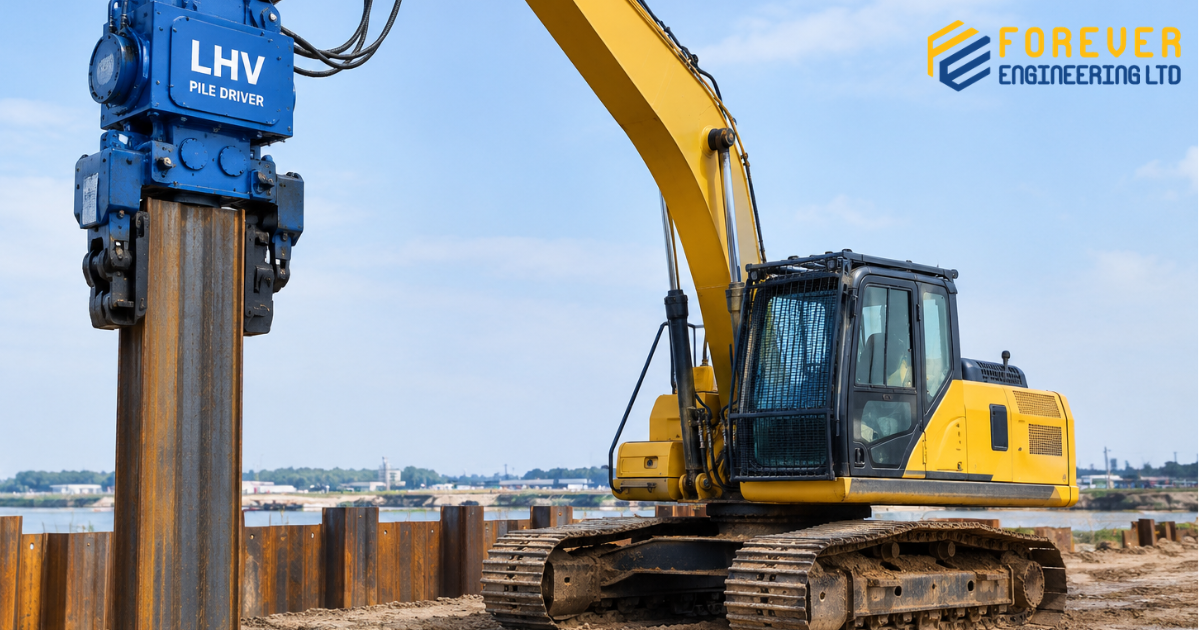
What Is LHV Pile Driving?
LHV Pile Driving uses an excavator-mounted hydraulic vibratory hammer to install piles into the ground. The machine holds the pile with a special clamp and uses vibration to reduce the resistance between the pile and the surrounding soil. The excavator also helps guide and press the pile into position. LHV equipment can be used for suitable steel sheet piles and other pile types supported by the machine’s specifications. One useful feature is that the same type of equipment can also help extract piles after temporary construction work is complete. This makes it a practical option for projects that need both pile installation and removal.
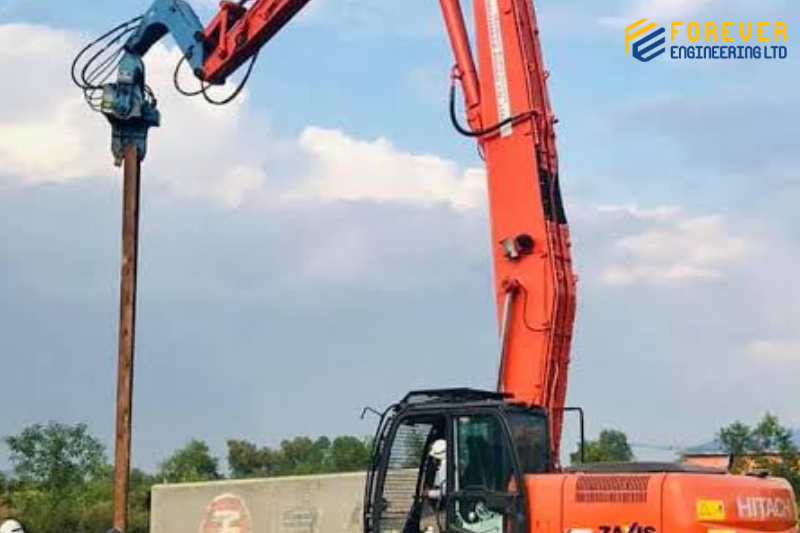
How Does an LHV Machine Work?
An LHV machine works through a combination of hydraulic power, vibration, and controlled movement. The hydraulic system operates the vibratory hammer, while the clamp holds the pile securely during the work. The vibration helps reduce soil resistance, allowing the pile to move into the ground. The excavator arm helps the operator position the pile and guide it in the required direction. During extraction, the machine grips the installed pile and uses vibration with a controlled pulling force to help remove it. The operator must follow the machine manufacturer’s instructions and monitor the pile throughout the process. Proper control helps keep the pile aligned and reduces the risk of damage.
Main Methods of LHV Pile Driving
The method used for LHV Pile Driving depends on the project requirements, soil conditions, pile dimensions, and available working space. The following methods are commonly considered for sheet pile installation and removal.
- Single Pile Driving: In this method, workers install one sheet pile at a time. The operator positions the pile, grips it with the LHV machine, and drives it into the ground. This method can be useful for small projects or sites where access and space are limited.
- Pitch and Drive Method: Workers position and install sheet piles one after another along the planned wall line. Each pile is connected to the previous pile through its interlock. The team must check the position and vertical alignment regularly to prevent the wall from moving away from the planned line.
- Guide Frame Method: A guide frame helps workers keep the sheet piles in the correct position during installation. It can improve alignment and help maintain a straight sheet pile wall. This method is useful when accurate positioning is important for the project.
- Vibratory Pile Extraction: In this method, the LHV machine grips an installed pile and applies vibration while pulling it upward. The vibration helps reduce soil resistance around the pile. It is often considered when temporary sheet piles need to be removed after excavation or foundation work is complete.
LHV Pile Driving Process: Step by Step
A clear installation process helps workers control the equipment and place the piles correctly. Before starting, the project team should review the drawings, soil conditions, pile specifications, and site safety requirements.
- Step 1: Prepare the Site: Check the working area, ground stability, access route, overhead restrictions, and nearby structures. Make sure the excavator can operate safely in the available space.
- Step 2: Check the Sheet Piles: Inspect each pile for damage, bending, or problems with the interlocks. Confirm that the pile length and profile match the project requirements.
- Step 3: Position the LHV Machine: Place the excavator on stable ground and check that the hydraulic system and LHV attachment are ready for use. Follow the manufacturer’s instructions before operating the equipment.
- Step 4: Grip the Pile: Use the machine’s clamp to hold the sheet pile securely. Check that the pile is properly positioned before starting the driving operation.
- Step 5: Align the Pile: Position the pile along the planned wall line and check its vertical alignment. Correct positioning at the beginning helps prevent problems during installation.
- Step 6: Drive the Pile: Operate the LHV machine to apply vibration and controlled force. Monitor the pile’s movement and penetration depth throughout the process.
- Step 7: Check the Final Position: Once the pile reaches the required depth, check its position and alignment. Continue with the next pile according to the installation plan.
LHV Pile Extraction Methods
Pile extraction is an important part of projects where sheet piles are used temporarily. For example, contractors may install sheet piles to support soil during basement excavation and remove them after the required construction work is complete. LHV equipment can help with this task when the pile and ground conditions are suitable.
- Direct Vibratory Extraction: The LHV machine grips the exposed part of the pile and applies vibration while pulling upward. This helps reduce the friction between the pile and the surrounding soil, making removal easier in suitable conditions.
- Controlled Step-by-Step Extraction: When a pile is difficult to remove, the operator may need to work carefully in stages according to the machine’s instructions and the approved extraction plan. Sudden pulling should be avoided because it can damage the pile or create unsafe movement.
- Extraction with Supporting Equipment: Some projects may require additional equipment to support pile handling or move the extracted piles to a storage area. The team must ensure that all machines and lifting accessories are suitable for the load and working conditions.
- Planned Pile Removal Sequence: Sheet piles should be removed in a planned order based on the temporary works design. Removing piles in the wrong order may affect soil support, ground stability, or nearby structures.
Advantages of LHV Pile Driving
LHV equipment offers several useful features for suitable piling projects. Its main benefit is the combination of hydraulic vibration and excavator-based movement.
- Useful in Limited Spaces: The excavator-mounted design can help the machine work in narrow areas where larger piling equipment may be difficult to position.
- Installation and Extraction: Suitable LHV equipment can be used for both driving piles into the ground and extracting them later. This can be helpful when temporary sheet piles are reused across projects.
- Low Noise and Vibration Features: LHV machines are designed for lower-noise and lower-vibration operation than some conventional piling methods. However, actual noise and vibration depend on the soil, equipment settings, pile type, and nearby conditions.
- Flexible Operation: The excavator arm helps the operator position and guide piles during the work. This can be useful when working around restricted access areas.
- Reduced Need for Separate Equipment: Depending on the machine model and site setup, an LHV attachment may perform several pile-handling tasks without requiring a separate crane for every operation.
Where Is LHV Pile Driving Used?
LHV Pile Driving can be used in different construction projects when the equipment is suitable for the pile type and ground conditions.
- Basement Construction: Sheet piles may be installed to support soil around basement excavations. Temporary piles may later be extracted when the project design and ground conditions allow safe removal.
- Roadside Construction: Compact excavator-mounted equipment can be useful on narrow roads and roadside sites where working space is limited.
- Riverbank Protection: Steel sheet piles may be installed to support riverbank protection works. The installation method must suit the ground conditions and project design.
- Utility and Drainage Work: Temporary sheet piles can provide support around selected drainage, pipeline, and utility excavations.
- Temporary Retaining Walls: LHV equipment may be used to install suitable sheet piles for temporary soil support. The pile design and installation method must follow the project’s engineering requirements.
Factors to Consider Before Using an LHV Machine
Before choosing an LHV machine, contractors should check whether the equipment can handle the planned work safely and effectively.
- Soil Conditions: Soft soil and loose sand may allow easier pile installation than dense soil or ground containing obstructions. A soil investigation helps determine whether the LHV method is suitable.
- Pile Size and Weight: The machine’s clamp and operating capacity must match the pile’s profile, dimensions, and weight. Not every LHV model can handle every type of sheet pile.
- Required Depth: The installation depth affects the resistance the pile may face. Contractors should check whether the selected machine can achieve the required depth under the expected ground conditions.
- Excavator Compatibility: The excavator must meet the attachment manufacturer’s requirements for hydraulic flow, pressure, operating weight, and other specifications.
- Nearby Structures: Even equipment designed for lower vibration can affect surrounding buildings or underground services. The team should assess risks and arrange vibration monitoring when needed.
- Extraction Requirements: Removing a pile can be difficult when it has been installed deeply or held tightly by the soil. The extraction plan should consider pile length, soil resistance, and the stability of nearby ground.
Safety Precautions for LHV Pile Driving and Extraction
Safe operation is essential during both pile installation and removal. The operator and ground team should understand their responsibilities before work begins.
- Inspect the Machine: Check the LHV attachment, clamp, hydraulic hoses, excavator, and safety systems before starting work.
- Check Ground Stability: Make sure the excavator is positioned on stable ground and has enough room to operate safely.
- Secure the Pile: Confirm that the clamp grips the pile properly before driving or extracting it.
- Keep Workers Clear: Workers should stay away from the moving pile, excavator arm, and other dangerous areas. No one should stand beneath a suspended load.
- Monitor Alignment: Check the pile’s position during installation to reduce the risk of leaning or movement away from the planned wall line.
- Watch for Unexpected Resistance: If the pile stops moving or the machine behaves unusually, the operator should stop and assess the problem instead of applying uncontrolled force.
- Follow the Manufacturer’s Instructions: Use the machine within its rated limits and follow the approved installation, extraction, and maintenance procedures.
Common Problems During LHV Pile Driving
Some problems may occur when the machine is not suitable for the ground conditions or the work is not properly planned. Understanding these issues helps the team respond before they cause major delays.
- Slow Pile Penetration: Dense soil, underground obstructions, or an unsuitable machine can slow installation. The team should review the soil conditions and choose an appropriate solution.
- Pile Misalignment: A pile may lean or move away from the planned line if it is not positioned correctly. Using a guide frame and checking alignment during installation can help prevent this problem.
- Difficult Pile Extraction: Deeply embedded piles or strong soil resistance can make removal difficult. The operator should follow the extraction plan and avoid uncontrolled pulling.
- Hydraulic Problems: Incorrect hydraulic settings or damaged hoses can affect machine performance. Regular inspection and proper maintenance help reduce these issues.
How Forever Engineering Ltd. Supports Piling Projects
Forever Engineering Ltd. recognizes the importance of suitable equipment and proper planning for sheet pile installation work. Every project has different requirements, including soil conditions, pile dimensions, installation depth, and site access. Reviewing these factors helps contractors choose an appropriate piling method and prepare for possible site challenges. Safe operation, correct pile alignment, and proper equipment selection are important for completing piling work efficiently. For LHV pile driving projects, the machine and installation method should always be selected according to the project’s technical requirements.
Conclusion
LHV pile driving is a useful method for installing and extracting suitable piles in construction projects. Its excavator-mounted design can help with work in restricted spaces, while its hydraulic vibratory system helps reduce soil resistance during installation and removal. However, the right results depend on soil conditions, pile size, machine capacity, and proper operation. Contractors should check these factors and follow safe working procedures before starting a site driving. Forever Engineering Ltd. understands the importance of careful planning and suitable piling methods for construction projects.
Frequently Asked Questions
- What is LHV Pile Driving?
LHV Pile Driving uses an excavator-mounted hydraulic vibratory hammer to install suitable piles into the ground.
- Can an LHV machine extract sheet piles?
Yes. Suitable LHV machines can drive and extract piles, provided the equipment and ground conditions are appropriate.
- What types of piles can an LHV machine handle?
Depending on the model, an LHV machine may handle suitable steel sheet piles, H-section piles, and other supported pile types. Always check the manufacturer’s specifications.
- Is LHV Pile Driving suitable for narrow spaces?
It can be useful in narrow working areas because the equipment is mounted on an excavator. Actual suitability depends on the excavator’s size, working space, and site access.
- Does LHV Pile Driving produce noise and vibration?
Yes, but LHV equipment is designed to reduce noise and vibration compared with some conventional piling methods. Actual levels depend on the machine, soil, and site conditions.
- What affects the performance of an LHV machine?
Soil conditions, pile size, installation depth, hydraulic capacity, and the operator’s technique all affect performance.
- What safety measures are needed during LHV pile extraction?
Workers should check the machine and clamp, keep clear of moving piles, monitor the surrounding ground, and follow the approved extraction plan.