
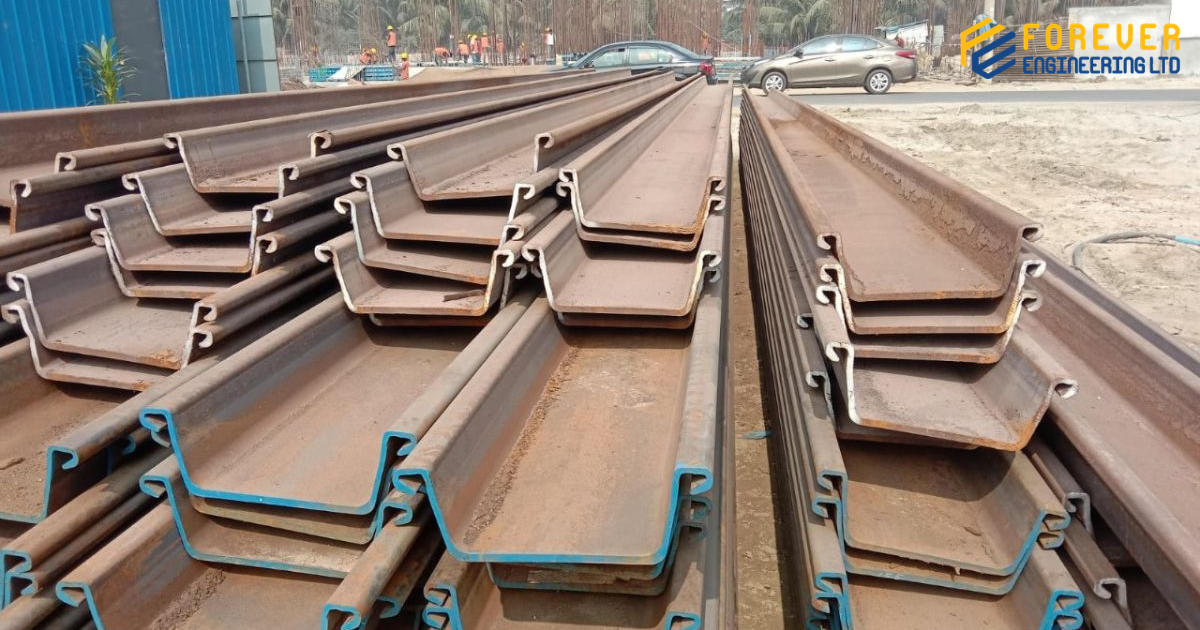
Sheet pile driving depth is an important part of sheet pile installation. The required depth depends on soil conditions, excavation depth, groundwater, lateral pressure, sheet pile type, loads, and project requirements. Driving the piles to the correct depth helps provide proper support and stability.
Sheet piles are commonly used for excavation support, retaining walls, cofferdams, riverbank protection, bridge construction, marine structures, and basement construction. The required driving depth is not the same for every project. Engineers need to study the site conditions before deciding how deep the sheet piles should go.
Forever Engineering Ltd. provides sheet pile supply and installation solutions for different construction projects in Bangladesh. The company can support projects with suitable sheet pile selection and installation methods based on site and project requirements.
What Is Sheet Pile Driving Depth?
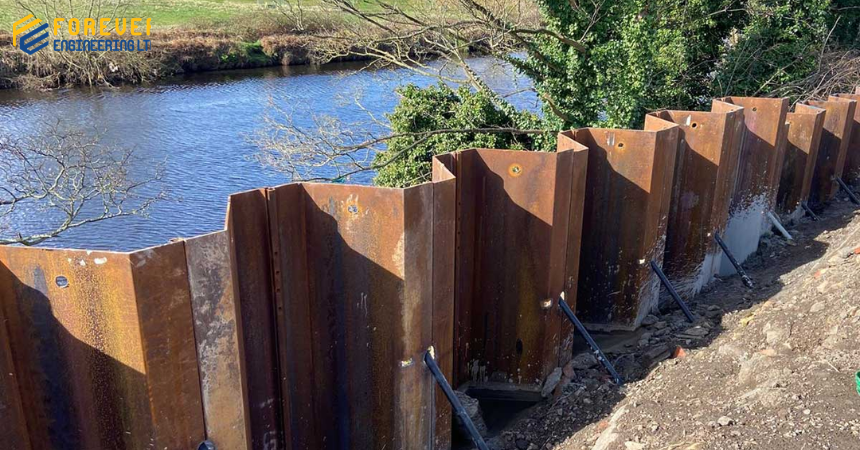
Sheet pile driving depth means the total depth to which a sheet pile is installed below the ground surface or required construction level.
A part of the sheet pile remains above the excavation or ground level to provide the required retaining support. The remaining part goes below the excavation level as embedment. This embedded section helps resist soil pressure and supports the stability of the sheet pile wall.
The required depth depends on the design of the wall and the conditions around the excavation.
Main Factors That Affect Sheet Pile Driving Depth Include:
- Excavation Depth: A deeper excavation usually requires greater pile embedment.
- Soil Condition: Different soils provide different levels of resistance.
- Groundwater Level: Water pressure can increase the forces acting on the wall.
- Lateral Earth Pressure: Soil pressure affects the required depth and pile capacity.
- Nearby Loads: Buildings, roads, cranes, and materials can increase pressure behind the wall.
- Sheet Pile Type: Pile profile, thickness, stiffness, and strength affect the design.
Why Is Sheet Pile Driving Depth Important?
The correct driving depth helps the sheet pile wall resist soil and water pressure. If the embedded section is not sufficient, the wall may experience excessive movement or instability.
Proper depth also helps maintain the stability of an excavation during construction. This is especially important for deep excavations, basement projects, bridge foundations, and cofferdams.
Proper Planning Helps With:
- Better excavation stability
- Improved resistance against soil pressure
- Better groundwater control
- Reduced risk of excessive wall movement
- Proper use of sheet pile materials
- Better installation planning
- Improved construction safety
Sheet Pile Driving Depth Solutions Offered by Forever Engineering Ltd.
Forever Engineering Ltd. supports sheet pile projects by providing sheet pile supply and driven services for different construction requirements in Bangladesh.
The required pile length and driving depth depend on project conditions. Forever Engineering Ltd. can help clients select and install sheet piles according to the project requirements, soil conditions, excavation requirements, and installation method.
The company can use vibratory, impact, and vibration-free installation methods depending on the site and project requirements.
What Factors Affect Sheet Pile Driving Depth?
Several factors should be reviewed before determining the required depth.
- Excavation Depth: The depth of excavation is one of the main factors. Deeper excavation normally requires sufficient embedment below the excavation level.
- Soil Type: Clay, sand, silt, gravel, and mixed soil can provide different levels of resistance to the embedded sheet pile.
- Groundwater: Groundwater can create additional pressure and affect the stability of the excavation.
- Soil Pressure: Lateral earth pressure acts against the sheet pile wall and influences the required embedment.
- Water Pressure: Water on one or both sides of a sheet pile wall can change the forces acting on the structure.
- Nearby Structures: Buildings and other structures near the excavation can add loads behind the sheet pile wall.
- Traffic Loads: Roads, vehicles, and heavy equipment near the excavation can increase the pressure on the retaining system.
- Sheet Pile Profile: The shape, stiffness, thickness, and strength of the sheet pile can affect the required design.
- Wall Support System: Anchors, struts, walers, and bracing systems can influence how the sheet pile wall performs.
- Soil Layer Changes: Different soil layers below the ground can affect resistance and driving conditions.
- Installation Method: Vibratory, impact, and press-in methods can have different requirements depending on the ground condition.
- Project Requirements: Temporary and permanent sheet pile structures may require different design considerations.
What Is Included in Sheet Pile Driving Depth Planning?
Determining the required depth involves more than measuring the excavation depth. Engineers and contractors need to consider the complete site condition.
Main Planning Activities Include:
- Reviewing soil investigation information
- Checking excavation depth
- Identifying groundwater conditions
- Studying nearby structures and loads
- Selecting a suitable sheet pile profile
- Determining required pile length
- Planning pile embedment
- Selecting the installation method
- Checking equipment requirements
- Planning pile positioning
- Monitoring driving depth
- Checking final pile alignment
A proper plan helps the installation team understand the required pile length and target driving level before starting the work.
How Can You Determine the Required Sheet Pile Driving Depth?
The required depth should be determined through proper engineering assessment rather than using one fixed depth for every project.
Follow These Steps:
- Study the Project: Understand the purpose of the sheet pile wall and the construction sequence.
- Determine Excavation Level: Identify the final excavation depth that the sheet pile wall needs to support.
- Review Soil Data: Study the available soil investigation and identify different soil layers.
- Check Groundwater: Determine the groundwater level and possible water pressure.
- Identify Nearby Loads: Check buildings, roads, equipment, stored materials, and other loads near the excavation.
- Assess Earth Pressure: Consider the pressure acting against the sheet pile wall.
- Select the Sheet Pile: Choose the suitable profile, thickness, strength, and length.
- Determine Embedment: Calculate the required portion of the pile that must remain below the excavation level.
- Select the Support System: Determine whether anchors, struts, walers, or other support systems are required.
- Select Equipment: Choose suitable installation equipment based on soil and pile conditions.
- Drive the Sheet Piles: Install the piles to the planned level while maintaining proper alignment.
- Monitor Installation: Check the final driving depth, alignment, and site conditions throughout the work.
Sheet Pile Driving Depth for Different Construction Applications
Different projects require different sheet pile depth considerations. The depth should always match the project design and ground conditions.
Common Applications Include:
- Deep Excavation: Sheet piles require adequate embedment to support deep excavation walls.
- Basement Construction: Proper depth helps retain surrounding soil during basement excavation.
- Bridge Construction: Sheet piles can be used around bridge foundation work and cofferdams.
- Road Projects: They can support excavation near roads and other infrastructure.
- Riverbank Protection: Deeper embedment can help provide stability against soil and water movement.
- Marine Construction: Sheet pile depth depends on water level, soil, structural loads, and project requirements.
- Cofferdams: The piles need adequate embedment to create a stable enclosed work area.
- Retaining Walls: The embedded portion helps resist lateral soil pressure.
- Port Construction: Sheet pile depth depends on ground conditions and marine loads.
- Water Treatment Projects: Sheet piles can support excavation for treatment plants and related structures.
- Temporary Excavation Support: The required depth depends on excavation conditions and the planned support period.
How Can You Improve Sheet Pile Driving Efficiency?
Correct planning can make sheet pile installation more efficient and reduce unnecessary delays.
Consider These Factors:
- Review Soil Information: Understand the ground conditions before selecting equipment.
- Select the Correct Pile: Use a suitable profile and length for the project.
- Plan the Driving Sequence: A proper sequence can help maintain alignment and installation control.
- Use Suitable Equipment: Select a hammer that matches the pile and ground conditions.
- Prepare the Site: Provide enough space for cranes, piling equipment, and material handling.
- Maintain Alignment: Proper alignment helps the sheet pile wall perform as planned.
- Monitor Driving: Record pile depth and installation progress during the work.
- Manage Equipment Movement: Good site planning helps reduce unnecessary equipment movement.
- Check Interlocks: Proper interlocking is important for creating a continuous sheet pile wall.
- Coordinate With Excavation Work: Sheet pile installation should match the planned excavation sequence.
How Does Forever Engineering Ltd. Support Sheet Pile Driving Depth Requirements?
Forever Engineering Ltd. provides sheet pile supply and driven services for different construction projects in Bangladesh. The company works with sheet pile installation equipment and methods suited to project requirements.
For each project, factors such as soil condition, excavation depth, pile specifications, and installation requirements need to be considered before installation.
Forever Engineering Ltd. can provide support for sheet pile projects involving excavation support, retaining structures, cofferdams, riverbank protection, bridge construction, and other infrastructure work.
Benefits of Choosing the Right Sheet Pile Driving Depth
Selecting the appropriate driving depth can provide several benefits during construction.
Key Benefits Include:
- Better Wall Stability: Adequate embedment helps support the sheet pile wall.
- Improved Soil Retention: Proper depth helps resist soil movement.
- Better Excavation Support: The wall can provide more reliable support around the excavation.
- Improved Water Control: Properly designed sheet piles can help reduce water movement.
- Reduced Construction Risk: Correct planning can reduce the risk of excessive wall movement.
- Better Equipment Planning: Knowing the required depth helps select suitable installation equipment.
- Efficient Material Use: Proper pile length can reduce unnecessary material use.
- Better Project Planning: Accurate depth requirements help contractors plan supply and installation.
Safety During Sheet Pile Driving
Sheet pile installation involves heavy steel piles, cranes, hammers, and other equipment. Proper safety procedures are important throughout the work.
Important Safety Measures Include:
- Inspect sheet piles before installation.
- Check cranes and piling equipment before operation.
- Use trained equipment operators.
- Keep workers away from suspended piles.
- Maintain a safe distance from operating hammers.
- Use proper personal protective equipment.
- Keep the installation area clear.
- Check pile alignment during driving.
- Monitor nearby structures.
- Control access to the piling area.
- Check ground stability before equipment movement.
- Stop work if unsafe conditions develop.
Why Choose Forever Engineering Ltd. for Sheet Pile Installation?
Forever Engineering Ltd. provides sheet pile supply and driven services for construction projects in Bangladesh. The company supports different sheet pile applications and installation requirements.
Key Reasons to Consider Forever Engineering Ltd. Include:
- Sheet pile supply
- Sheet pile driving services
- Technical project support
- Experienced piling team
- Suitable installation equipment
- Vibratory installation
- Impact installation
- Vibration-free installation
- Support for excavation projects
- Support for infrastructure projects
- Cofferdam and retaining applications
The correct Sheet Pile Driving Depth depends on the actual project conditions. Forever Engineering Ltd. can discuss your project requirements and provide suitable sheet pile solutions.
Contact Forever Engineering Ltd. for Sheet Pile Solutions
If you need help with Sheet Pile Driving Depth, sheet pile supply, or installation for a construction project, contact Forever Engineering Ltd.
The company can support projects involving excavation support, retaining walls, bridge construction, cofferdams, riverbank protection, marine structures, and other infrastructure works.
For project consultation, sheet pile supply, or pricing information, contact Forever Engineering Ltd. at +880 1894 615871 or +880 1894 615872. You can also email info@foreverengineeringltd.com.
Conclusion
Sheet Pile Driving Depth plays an important role in the stability and performance of a sheet pile wall. The required depth depends on excavation depth, soil condition, groundwater, earth pressure, nearby loads, sheet pile specifications, and the support system.
There is no single driving depth that works for every project. A proper site assessment and engineering design should determine the required embedment before installation begins.
Forever Engineering Ltd. provides sheet pile supply and driven services for different construction applications in Bangladesh. With suitable planning, equipment, and installation methods, the company can support contractors and project owners with practical sheet pile solutions.
Frequently Asked Questions
1. What is Sheet Pile Driving Depth?
Sheet pile driving depth is the total depth to which a sheet pile is installed into the ground. The required depth includes the portion needed below the excavation level for stability.
2. How deep should sheet piles be driven?
There is no fixed depth for every project. The required depth depends on excavation depth, soil condition, groundwater, lateral pressure, loads, pile type, and engineering design.
3. Why is sheet pile embedment important?
Embedment provides resistance against soil and water pressure and helps support the stability of the sheet pile wall.
4. Does soil type affect sheet pile driving depth?
Yes. Soil type and soil layers affect resistance around the embedded pile and can influence the required depth and installation method.
5. Does groundwater affect sheet pile depth?
Yes. Groundwater can create additional pressure and affect excavation stability. The groundwater condition should be considered during sheet pile design.
6. Can sheet piles be used for deep excavation?
Yes. Sheet piles are commonly used for excavation support. The required pile length and embedment depend on the depth and conditions of the excavation.
7. What equipment is used to drive sheet piles?
Common equipment includes vibratory hammers, impact hammers, cranes, and other supporting equipment. The selection depends on pile specifications and site conditions.
8. Can sheet pile depth be changed during installation?
The target depth should come from the approved project design. If actual ground conditions differ from expectations, the project engineer may need to review the installation requirements.
9. Does pile length equal driving depth?
Not always. The total sheet pile length includes the section above the excavation or ground level and the embedded section below it.
10. Can Forever Engineering Ltd. help with sheet pile installation?
Yes. Forever Engineering Ltd. provides sheet pile supply and driven services and can support different sheet pile installation requirements in Bangladesh.