
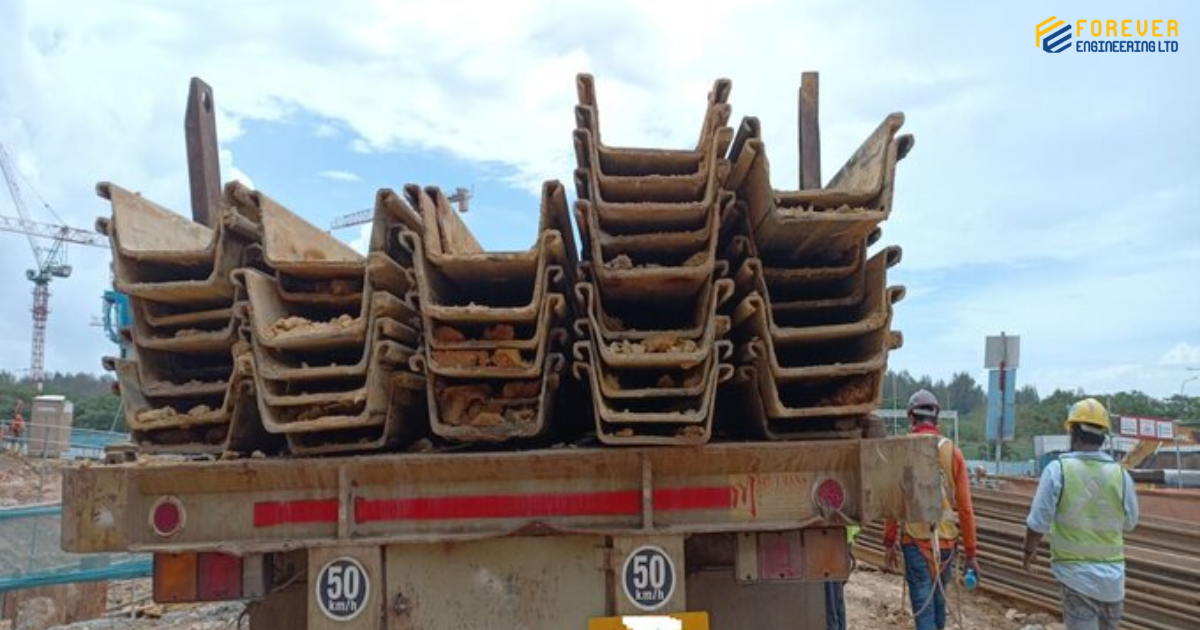
Sheet Pile Installation in Soft Soil requires proper planning, suitable equipment, and careful control during driving. Soft clay, loose soil, saturated ground, and weak soil layers can create installation challenges such as pile movement, poor alignment, low resistance, and ground disturbance. Contractors should study the soil condition and select the correct installation method before starting work.
Steel sheet piles provide strong support for excavation, retaining walls, cofferdams, riverbank protection, basement construction, marine projects, and other civil engineering works. Proper installation helps maintain wall alignment and achieve the required penetration depth.
Forever Engineering Ltd. provides sheet pile solutions for construction projects. Our team can help clients understand their sheet pile installation requirements and identify suitable equipment and methods based on soil conditions, pile specifications, project requirements, and site conditions.
What Is Sheet Pile Installation in Soft Soil?
Sheet pile installation in soft soil is the process of driving or pressing steel sheet piles into weak or soft ground to create a continuous retaining or support wall. Soft soil usually offers less resistance to pile penetration than dense or hard ground, but it can create other problems such as excessive pile movement, soil displacement, and alignment issues.
Contractors commonly use vibratory hammers, hydraulic press-in systems, cranes, pile clamps, and guide systems for sheet pile installation. The equipment selection depends on the soil condition, pile size, pile length, installation depth, site access, and project requirements.
A complete sheet pile installation system may include a crane, hammer, clamp, power unit, lifting accessories, and pile guide. Proper coordination between these components helps workers install sheet piles safely and maintain the required wall alignment.
Why Is Sheet Pile Installation in Soft Soil Important?
The right installation method can make sheet pile work more efficient and controlled in soft ground. Although soft soil may allow easier penetration, it can also cause piles to move from their planned position during installation.
Key Benefits Include:
- Faster Installation: Suitable equipment can drive sheet piles efficiently through soft soil. This can help workers complete installation faster and reduce unnecessary delays.
- Better Pile Penetration: Proper equipment can help the sheet piles reach the planned depth. Controlled driving also helps prevent installation problems caused by unstable soil.
- Improved Alignment: A suitable pile guide helps keep the sheet piles in the correct position. Good alignment allows the piles to interlock properly and helps create a straight wall.
- Reduced Ground Disturbance: Controlled installation can reduce unnecessary soil movement around the sheet pile wall. This is important when nearby buildings, roads, utilities, or other structures are present.
- Suitable for Weak Ground: Sheet piles can provide effective support in soft clay, loose soil, saturated ground, and other weak soil conditions when the design and installation method are suitable.
- Better Project Planning: Understanding the soil condition before installation helps contractors select the correct equipment, pile length, installation method, crane, and workforce.
- Improved Safety: Suitable equipment, trained operators, proper lifting procedures, and controlled pile driving help create a safer working area for the construction team.
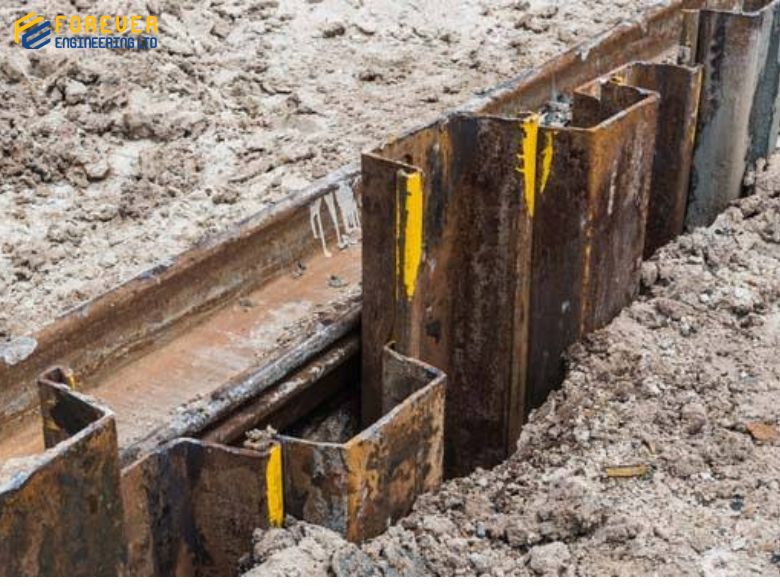
Sheet Pile Installation Equipment Offered by Forever Engineering Ltd.
Forever Engineering Ltd. provides sheet pile equipment and solutions for different construction projects. The right equipment depends on the pile type, soil condition, installation depth, and project requirements.
- Vibratory Hammer Support: A vibratory hammer uses vibration to help drive sheet piles into soft soil. It is commonly used because it can provide efficient penetration with controlled operation.
- Hydraulic Press-In Support: Hydraulic press-in systems push sheet piles into the ground using hydraulic force. They can be useful on projects where vibration and noise need to be controlled.
- Crane Coordination: A crane lifts and places sheet piles and installation equipment at the work site. The crane should have enough capacity to handle the pile and equipment safely.
- Pile Clamp: A pile clamp holds the sheet pile firmly during installation. It helps transfer the driving or pressing force to the pile.
- Pile Guide: A pile guide keeps the sheet pile in the correct position during installation. It helps maintain wall alignment and reduces unwanted pile movement.
- Project-Based Equipment Planning: Forever Engineering Ltd. helps clients choose suitable equipment for their projects. The team considers soil condition, pile size, pile length, installation depth, site space, and project requirements before recommending equipment.
What Is the Sheet Pile Installation Method for Soft Soil?
The suitable sheet pile installation in soft soil method depends on the soil profile, pile specifications, required penetration depth, vibration restrictions, nearby structures, and project design.
The final method may include:
| Installation Requirement | Suitable Approach |
| Soft clay | Vibratory installation or controlled press-in |
| Loose soil | Controlled driving with proper guidance |
| Saturated soft soil | Suitable vibratory or press-in equipment |
| Sensitive nearby structures | Low-vibration installation method |
| Deep sheet pile wall | Suitable high-capacity installation equipment |
| Restricted working area | Compact or suitable press-in equipment |
| Temporary sheet pile wall | Efficient driving and possible extraction planning |
| Permanent sheet pile wall | Installation based on project design and soil conditions |
There is no single installation method for every soft soil project. Contractors should review the geotechnical investigation, pile design, site restrictions, and required penetration before selecting equipment.
What Is Included in Sheet Pile Installation Cost?
The equipment cost may not represent the complete cost of sheet pile installation in soft soil. Contractors should check what the quotation includes before comparing project prices.
Possible costs include:
- Sheet piles
- Vibratory hammer
- Hydraulic press-in equipment
- Crane
- Pile clamp
- Pile guide
- Operator
- Transportation
- Mobilization
- Demobilization
- Fuel or power
- Maintenance
- Installation labor
- Equipment rental period
- Site preparation
- Additional support equipment
The final cost depends on the project conditions. Soft soil may allow faster penetration, but special controls may be needed when the site has nearby structures, groundwater, limited access, or strict vibration requirements.
A detailed quotation helps clients understand the complete project cost and avoid unexpected charges.
Applications of Sheet Pile Installation in Soft Soil
- Excavation Support: Contractors use sheet piles to support the sides of excavations in weak ground. They help retain soil and provide a safer working area during construction.
- Retaining Walls: Sheet piles can form retaining walls in areas where soft soil needs support. They help hold back soil and reduce ground movement.
- Basement Construction: Contractors can install sheet piles around basement excavations to support surrounding soil. They can also help reduce water entering the excavation area when designed and installed correctly.
- Cofferdam Construction: Sheet piles can create temporary walls around construction areas in or near water. They help separate the work area from surrounding water and provide space for construction activities.
- Riverbank Protection: Contractors use sheet piles along weak riverbanks to help control soil erosion. They can strengthen the bank and reduce soil loss caused by flowing water.
- Marine Construction: Sheet piles are useful for construction projects near water. They can support waterfront structures, quay walls, docks, and other marine works.
- Bridge Construction: Contractors can use sheet piles for bridge excavation and temporary support. They can form cofferdams and provide support around bridge foundation work.
- Industrial Construction: Sheet piles can support excavation and foundation work at industrial sites. They are useful for factories, warehouses, plants, and other large construction projects.
How to Choose the Right Sheet Pile Installation Method for Soft Soil
Choosing the correct installation method requires more than checking the soil type. Contractors should review the complete project conditions before starting work.
Consider these factors:
- Review the soil investigation report.
- Identify the required sheet pile profile and size.
- Confirm the required pile length and penetration depth.
- Check the soil strength and groundwater condition.
- Identify nearby buildings, roads, and underground utilities.
- Select the appropriate driving or press-in method.
- Check the required hammer capacity and power.
- Confirm crane capacity and working radius.
- Review site access and working space.
- Consider vibration and noise restrictions.
- Plan pile alignment and installation sequence.
- Confirm availability of maintenance and technical support.
The final installation method should follow the project design, geotechnical conditions, site restrictions, and required sheet pile performance.
How Is Sheet Pile Installation in Soft Soil Carried Out?
The installation process depends on the project design and equipment, but contractors commonly follow a controlled sequence.
- Review the Soil Investigation: The team reviews soil layers, groundwater levels, soil strength, and expected installation resistance before starting work.
- Prepare the Site: Workers clear the installation area and provide suitable access for cranes, sheet piles, equipment, and transportation vehicles.
- Mark the Wall Alignment: The required sheet pile wall position is marked according to the project drawings. Accurate marking helps maintain the correct wall location.
- Prepare the Guide System: A suitable pile guide is installed to control the position of the sheet piles during driving. The guide helps prevent unwanted movement in soft ground.
- Lift the Sheet Pile: The crane lifts the sheet pile using approved lifting accessories. Workers should control the pile carefully during lifting and positioning.
- Position the Sheet Pile: The sheet pile is placed into the guide at the planned position. Workers check the pile alignment before driving begins.
- Start Controlled Installation: The selected hammer or press-in system begins installing the sheet pile. Operators should control the installation speed to maintain alignment.
- Monitor Pile Movement: Workers monitor the pile during installation because soft soil can allow the pile to move from its planned position.
- Check Interlocks: The interlocks between sheet piles should remain properly connected during installation. Correct interlocking helps create a continuous wall.
- Reach the Required Depth: The sheet pile is installed until it reaches the required penetration level based on the project design.
- Check Wall Alignment: The installation team checks the vertical and horizontal alignment of the completed sheet pile section.
- Continue the Installation Sequence: The next sheet piles are installed using the planned sequence until the required wall length is completed.
A controlled installation sequence helps maintain pile alignment, reduce unnecessary soil disturbance, and achieve the required wall configuration.
Best Practices for Sheet Pile Installation in Soft Soil
Proper installation practices can improve the quality and efficiency of sheet pile work in weak ground.
- Controlled Driving: Operators should avoid excessive driving force or uncontrolled installation speeds. Controlled operation helps maintain pile position.
- Use Proper Guides: A strong and correctly positioned guide system helps keep the piles aligned during installation.
- Monitor Verticality: Workers should regularly check the pile position and verticality. Early correction is easier than correcting a large alignment problem later.
- Follow the Correct Installation Sequence: The pile installation sequence should follow the project method statement. A suitable sequence helps maintain wall alignment.
- Check Interlocks: Workers should inspect the sheet pile interlocks before and during installation. Damaged or poorly connected interlocks can affect wall performance.
- Monitor Ground Movement: Contractors should observe the surrounding ground, especially when buildings, roads, utilities, or other sensitive structures are nearby.
- Control Vibration: The installation team should monitor vibration when using vibratory equipment near sensitive structures.
- Maintain Equipment: Hammers, clamps, guides, cranes, and lifting accessories should remain in good working condition throughout the project.
- Follow the Design: Installation should follow the approved structural and geotechnical design, including pile length, embedment depth, alignment, and installation sequence.
Safety During Sheet Pile Installation in Soft Soil
Sheet pile installation involves heavy steel piles, cranes, hammers, lifting accessories, and high operating forces. Contractors should follow proper safety procedures throughout the project.
Important safety measures include:
- Inspect the installation equipment before operation.
- Check cranes, hammers, clamps, slings, and shackles.
- Use trained and authorized operators.
- Maintain stable ground for cranes and heavy equipment.
- Keep unauthorized workers away from the operating area.
- Establish a controlled working zone.
- Check lifting accessories before every operation.
- Monitor pile movement during lifting and installation.
- Maintain safe clearance from power lines.
- Use suitable personal protective equipment.
- Follow the approved installation and safety plan.
- Monitor vibration and noise near sensitive structures.
- Monitor surrounding ground movement where required.
- Stop work when site conditions become unsafe.
Proper safety management helps reduce accidents and supports smoother sheet pile installation in soft soil.

Why Choose Forever Engineering Ltd. for Sheet Pile Solutions?
Forever Engineering Ltd. focuses on practical sheet pile solutions for construction projects. We understand that installation requirements depend on soil conditions, pile specifications, installation depth, site access, equipment, and project requirements.
- Project-Focused Support: We review project requirements and help clients understand suitable sheet pile and installation requirements.
- Quality-Focused Solutions: We focus on project specifications when planning sheet pile materials and installation requirements.
- Installation Guidance: Our team can help clients understand suitable installation methods and equipment requirements for their projects.
- Wide Construction Applications: Our solutions can support excavation, retaining walls, basement construction, cofferdams, riverbank protection, marine projects, bridge construction, and industrial projects.
- Professional Assistance: We provide clear communication and project-focused support for sheet pile requirements.
- Complete Project Support: We help clients coordinate sheet piles, installation methods, equipment requirements, and construction needs.
Contact Forever Engineering Ltd.
Need reliable sheet pile installation in soft soil for your construction project?
Contact Forever Engineering Ltd. to discuss your soil conditions, pile specifications, installation depth, equipment needs, site restrictions, and construction schedule. Our team can help you understand the suitable sheet pile installation approach and prepare a project quotation based on your requirements.
Conclusion
Sheet pile installation in soft soil requires proper planning, suitable equipment, controlled installation, and regular monitoring. Soft clay, loose soil, and saturated ground may allow easier pile penetration, but contractors still need to manage alignment, soil movement, vibration, groundwater, and nearby structures.
Vibratory hammers, hydraulic press-in systems, cranes, pile clamps, and pile guides can provide different installation solutions. Contractors should select the method according to the soil investigation, pile specifications, required penetration, site conditions, and project design.
Following proper installation practices can improve pile alignment, penetration, work efficiency, safety, and overall project performance.
Forever Engineering Ltd. provides practical sheet pile solutions for construction projects. Our team helps clients understand their sheet pile and installation requirements and plan suitable solutions according to project conditions and construction needs.
Frequently Asked Questions
- What is Sheet Pile Installation in Soft Soil?
Sheet pile installation in soft soil is the process of installing steel sheet piles into weak or soft ground to create a retaining or support wall. Contractors may use vibratory hammers, hydraulic press-in systems, and other suitable equipment.
- Is sheet pile installation suitable for soft soil?
Yes. Sheet piles can be installed in soft clay, loose soil, saturated ground, and other weak soil conditions when the design, pile type, equipment, and installation method are suitable for the site.
- Which method is commonly used for sheet pile installation in soft soil?
Vibratory hammers are commonly used because they can provide efficient pile penetration. Hydraulic press-in systems may also be suitable where vibration and noise need to be controlled.
- Can sheet piles move during installation in soft soil?
Yes. Soft soil can allow sheet piles to move from their planned position during installation. Proper guides, controlled driving, accurate positioning, and regular alignment checks can help reduce this problem.
- Does soft soil make sheet pile installation easier?
Soft soil may provide lower resistance to pile penetration, which can make driving easier. However, contractors still need to control alignment, soil movement, groundwater, and other site conditions.
- How deep can sheet piles be installed in soft soil?
The required depth depends on the project design, soil profile, wall height, loads, groundwater, pile type, and required embedment. Contractors should follow the approved geotechnical and structural design.
- What equipment is used for sheet pile installation in soft soil?
Common equipment includes cranes, vibratory hammers, hydraulic press-in systems, pile clamps, pile guides, lifting slings, shackles, power units, and other accessories.
- Does groundwater affect sheet pile installation in soft soil?
Yes. Groundwater can affect excavation conditions and installation planning. Contractors should review groundwater levels and soil conditions before selecting the installation method.
- How can contractors maintain sheet pile alignment in soft soil?
Contractors can use suitable pile guides, accurate wall marking, controlled installation, regular verticality checks, and a planned installation sequence to maintain sheet pile alignment.
- Why choose Forever Engineering Ltd.?
Forever Engineering Ltd. provides project-focused sheet pile solutions and helps clients understand their material, installation, and equipment requirements according to soil conditions, project design, and construction needs.