
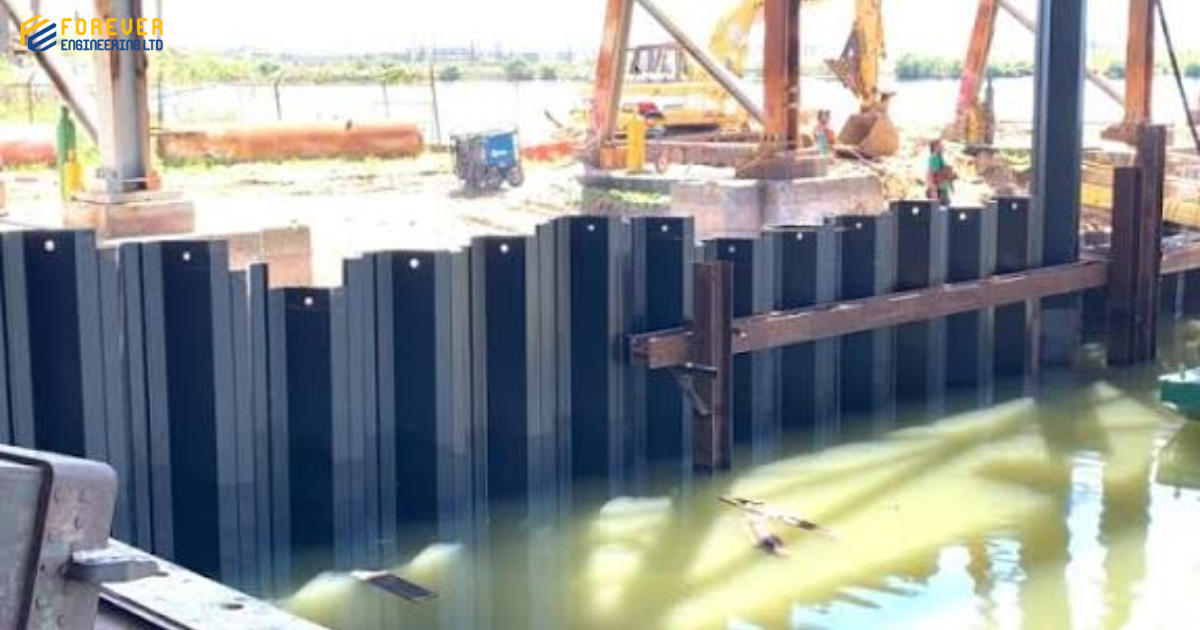
Steel sheet pile weight is an important specification for contractors, engineers, suppliers, and project owners when planning sheet pile projects. The weight of a steel sheet pile affects transportation, lifting equipment, crane capacity, handling, installation, and overall material requirements. Contractors usually calculate sheet pile weight from the pile profile, thickness, width, length, and unit weight. A proper weight calculation helps the project team estimate the total steel quantity and plan suitable equipment for handling and installation.
Different sheet pile profiles have different cross-sectional areas and weights. Therefore, contractors should always check the manufacturer’s technical data or approved product specifications before using a weight value for structural or lifting calculations.
What Is Steel Sheet Pile Weight?
Steel sheet pile weight refers to the mass of a sheet pile, usually expressed as kilograms per meter (kg/m) for unit weight or kilograms (kg) for the weight of a complete pile. The weight depends mainly on the steel sheet pile profile and its dimensions. A thicker or heavier profile generally has a higher unit weight. A longer pile also has a higher total weight when the unit weight remains the same.
For example, if a sheet pile has a unit weight of 60 kg/m and the pile length is 12 m, the approximate pile weight is
Total Weight = Unit Weight × Pile Length
Total Weight = 60 × 12 = 720 kg
This basic calculation helps contractors estimate individual pile weight before transportation, lifting, and installation.
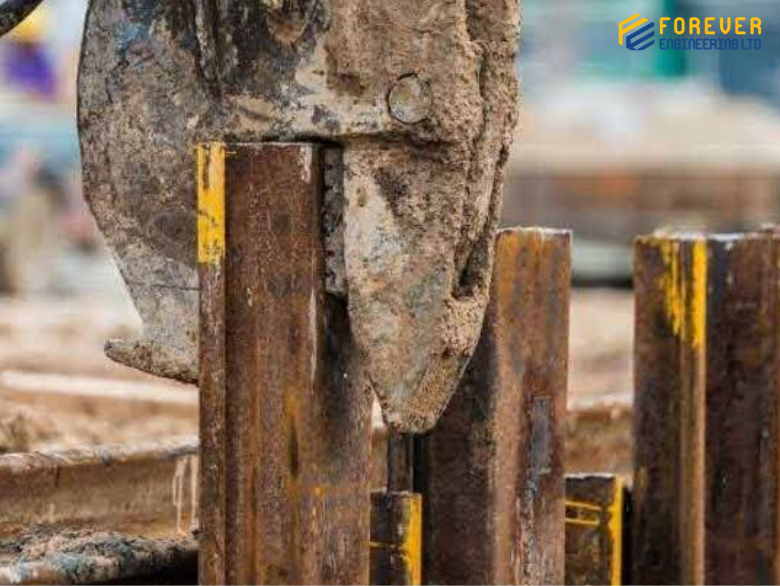
Why Is Steel Sheet Pile Weight Important?
The correct steel sheet pile weight directly affects material planning, transportation, lifting, and installation. Contractors need accurate weight information before moving heavy steel piles to the project site.
Benefits include:
- Improves Transportation Planning: Knowing the pile weight helps contractors estimate the required transport capacity and plan safe delivery.
- Supports Crane Selection: Crane capacity depends on the weight of the pile, lifting accessories, and working radius. Accurate weight information helps contractors select suitable lifting equipment.
- Helps Estimate Material Quantity: Unit weight allows contractors to estimate the total steel quantity required for a project.
- Controls Project Costs: Weight calculations help suppliers and contractors estimate material costs, transportation requirements, and handling expenses.
- Improves Site Safety: Workers can select suitable lifting slings, shackles, hooks, and cranes when they know the approximate pile weight.
- Supports Installation Planning: Heavy sheet piles may require higher-capacity equipment for lifting and positioning.
Steel Sheet Pile Weight Chart
Steel sheet pile weight varies by profile, thickness, width, and manufacturer. The following values are illustrative examples only and should not replace the manufacturer’s technical data.
| Sheet Pile Unit Weight | Approximate Weight at 6 m | Approximate Weight at 12 m | Approximate Weight at 18 m |
| 40 kg/m | 240 kg | 480 kg | 720 kg |
| 50 kg/m | 300 kg | 600 kg | 900 kg |
| 60 kg/m | 360 kg | 720 kg | 1,080 kg |
| 70 kg/m | 420 kg | 840 kg | 1,260 kg |
| 80 kg/m | 480 kg | 960 kg | 1,440 kg |
| 90 kg/m | 540 kg | 1,080 kg | 1,620 kg |
| 100 kg/m | 600 kg | 1,200 kg | 1,800 kg |
| 120 kg/m | 720 kg | 1,440 kg | 2,160 kg |
The table shows how total pile weight changes as pile length increases. Contractors should use the actual unit weight from the selected sheet pile manufacturer’s specification when preparing project calculations.
How to Calculate Steel Sheet Pile Weight
Calculating steel sheet pile weight becomes simple when the unit weight and pile length are known.
Basic Formula
Steel Sheet Pile Weight = Unit Weight × Pile Length
Where:
- Unit Weight = weight of the sheet pile per meter in kg/m
- Pile Length = total pile length in meters
- Total Weight = approximate weight of one complete sheet pile in kg
Example 1: 12 m Sheet Pile
Suppose the sheet pile has a unit weight of 60 kg/m and a length of 12 m.
Weight = 60 × 12
Weight = 720 kg
Therefore, one 12 m sheet pile weighs approximately 720 kg.
Example 2: 18 m Sheet Pile
Suppose a sheet pile has a unit weight of 80 kg/m and a length of 18 m.
Weight = 80 × 18
Weight = 1,440 kg
Therefore, one 18 m sheet pile weighs approximately 1,440 kg.
Example 3: Multiple Sheet Piles
If a project requires 100 sheet piles and each pile weighs 720 kg:
Total Weight = 720 × 100
Total Weight = 72,000 kg
Total Weight = 72 metric tons
This calculation helps contractors estimate the total steel quantity required for transportation and project planning.
Steel Sheet Pile Weight Per Meter
Steel sheet pile weight per meter is commonly used when comparing different sheet pile profiles. Manufacturers normally provide unit weight in kg/m or another standard measurement.
For example:
- 40 kg/m means each meter weighs approximately 40 kg.
- 60 kg/m means each meter weighs approximately 60 kg.
- 80 kg/m means each meter weighs approximately 80 kg.
- 100 kg/m means each meter weighs approximately 100 kg.
A higher kg/m value means the sheet pile contains more steel per meter. However, contractors should not select a pile based only on weight. Engineers should also consider section properties, steel grade, soil conditions, loads, embedment depth, and project design.
Factors That Affect Steel Sheet Pile Weight
Several factors affect steel sheet pile weight. Contractors should review these factors before ordering or transporting sheet piles.
- Pile Profile: Different sheet pile profiles have different cross-sectional shapes and steel quantities. U-type and Z-type profiles can have different unit weights even when their overall dimensions look similar.
- Thickness: Thicker steel sections generally contain more material and therefore have higher weight per meter.
- Width: Wider sheet piles can cover more wall area per pile. The actual unit weight depends on the complete cross-sectional design.
- Length: Longer sheet piles weigh more because the unit weight applies over a greater length.
- Steel Grade: Steel grade changes strength properties rather than automatically determining the physical weight. Contractors should check the actual product specification instead of assuming that a higher steel grade means a heavier pile.
- Profile Design: The shape and geometry of the sheet pile section affect its cross-sectional area and unit weight.
- Manufacturer: Different manufacturers can offer profiles with different dimensions and unit weights. Contractors should use the technical data for the exact product being supplied.
Steel Sheet Pile Size and Weight
Sheet pile size and weight are closely related, but size alone does not determine the exact weight. Contractors should check the manufacturer’s technical specification for the selected profile.
Important sheet pile dimensions can include:
- Overall width
- Profile height
- Thickness
- Section modulus
- Cross-sectional area
- Pile length
- Unit weight
- Steel grade
A larger or thicker profile can contain more steel, but contractors should compare the actual kg/m value before making transportation or lifting calculations.
How Sheet Pile Length Affects Weight
Pile length has a direct relationship with total pile weight when the unit weight remains constant. For example, a sheet pile with a unit weight of 70 kg/m would have approximately:
- 6 m: 420 kg
- 10 m: 700 kg
- 12 m: 840 kg
- 15 m: 1,050 kg
- 18 m: 1,260 kg
- 20 m: 1,400 kg
The calculation uses the same formula:
Total Weight = Unit Weight × Length
Therefore, contractors should confirm the pile length before calculating transportation and lifting requirements.
How to Calculate Total Steel Sheet Pile Weight for a Project
Contractors can calculate the total material weight by multiplying the weight of one pile by the number of piles required.
Step 1: Find the Unit Weight: Check the manufacturer’s technical data and identify the sheet pile unit weight in kg/m.
Step 2: Confirm the Pile Length: Determine the required length of each sheet pile in meters.
Step 3: Calculate One Pile Weight: One Pile Weight = Unit Weight × Pile Length
Step 4: Confirm the Number of Piles: Calculate the required number of sheet piles based on wall length and effective pile width.
Step 5: Calculate Total Weight: Total Sheet Pile Weight = Weight Per Pile × Number of Piles
Example: Suppose:
- Unit weight = 70 kg/m
- Pile length = 12 m
- Number of piles = 150
First calculate one pile:
70 × 12 = 840 kg
Then calculate the total:
840 × 150 = 126,000 kg
Total = 126 metric tons
This estimate helps contractors plan transportation, storage, lifting, and material requirements.
Steel Sheet Pile Weight for Transportation
Steel sheet pile weight plays an important role in transportation planning. Contractors need to know the total load before arranging vehicles for delivery.
Transportation planning should consider:
- Weight of individual sheet piles
- Total shipment weight
- Pile length
- Number of piles
- Loading arrangement
- Vehicle capacity
- Site access
- Unloading equipment
- Road and site restrictions
Long sheet piles can also create transportation challenges because their length may affect vehicle selection and route planning. Contractors should plan loading and unloading operations before sending the material to the site.
Steel Sheet Pile Weight and Crane Selection
Crane selection requires accurate information about the sheet pile weight. The crane must safely lift the pile together with the hammer, clamps, slings, shackles, and other equipment where applicable.
Crane planning should consider:
- Sheet pile weight
- Lifting equipment weight
- Working radius
- Required lifting height
- Ground stability
- Crane capacity
- Site access
- Nearby structures
Contractors should never select a crane based only on the pile’s weight. The lifting plan should consider the complete load and the crane’s rated capacity at the required working radius.
Steel Sheet Pile Weight and Installation Equipment
The weight of the sheet pile also affects installation equipment. Heavy piles may require suitable cranes, clamps, hammers, and lifting accessories.
Common equipment includes:
- Vibratory Hammer: Provides vibration to help drive sheet piles into the soil.
- Impact Hammer: Uses repeated blows to drive piles into ground with higher resistance.
- Crane: Lifts and positions the sheet pile during installation.
- Pile Clamp: Connects the hammer to the sheet pile.
- Lifting Slings: Connect the pile to the crane during lifting.
- Shackles: Connect lifting accessories securely.
- Pile Guide: Helps maintain pile position and alignment.
The equipment should match the actual pile weight, dimensions, installation method, and project conditions.
Common Mistakes When Calculating Steel Sheet Pile Weight
Contractors can make calculation errors when they use incorrect or incomplete product information.
- Using the Wrong Unit Weight: Different profiles can have different kg/m values. Always check the specification for the selected profile.
- Ignoring Pile Length: Total weight increases with pile length. Contractors should use the actual length in the calculation.
- Confusing kg/m with Total Weight: Unit weight represents weight per meter, not the weight of the complete pile.
- Ignoring Accessories: Crane planning should include lifting accessories and installation equipment where applicable.
- Using Estimated Values for Final Design: Illustrative weight values should not replace manufacturer-certified technical data.
- Ignoring Cutting or Splicing: If contractors modify pile lengths, they should recalculate the actual material weight.
- Ordering Without Quantity Calculation: Contractors should calculate total wall length and pile quantity before placing a material order.
Best Practices for Steel Sheet Pile Weight Calculation
Following proper practices helps contractors prepare more accurate material and logistics estimates.
- Use Manufacturer Data: Always use the technical specification for the exact sheet pile profile being purchased.
- Confirm Unit Weight: Check whether the value is provided in kg/m and make sure the unit is correct.
- Confirm Pile Length: Use the actual pile length rather than an assumed length.
- Calculate Individual Pile Weight: Multiply the unit weight by the pile length.
- Calculate Total Material Weight: Multiply the individual pile weight by the required quantity.
- Check Lifting Requirements: Use the calculated weight when planning cranes, slings, clamps, and other lifting equipment.
- Plan Transportation: Consider total shipment weight, pile length, loading method, and vehicle capacity.
- Verify Final Quantities: Review the number of piles and their lengths before ordering materials.
Safety Considerations When Handling Steel Sheet Piles
Steel sheet piles can be heavy and difficult to handle. Contractors need proper safety procedures during loading, transportation, storage, lifting, and installation.
Safety measures include:
- Inspect lifting slings, hooks, shackles, and clamps before use.
- Confirm the actual pile weight before lifting.
- Use a crane with suitable capacity.
- Keep workers away from suspended piles.
- Use trained crane operators and lifting personnel.
- Store piles on stable and suitable supports.
- Control pile movement during lifting.
- Keep the lifting area clear of unauthorized workers.
- Follow the approved lifting plan.
- Use suitable personal protective equipment.
Proper handling procedures help reduce the risk of dropped loads, equipment failure, and worker injuries.
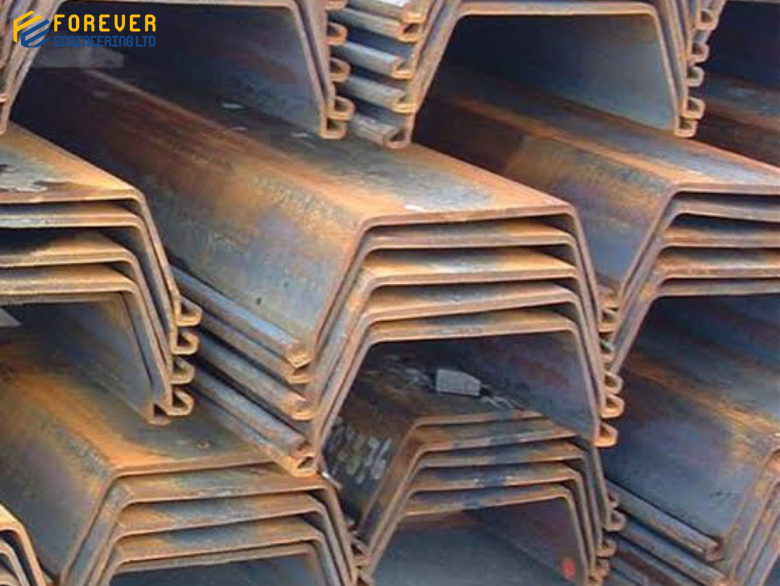
How Forever Engineering Ltd. Supports Steel Sheet Pile Requirements
Forever Engineering Ltd. provides steel sheet pile supply solutions for construction projects in Bangladesh. Our team focuses on understanding project requirements and helping clients identify suitable sheet pile specifications.
We support sheet pile requirements for applications such as excavation support, retaining walls, basement construction, cofferdams, riverbank protection, marine construction, bridge projects, and other infrastructure works.
- Steel Sheet Pile Supply: We provide steel sheet pile supply based on project requirements, specifications, quantities, and applications.
- Project Requirement Support: Our team helps clients review pile length, profile, quantity, and other important requirements.
- Weight and Quantity Planning: Accurate weight information helps contractors plan transportation, lifting, and material requirements.
- Equipment Requirement Support: We help clients understand the equipment needed to handle and install steel sheet piles based on project conditions.
- Construction Application Support: We provide project-focused assistance for different sheet pile applications.
Benefits of Choosing Forever Engineering Ltd.
Selecting an experienced sheet pile supplier can help contractors manage material and project requirements more effectively.
- Reliable Steel Sheet Pile Supply: Forever Engineering Ltd. provides steel sheet pile supply solutions for different construction projects. We focus on understanding client requirements before arranging suitable materials.
- Accurate Product Information: Proper product information helps contractors calculate pile weight, quantity, transportation requirements, and lifting needs more effectively.
- Project-Based Solutions: Every project has different pile lengths, profiles, soil conditions, and construction requirements. We help clients consider their project conditions when planning sheet pile requirements.
- Professional Support: Our team provides clear communication and project-focused assistance. This helps clients understand their material requirements and coordinate construction activities.
Contact Forever Engineering Ltd.
Need accurate steel sheet pile weight information and a reliable sheet pile supply for your construction project?
Contact Forever Engineering Ltd. to discuss your sheet pile profile, size, length, quantity, weight, transportation requirements, and project needs.
Conclusion
Steel sheet pile weight is an important factor in sheet pile transportation, lifting, storage, installation, and project cost planning. Contractors can calculate the weight of an individual pile by multiplying its unit weight in kg/m by its total length.
The actual weight depends on the sheet pile profile, cross-sectional design, thickness, width, length, and manufacturer’s specifications. Contractors should always use verified technical data for final material, structural, transportation, and lifting calculations. Accurate weight calculations help contractors select suitable cranes, plan transportation, estimate total steel quantities, and improve site safety. The team should also consider lifting accessories and installation equipment when preparing the complete lifting plan.
Forever Engineering Ltd. provides steel sheet pile supply and project support for construction projects in Bangladesh. We help clients understand their sheet pile requirements and plan suitable solutions based on project conditions and construction needs.
Frequently Asked Questions
- How is steel sheet pile weight calculated?
The basic formula is Steel Sheet Pile Weight = Unit Weight × Pile Length
For example, a 60 kg/m sheet pile with a length of 12 m weighs approximately 720 kg.
- What is sheet pile weight per meter?
Sheet pile weight per meter is the unit weight of the pile, normally expressed in kg/m. The actual value depends on the sheet pile profile and manufacturer.
- Does sheet pile length affect total weight?
Yes. When the unit weight remains constant, a longer sheet pile has a higher total weight. You can calculate the weight by multiplying kg/m by the pile length.
- Does sheet pile thickness affect weight?
Yes. A thicker profile generally contains more steel and can have a higher weight per meter. Contractors should check the manufacturer’s technical specification for the exact value.
- Why do contractors need to know sheet pile weight?
Contractors need weight information to plan transportation, crane selection, lifting accessories, storage, installation equipment, and total material requirements.
- Can I calculate total project weight from kg/m?
Yes. First multiply kg/m by the length of one pile. Then multiply the weight of one pile by the total number of piles.
- Is the weight chart suitable for final engineering calculations?
No. A general chart provides an example of how weight changes with unit weight and length. Contractors should use the manufacturer’s verified technical data for final engineering, lifting, and procurement calculations.
- What equipment is needed to handle heavy sheet piles?
Common equipment includes cranes, lifting slings, shackles, hooks, clamps, and other lifting accessories. The equipment should match the actual pile weight and project conditions.
- Can Forever Engineering Ltd. supply steel sheet piles in Bangladesh?
Yes. Forever Engineering Ltd. provides steel sheet pile supply solutions for construction projects in Bangladesh and supports clients with project-related sheet pile requirements.