
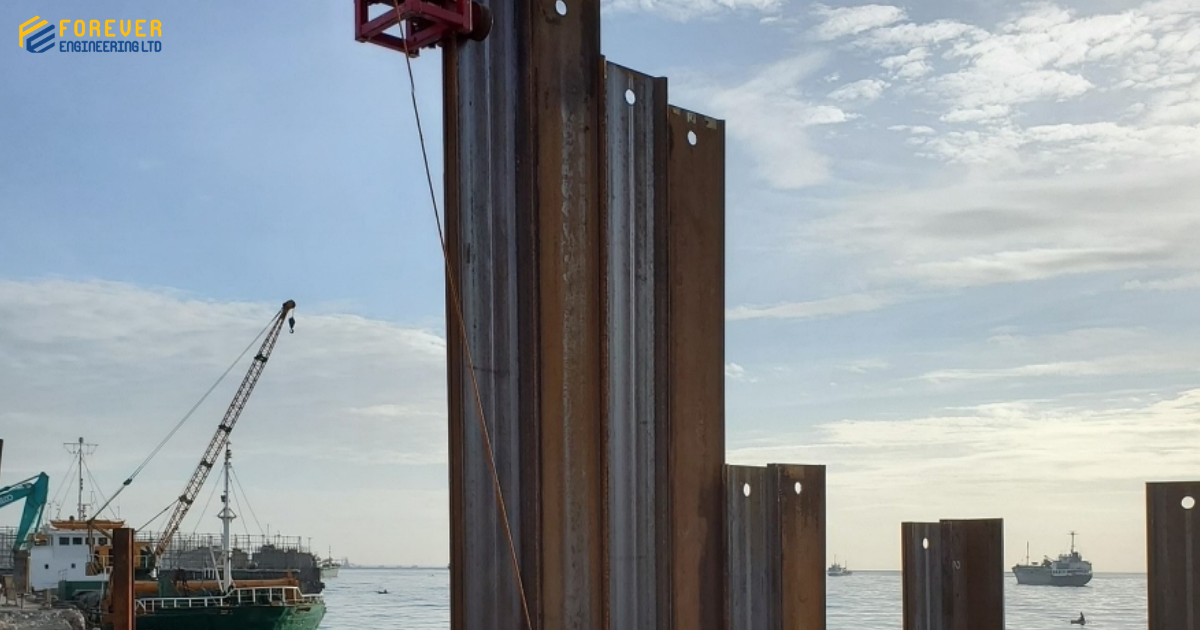
A strong foundation is the first step for every successful construction project. Whether you build a residential building, commercial complex, bridge, factory, or river protection system, the foundation must support the total weight of the structure. This is why engineers always check the sheet pile load bearing capacity before they start construction.
At Forever Engineering Ltd., we understand that every project needs a safe and reliable foundation. Our experienced engineering team supplies high-quality sheet piles and provides professional installation services across Bangladesh. We carefully evaluate the soil condition, project requirements, and structural load to recommend the right sheet pile solution for every client.
In this complete guide, you will learn what sheet pile load bearing capacity means, the factors that affect it, how engineers calculate it, and why choosing the right sheet pile is important for your construction project.
What Is Sheet Pile Load Bearing Capacity?
Sheet pile load bearing capacity is the maximum load that a sheet pile can safely support without failing. The pile transfers the weight of the structure into the surrounding soil. When engineers know the load bearing capacity, they can design a foundation that remains stable for many years.
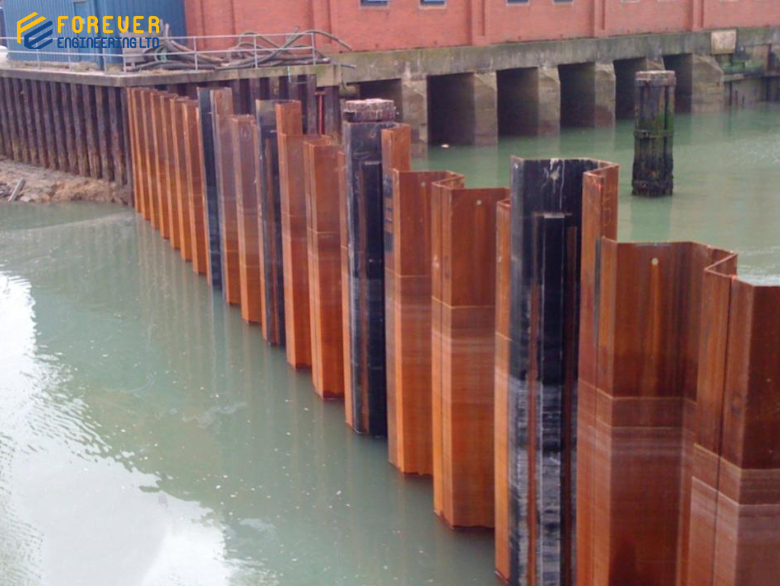
The capacity depends on both the sheet pile and the soil where it is installed. Even a high-quality sheet pile may not perform well if the soil is weak or the installation is poor. For this reason, engineers always study the site before selecting a sheet pile system. A properly designed sheet pile foundation provides excellent strength, safety, and long service life.
Why Is Load Bearing Capacity Important?
Understanding the load bearing capacity helps engineers design safer structures. It also reduces construction risks and avoids future problems. Some important benefits include:
- Supports heavy structural loads safely
- Reduces foundation settlement
- Improves structural stability
- Increases project safety
- Extends the service life of the foundation
- Reduces maintenance costs
- Prevents foundation failure
- Improves construction quality
Every successful construction project starts with an accurate load calculation.
How Do Sheet Piles Carry Loads?
Sheet piles carry loads by transferring pressure into the surrounding soil. Engineers mainly consider two types of resistance.
Skin Friction
Skin friction develops between the surface of the sheet pile and the surrounding soil. As the pile goes deeper into the ground, more soil comes into contact with the pile surface. This creates friction that helps support the structural load. Skin friction becomes very important in soft clay and sandy soil.
End Bearing
End bearing occurs when the bottom of the sheet pile reaches a strong soil layer. The pile transfers the building load directly to this hard layer. When engineers combine skin friction and end bearing, the foundation becomes stronger and more stable.
Factors That Affect Sheet Pile Load Bearing Capacity
Many factors influence the load performance of a sheet pile.
Soil Type
Soil condition is one of the biggest factors. Dense sand usually provides better support than loose sand. Soft clay may require deeper installation. Rock layers offer excellent bearing capacity. Engineers perform soil tests before selecting the sheet pile.
Sheet Pile Material
The material also affects strength. Steel sheet piles have very high load bearing capacity. Vinyl sheet piles work well for light structures. Concrete sheet piles provide good durability for certain projects. Steel remains the most common choice for heavy construction projects in Bangladesh.
Sheet Pile Length
Longer sheet piles reach deeper and stronger soil layers. A deeper pile usually provides better stability and higher load capacity. The required length depends on soil conditions and project design.
Sheet Pile Thickness
Thicker sheet piles can resist greater pressure. They also provide higher bending strength during excavation and earth retention. Engineers select the thickness based on structural calculations.
Installation Quality
Even the best sheet pile cannot perform well if installation is poor. Professional installation ensures:
- Correct pile alignment
- Proper penetration depth
- Stable interlocking
- Strong structural performance
Experienced contractors use modern equipment to achieve accurate installation.
Groundwater Level
High groundwater changes soil behavior. Engineers must consider water pressure during foundation design. Proper drainage and waterproofing improve foundation performance.
Types of Loads on Sheet Piles
Engineers calculate different types of loads before construction.
Dead Load
Dead load includes the permanent weight of the building. Examples include:
- Concrete
- Steel beams
- Floors
- Walls
- Roof structure
Dead load remains constant throughout the life of the building.
Live Load
Live load changes over time. Examples include:
- People
- Furniture
- Vehicles
- Equipment
- Storage materials
Commercial and industrial buildings usually have higher live loads.
Lateral Load
Lateral loads act from the side. These loads come from:
- Soil pressure
- Water pressure
- Wind
- Earthquake forces
Sheet piles are specially designed to resist lateral pressure.
Dynamic Load
Dynamic loads change suddenly. Examples include:
- Heavy machinery
- Traffic vibration
- Construction equipment
- Impact forces
Engineers include these loads in foundation calculations to ensure safety.
Applications of High Load Bearing Sheet Piles
High-strength sheet piles are used in many projects across Bangladesh. Some common applications include:
- Basement construction
- Riverbank protection
- Bridge foundations
- Port development
- Marine structures
- Flood protection walls
- Retaining walls
- Industrial factories
- Power plants
- Commercial buildings
These projects require strong and durable foundation systems that can perform for many years.
How Engineers Calculate Sheet Pile Load Bearing Capacity
Engineers use several methods to calculate the load bearing capacity of a sheet pile. They first collect information about the construction site. After that, they study the soil, groundwater level, and project requirements. These details help them choose the correct sheet pile size and depth.
The calculation process usually includes the following steps:
Soil Investigation
The first step is to test the soil. Engineers collect soil samples from different depths. They check the soil strength, density, moisture, and bearing capacity. A detailed soil report helps them design a safe foundation.
Structural Load Calculation
Next, engineers calculate the total weight that the foundation must support. This includes the weight of the building, equipment, people, and other loads that may affect the structure during its lifetime.
Sheet Pile Design
After studying the soil and the expected load, engineers select the proper sheet pile section. They decide the pile length, thickness, and steel grade based on the project requirements.
Safety Factor
Engineers always include a safety factor in their design. This extra margin helps protect the structure from unexpected loads or changes in soil conditions. A proper safety factor increases the reliability of the foundation.
Common Signs of Poor Load Bearing Capacity
A weak foundation can create serious problems. If the sheet pile does not have enough load bearing capacity, the structure may become unsafe over time. Some common warning signs include:
- Uneven settlement of the ground
- Cracks in walls or floors
- Leaning retaining walls
- Excessive movement of sheet piles
- Water leakage around the excavation
- Ground sinking near the foundation
If any of these problems appear, engineers should inspect the foundation as soon as possible.
How to Increase Sheet Pile Load Bearing Capacity
Engineers can improve the performance of sheet piles in several ways.
Choose the Right Sheet Pile
Selecting the correct sheet pile is very important. A larger and stronger section can support heavier loads and improve the stability of the structure.
Increase the Installation Depth
Driving the pile deeper allows it to reach stronger soil layers. This improves both skin friction and end bearing resistance.
Improve Soil Conditions
In some projects, engineers strengthen the soil before installing the sheet piles. They may use soil compaction, sand filling, or ground improvement methods to increase soil strength.
Use Professional Installation Equipment
Modern vibratory hammers and hydraulic equipment help install sheet piles accurately. Proper installation improves the overall performance of the foundation.
Follow Engineering Standards
Every project should follow approved engineering standards and design guidelines. Proper planning reduces construction risks and increases safety.
Why Choose Forever Engineering Ltd.?
Forever Engineering Ltd. is one of the trusted engineering companies in Bangladesh for sheet pile supply and foundation solutions. We provide complete support from planning to installation. Our experienced team works carefully to deliver safe and reliable results for every project. Our services include:
- High-quality steel sheet pile supply
- Professional sheet pile installation
- Foundation engineering solutions
- Site inspection and technical support
- Modern piling equipment
- Fast project completion
- Competitive pricing
- Reliable after-sales support
We work on projects of all sizes, from residential buildings to large industrial developments.
Why Clients Trust Forever Engineering Ltd.?
Many contractors, engineers, and project owners choose Forever Engineering Ltd. because we focus on quality and customer satisfaction. Our strengths include:
- Experienced engineering team
- High-quality construction materials
- Modern installation equipment
- Careful quality control
- Competitive project cost
- On-time project delivery
- Excellent customer support
- Strong reputation across Bangladesh
Our goal is to provide foundation solutions that remain safe and durable for many years.
Get a Free Quotation from Forever Engineering Ltd.
If you need strong and dependable sheet pile solutions, Forever Engineering Ltd. is ready to help. Our team will study your project requirements and recommend the best sheet pile system based on your soil condition and structural design. Whether you are planning a basement, bridge, retaining wall, river protection project, or industrial building, we can provide high-quality sheet piles and professional installation services throughout Bangladesh.
Call Forever Engineering Ltd. today at +880 1711-457346 to speak with our engineering team and request a free quotation for your upcoming project.
Conclusion
Choosing the right sheet pile system is an important step for every construction project. A proper understanding of sheet pile load bearing capacity helps engineers design safe and durable foundations. The load bearing capacity depends on several factors, including soil condition, sheet pile size, installation depth, and construction quality. When these factors are carefully considered, the foundation can support heavy loads and perform well for many years.
At Forever Engineering Ltd., we provide high-quality sheet pile solutions for residential, commercial, industrial, marine, and infrastructure projects across Bangladesh. Our experienced engineering team helps clients choose the right sheet pile system based on their project requirements and soil conditions. We focus on quality materials, professional installation, and reliable engineering support to ensure long-lasting performance.
If you are planning a construction project and need expert advice, contact Forever Engineering Ltd. at +880 1711-457346.
Frequently Asked Questions
What is sheet pile load bearing capacity?
Sheet pile load bearing capacity is the maximum load that a sheet pile can safely support without failure. It depends on the soil condition, pile design, and installation quality.
Why is soil testing important?
Soil testing helps engineers understand the strength and condition of the ground. This information allows them to choose the correct sheet pile and design a safe foundation.
Which material offers the highest load bearing capacity?
Steel sheet piles usually provide the highest load bearing capacity. They are strong, durable, and suitable for heavy construction projects.
Can sheet piles support high-rise buildings?
Yes. Engineers use sheet piles for many large construction projects. They design the foundation based on the expected load and soil condition to ensure safety.