
What Is a Cast in Situ Pile for Industrial Buildings?
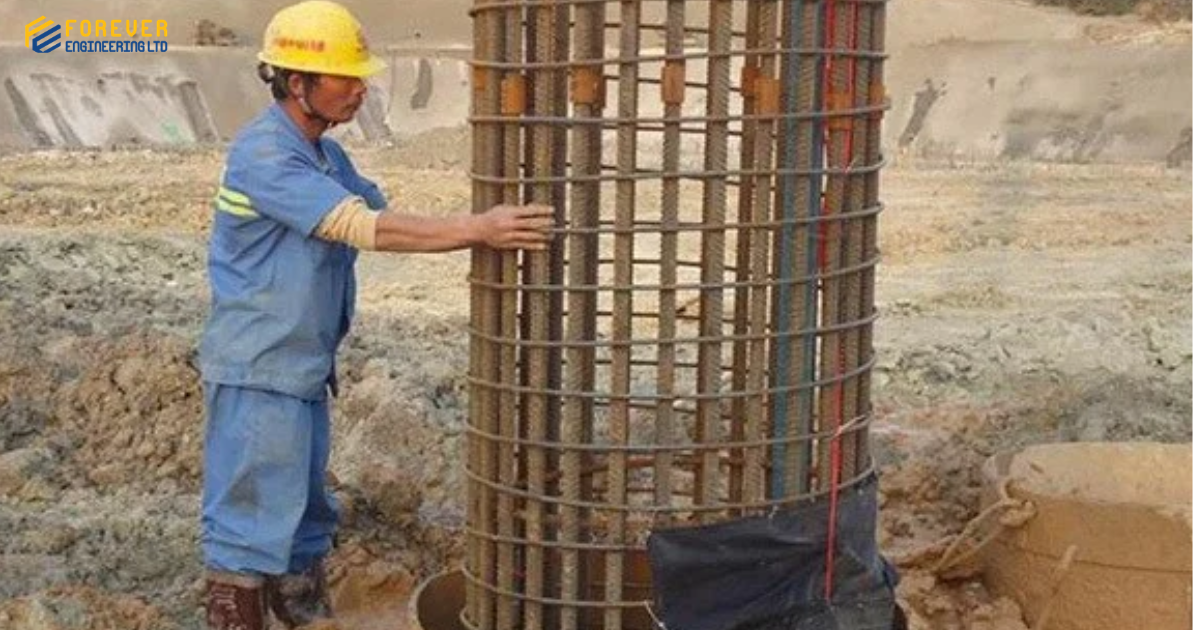
A cast in situ pile for industrial buildings is a deep foundation that workers build directly at the construction site. They drill a hole into the ground, place a steel reinforcement cage inside it, and pour concrete into the hole. After the concrete hardens, it becomes a strong reinforced concrete pile that supports the building.
Industrial buildings usually carry much heavier loads than residential buildings. Factories, warehouses, power plants, manufacturing units, and processing facilities all need strong foundations. A cast in situ pile transfers the building load from weak surface soil to stronger soil layers deep underground. This creates a stable and durable foundation. In Bangladesh, many industrial projects use cast in situ piles because the country has soft soil in many areas. These piles reduce settlement, improve safety, and increase the life of the building. They also allow engineers to build large industrial structures with confidence.
This guide explains why cast in situ piles are important for industrial buildings, how they work, their benefits, and why they are one of the best foundation choices for heavy structures.

Why Do Industrial Buildings Need Cast-in-Situ Piles?
Industrial buildings are very different from houses or small offices. They often contain heavy machines, storage racks, cranes, production equipment, and large steel structures. These loads create high pressure on the foundation.
A weak foundation can cause cracks, uneven settlement, damaged floors, and expensive repairs. In severe cases, it can even affect the safety of workers and equipment.
A cast-in-situ pile for industrial buildings provides the strength needed to support these heavy loads. The pile reaches deep into strong soil and spreads the building load safely below the weak topsoil.
Engineers often recommend this type of foundation for:
- Manufacturing factories
- Garment factories
- Food processing plants
- Pharmaceutical industries
- Power plants
- Cement factories
- Steel factories
- Large warehouses
- Cold storage facilities
- Logistics centers
The right foundation keeps the building safe throughout its service life.
How Does a Cast-in-Situ Pile Work?
A cast-in-situ pile acts like a strong column buried inside the ground.
The upper soil may be soft and unable to carry heavy loads. The pile passes through these weak soil layers until it reaches stronger soil or rock. The building load travels through the pile into the stronger layer below. This process reduces settlement and increases structural stability.
The pile also develops friction along its sides. This skin friction helps support additional loads. As a result, the pile carries weight through both end-bearing and side friction. Because of this dual support system, cast in situ piles can carry very heavy industrial loads.
Benefits of Cast in Situ Pile for Industrial Buildings
High Load Bearing Capacity
Industrial buildings require foundations that can support heavy equipment and structural loads. Cast in situ piles provide excellent load-bearing capacity. Engineers can design the pile depth and diameter according to the project requirements.
Suitable for Soft Soil
Many industrial sites in Bangladesh have soft clay or loose sandy soil. Cast in situ piles pass through these weak layers and transfer the load to stronger soil below. This makes them an excellent solution for difficult ground conditions.
Flexible Design
Every industrial project is different. Engineers can adjust the pile diameter, reinforcement, and depth based on the soil report and structural design. This flexibility helps create a safe and economical foundation.
Long Service Life
Concrete and reinforcement steel create a strong and durable pile. When contractors use quality materials and proper construction methods, the pile can perform well for many decades with very little maintenance.
Reduced Settlement
Uneven settlement can damage industrial floors, machinery, and production lines. A cast in situ pile minimizes settlement by transferring the building load to stable soil. This protects both the structure and expensive equipment.
Better Earthquake Performance
Industrial buildings should remain stable during earthquakes.
A deep pile foundation improves structural stability and helps resist ground movement. Although no foundation can completely eliminate earthquake effects, cast in situ piles improve overall performance.
Suitable for Large Industrial Projects
Large factories often require hundreds of piles.
Cast in situ piling allows contractors to build foundations for projects of different sizes without transportation limitations because the piles are constructed directly on site.
Applications of Cast in Situ Pile for Industrial Buildings
Many industries depend on cast in situ piles for safe construction. Some common applications include:
Manufacturing Factories
Heavy production machines create large foundation loads. Cast in situ piles safely support these loads while reducing settlement.
Garment Factories
Garment factories usually contain several floors with machinery and storage. Pile foundations provide long-term stability.
Warehouse Buildings
Warehouses store heavy products on tall storage racks. Strong pile foundations help support these concentrated loads.
Food Processing Plants
Food industries require durable buildings with stable floors. Pile foundations reduce movement and improve structural performance.
Pharmaceutical Industries
Precision equipment requires stable foundations. Pile systems help maintain floor level and reduce vibration.
Power Plants
Power generation facilities contain heavy turbines and equipment. Cast in situ piles provide the strength required for these demanding structures.
Cast-in-situ Pile Construction Process for Industrial Buildings
The construction process follows several important steps.
Step 1: Soil Investigation
Engineers first perform a soil investigation. They collect soil samples from different depths and prepare a soil report.
The report identifies:
- Soil type
- Groundwater level
- Bearing capacity
- Recommended pile depth
- Suitable pile diameter
Proper soil testing is the foundation of a successful project.
Step 2: Site Layout
Survey engineers mark the exact pile locations using approved structural drawings. Correct positioning ensures proper load distribution.
Step 3: Borehole Drilling
Workers drill the borehole using a rotary drilling rig. The hole reaches the required design depth.
Engineers monitor:
- Borehole diameter
- Vertical alignment
- Drilling depth
- Soil condition
Step 4: Borehole Cleaning
Workers remove loose soil and debris from the bottom of the hole. A clean borehole improves concrete quality and pile performance.
Step 5: Reinforcement Cage Installation
Workers fabricate the reinforcement cage according to the structural drawings. A crane carefully lowers the cage into the borehole. Spacers keep the reinforcement in the center.
Step 6: Concrete Pouring
Workers pour concrete through a tremie pipe. Continuous pouring prevents weak joints inside the pile. Engineers check concrete quality before placement.
Step 7: Curing
Concrete gains strength during curing. Proper curing improves durability and increases compressive strength.
Step 8: Pile Testing
Engineers test the completed piles before construction continues.
Common tests include:
- Static Load Test
- Pile Integrity Test
- Dynamic Load Test
- Low Strain Test
Testing confirms that the pile can safely support the design load.
Quality Control for Industrial Pile Foundations
Quality control is important during every construction stage. Engineers inspect:
- Soil condition
- Borehole depth
- Reinforcement quality
- Concrete slump
- Concrete strength
- Vertical alignment
- Final pile level
Continuous inspection helps prevent construction errors and improves foundation performance.
Factors That Affect Cast in Situ Pile Performance
Several factors influence the performance of a pile foundation.
- Soil condition
- Groundwater level
- Concrete quality
- Reinforcement quality
- Borehole cleaning
- Skilled workers
- Construction supervision
- Modern equipment
- Proper curing
- Accurate pile positioning
Each factor contributes to the strength and durability of the foundation.
Common Mistakes to Avoid
Some common construction mistakes include:
- Skipping soil investigation
- Poor borehole cleaning
- Incorrect reinforcement placement
- Interrupted concrete pouring
- Using low-quality concrete
- Poor supervision
- Incorrect pile positioning
- Ignoring quality control
Avoiding these mistakes improves safety and reduces future repair costs.

Why Choose Forever Engineering Ltd.?
Forever Engineering Ltd. provides professional Cast in Situ Pile for Industrial Buildings services across Bangladesh.
Our experienced engineers follow strict engineering standards during every stage of construction.
We provide:
- Professional site investigation support
- Modern piling equipment
- Skilled engineers and workers
- High-quality concrete
- Certified reinforcement steel
- Quality inspection
- Pile testing
- Safe construction practices
- On-time project completion
Our goal is to deliver strong and durable industrial foundations that perform reliably for many years.
Conclusion
A cast-in-situ pile for industrial buildings is one of the most reliable foundation systems for factories, warehouses, power plants, and other heavy structures. It provides high load-bearing capacity, excellent durability, and long-term stability.
Industrial buildings require strong foundations because they support heavy machines, storage systems, and production equipment every day. A properly designed and constructed cast-in-situ pile transfers these loads safely into strong soil layers below the ground.
With proper soil investigation, quality materials, skilled workers, and regular inspection, a cast in situ pile foundation can serve safely for decades. Choosing the right contractor also plays an important role in the success of the project.
If you are planning an industrial construction project in Bangladesh, investing in a quality cast in situ pile foundation will help protect your building, equipment, and investment for many years.
Frequently Asked Questions
1. What is a Cast-in-Situ Pile for Industrial Buildings?
It is a reinforced concrete pile that is built directly at the construction site to support heavy industrial structures.
2. Why are cast-in-situ piles used for factories?
Factories contain heavy machines and equipment. These piles provide the strength needed to support those loads safely.
3. Are cast-in-situ piles suitable for soft soil?
Yes. They transfer building loads from weak surface soil to stronger soil layers below.
4. How deep can a cast-in-situ pile be?
The depth depends on the soil investigation report and structural design.
5. What materials are used?
High-quality concrete and reinforcement steel are the main materials.
6. How is the pile tested?
Engineers perform load tests and integrity tests to verify quality and strength.
7. How long does a cast-in-situ pile last?
A properly constructed pile can last for many decades with minimal maintenance.
8. Why should I choose Forever Engineering Ltd.?
Forever Engineering Ltd. provides experienced engineers, modern equipment, quality control, and reliable piling solutions for industrial projects across Bangladesh.