
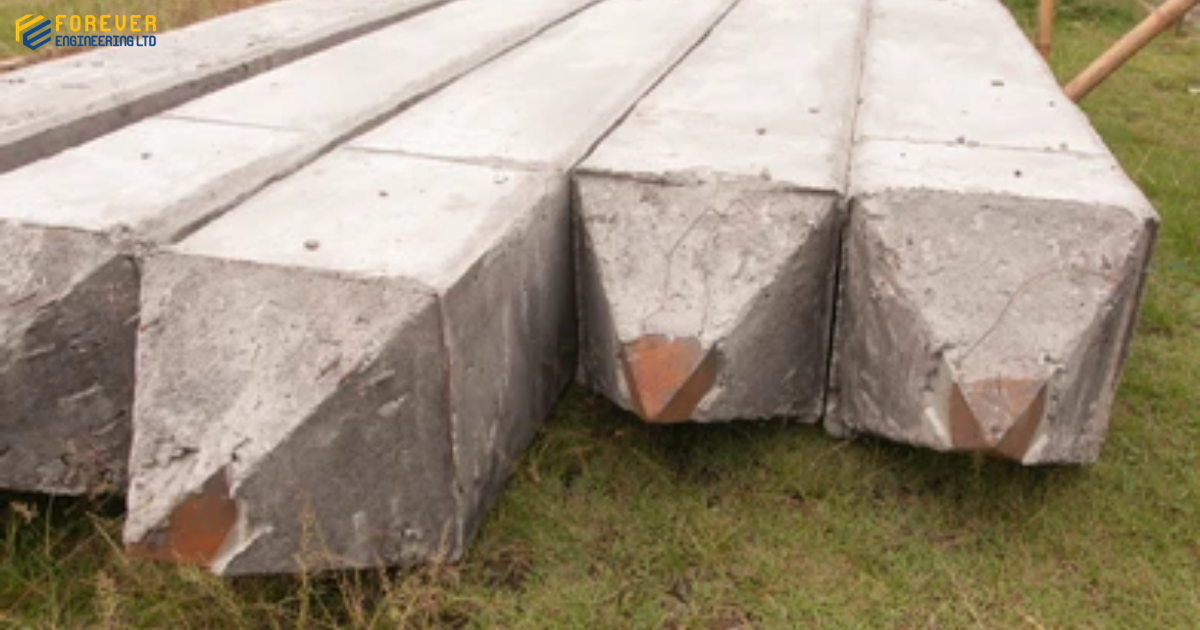
How Is Precast Pile Construction Done Step by Step?
Precast pile construction step by step is an important process in modern construction projects. Engineers use precast piles when they build foundations for buildings and bridges and factories. This is because a strong foundation is really important to keep a building safe and stable for a time. Engineers know that precast piles make the foundation of buildings and bridges and factories strong. A strong foundation is what keeps buildings and bridges and factories for people to use.
In Bangladesh the soil is usually very soft. So engineers use precast piles to support the buildings. The precast piles carry the load of the building down to the soil that’s deep down. They make the piles in a factory. After that they take the piles to the site where the building is being constructed. This helps to assure better quality and strength.
What is the importance of proper precast pile installation?
It is the quality of pile installation that determines the quality of a foundation. If the construction process is not done correctly, problems can occur later on in the foundation.
Advantages of correct precast pile construction:
- Strong foundation support
- More stable buildings
- Settlement reduced
- Enhanced safety
- Improved load distribution
- Longer building lifespan
For these reasons, each stage of pile construction must be performed with great care.

Stages of Pile Construction
Step 1: Research the site
Before building begins, engineers look into the soil at the project site. This helps them understand how well the soil will hold the structure. Engineers gather details on:
- Soil layers
- Soil strength
- How much water is, in the ground
- Bearing capacity
- Site conditions
Step 2: Design of Foundations
After checking the soil, engineers create the foundation design. The design process includes:
- Selecting pile size
- Determining pile length
- Calculating pile capacity
- Planning pile locations
- Estimating building loads
Step 3: Manufacturing of Precast Piles
The next step is making the precast piles. Precast piles are made in a factory where precast piles are produced in a factory under controlled conditions. Skilled workers and engineers supervise the production process. The manufacturing process generally includes:
Reinforcement Preparation
Workers prepare steel reinforcement cages according to engineering drawings.
Benefits:
- Increased strength
- Better durability
- Improved crack resistance: everything is controlled.
Mold Preparation
Pile forms are cleaned and prepared before starting the concrete casting.
Benefits:
- Accurate measurements
- Smooth surface finish.
- Quality consistency
Concrete Casting
Workers fill the forms with concrete and tamp it down properly.
Benefits of the piles include:
- They have solid densities.
- This means they have air voids.
- So the piles have improved strength.
Curing Process
The piles are cured for a time to get the required strength.
The benefits of the piles are many:
- They are longer-lasting.
- They have improved performance.
- They have longevity.
Step 4: Transportation to the Site
After production is complete, the piles are transported to the construction site. Careful handling is important during transportation.
Benefits of proper transportation:
- Reduced damage
- Safe delivery
- Better product quality
- Smooth project progress
Workers follow approved lifting and transportation methods to protect the piles.
Step 5: Site Preparation
Before pile installation begins, workers prepare the construction site.
Site preparation includes:
- Clearing the site
- Leveling the ground
- Marking pile locations
- Arranging equipment
- Setting safety measures
Proper preparation helps improve installation accuracy.
Step 6: Setting Out Pile Locations
Engineers mark the exact location of each pile according to the foundation drawing. Accurate positioning is important because every pile must be installed in the correct place.
Benefits:
- Correct load distribution
- Better foundation performance
- Reduced construction errors
Survey teams carefully check all pile positions before installation begins.
Step 7: Positioning the Precast Pile
The pile is lifted using cranes and placed vertically at the marked location. Workers ensure that the pile remains properly aligned.
Benefits:
- Accurate installation
- Better driving performance
- Improved foundation quality
Engineers inspect the alignment before driving starts.
Step 8: Driving the Pile into the Ground
Pile driving is one of the most important stages of the process. A pile hammer drives the pile into the ground until it reaches the required depth and soil layer. The driving process transfers the pile through weak soil and into stronger soil below.
Benefits:
- Strong foundation support
- Increased stability
- Better load transfer
- Reduced settlement
Engineers closely monitor the pile during installation.
Step 9: Monitoring the Driving Process
Engineers observe pile driving throughout the installation process.
They record:
- Driving resistance
- Hammer performance
- Penetration rate
- Final set of pile
- Depth achieved
This information helps verify that the pile has reached the required soil layer.
Step 10: Extending the Pile if Necessary
Sometimes the pile must reach a greater depth than its original length. In such cases, additional pile sections can be connected.
Benefits of pile extension:
- Greater depth capability
- Better foundation support
- Suitable for difficult soil conditions
- Increased design flexibility
This allows engineers to reach stronger soil layers when necessary.
Step 11: Cutting the Pile Head
After the pile reaches the required depth, workers cut the pile head to the design level. This step helps prepare the pile for connection with the pile cap.
Benefits:
- Proper foundation level
- Better structural connection
- Improved construction quality
Workers perform this work carefully to avoid damaging the pile.
Step 12: Quality Inspection
Engineers inspect the completed piles after installation.
The inspection includes:
- Alignment check
- Depth verification
- Structural condition
- Installation records
Benefits:
- Improved safety
- Better quality control
- Reliable foundation performance
Any issues can be identified and corrected before the next stage begins.
Step 13: Pile Load Testing
Some projects require pile load testing. During the test, engineers apply load to the pile and monitor its behavior.
Benefits of load testing:
- Accurate performance verification
- Improved safety
- Confirmation of design assumptions
- Reduced project risks
Load testing provides confidence in the foundation system.
Step 14: Construction of Pile Cap
After all piles are completed, workers construct the pile cap. The pile cap connects multiple piles together and distributes the building load.
Benefits:
- Better load sharing
- Increased foundation strength
- Improved stability
- Strong structural connection
The pile cap becomes part of the overall foundation system.

Common Projects That Use Precast Piles
Precast piles are used in many types of construction projects.
Residential Buildings
Apartment buildings and housing projects use precast piles to create stable foundations.
Commercial Buildings
Shopping malls, hotels, and office buildings often use precast piling systems.
Industrial Projects
Factories and warehouses require strong foundations for heavy machinery and equipment.
Bridge Construction
Bridge foundations commonly use precast piles because of their high load capacity.
Infrastructure Projects
Roads, flyovers, railways, and power plants often rely on precast piles.
Marine Structures
Ports and waterfront projects use precast piles to support heavy loads in difficult soil conditions.
Why do engineers prefer precast piles?
Engineers choose precast piles because they provide several important advantages.
Benefits include:
- High load capacity
- Quick installation
- Better quality control
- Strong concrete strength
- Long service life
- Reliable performance
- Reduced settlement
- Strong foundation support
These advantages make precast piles a trusted foundation solution.
Importance of Following the Correct Construction Process
Every step in precast pile construction plays an important role in foundation performance.
A properly installed pile foundation provides the following:
- Improved structural safety
- Better building stability
- Reliable load transfer
- Reduced maintenance costs
- Longer service life
- Better project performance
Following the correct construction procedure helps ensure long-term success.
Precast Pile Construction Services in Bangladesh
Precast pile construction is widely used across Bangladesh for residential, commercial, industrial, bridge, and infrastructure projects. The process includes site investigation, foundation design, pile manufacturing, transportation, installation, testing, and pile cap construction.
At Forever Engineering Ltd., we provide complete precast pile construction solutions based on project requirements and soil conditions. Our experienced team focuses on quality, safety, and reliable foundation performance.
We manufacture and install strong, durable, and dependable precast piles that help create safe foundations throughout Bangladesh.
FAQ: Precast Pile Construction Step by Step
1. What is precast pile construction?
Precast pile construction is the process of manufacturing piles in a factory and installing them in the ground to support a structure.
2. Why are precast piles used?
They provide strong foundation support, especially in areas with soft soil conditions.
3. What is the first step in precast pile construction?
The first step is site investigation and soil testing.
4. How are precast piles installed?
Workers position the pile and drive it into the ground using a pile hammer.
5. Why is pile load testing important?
Pile load testing helps verify that the pile can safely support the required load.
6. Which projects use precast piles?
Residential buildings, commercial buildings, factories, bridges, marine structures, and infrastructure projects commonly use precast piles.